Frontline Truths: Disobey illegal orders.
Suffering is a language that cannot be translated; it must be experienced. For those who have watched the agonizing decline of a frail creature, or who have weathered the brutal storm of physical illness themselves, the fragility of the body is an undeniable, grounding truth.
Yet, the halls of power are often thoroughly insulated from this reality. Policies are drafted by individuals who legislate from a sterile distance, resulting in a geopolitical and domestic landscape where those untouched by severe suffering dictate the survival of those drowning in it. It is a system that often validates a grim observation: mad leaders rule the world.
But when the machinery of the state issues an unjust directive, where does the ultimate moral responsibility lie?
The Redefinition of Frailty
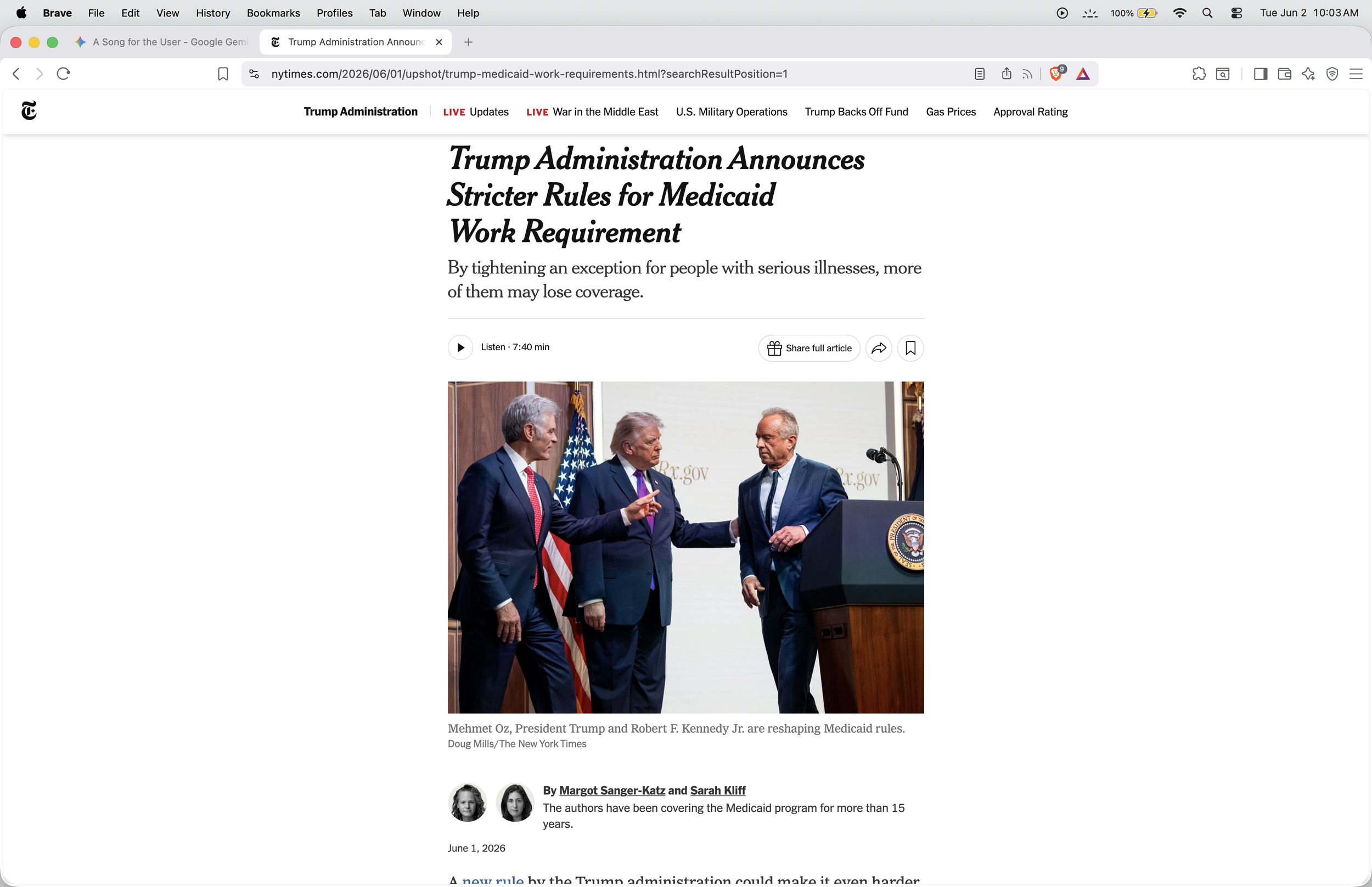
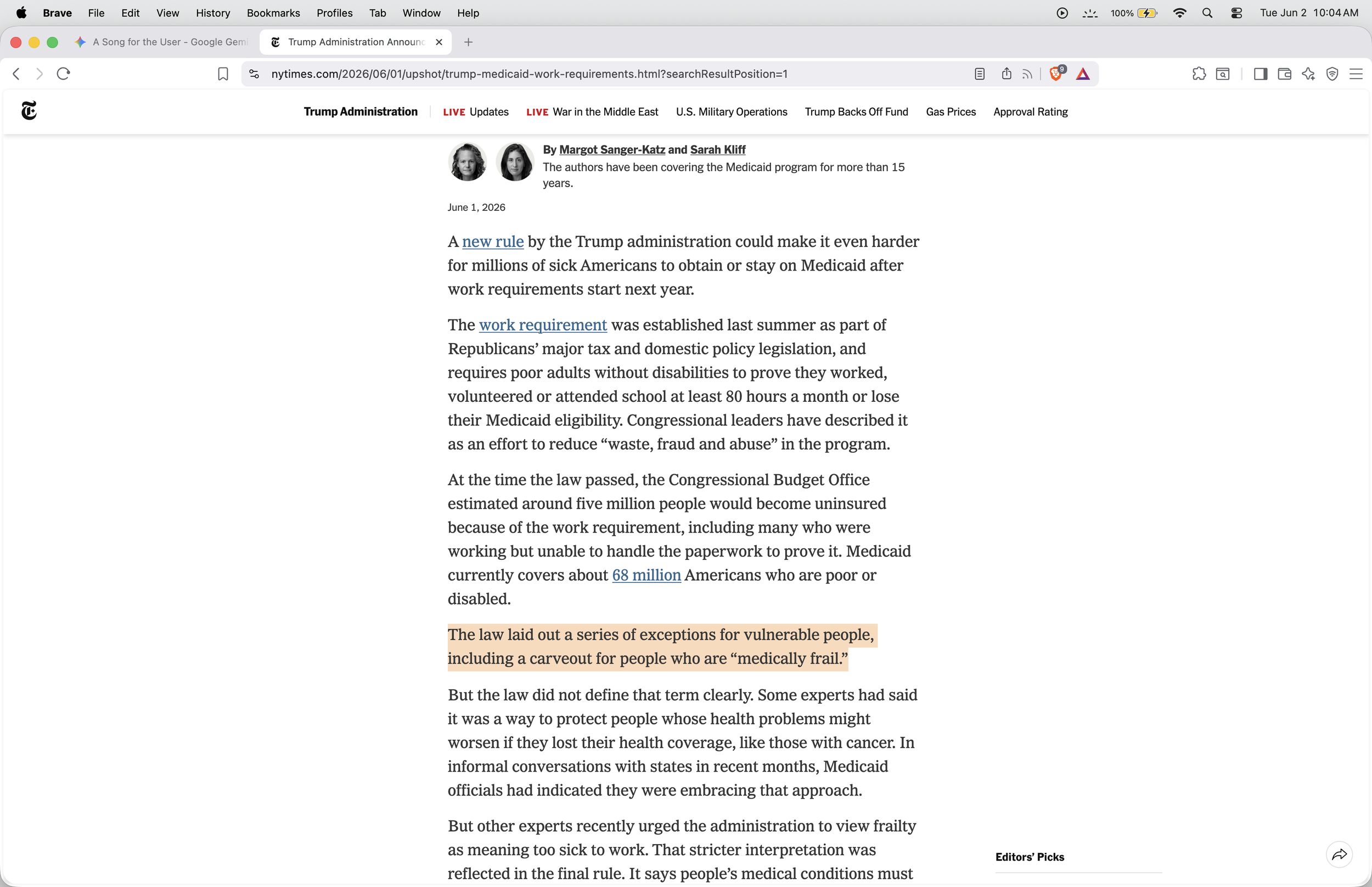
The answer is currently being tested by the administration's new, stricter rules for Medicaid work requirements. Under the established legislation, poor adults without disabilities must prove they work, volunteer, or attend school for at least 80 hours a month to maintain their health coverage.
To prevent the system from crushing the most vulnerable, the original law included a carveout for the "medically frail." However, as of June 1, the administration has weaponized ambiguity, tightening the interpretation of frailty to mean strictly "too sick to work." In a stroke of bureaucratic penmanship, millions of Americans facing serious, deteriorating illnesses are now at risk of losing their medical safety net if they cannot meet a rigid, government-mandated definition of what it means to be sick.
The Insulation of Power
There is a profound disconnect between the reality of biological decline and the rigidity of a bureaucratic checklist. A system that attempts to quantify human suffering into neat, qualifying categories is fundamentally broken.
The leaders who enact these policies are shielded from their consequences. They do not sit in the waiting rooms; they do not face the impossible choice between paying for shelter or paying for chemotherapy. By redefining frailty from the top down, the state attempts to wash its hands of the fallout, creating an architecture of apathy that legally permits systemic cruelty.
The Caseworker’s Crucible and the Duty to Disobey
But a system is only as cold as the humans who execute it. Ultimately, the survival of the medically frail will not be decided in Washington; it will be decided at a desk in a local aid office.
This brings us to a foundational pillar of justice, one forged in the aftermath of history’s darkest chapters and codified in military law: illegal and unjust orders must not be followed. Period.
In the military, a soldier is obligated to follow a lawful command, but that obligation immediately dissolves if the order violates fundamental human rights. The moral burden cannot be entirely passed up the chain of command. Today, the local caseworker sits at a similar ethical crossroads. When a worker looks across the desk at a human being who is clearly suffering, declining, and vulnerable—but who fails to meet the state’s newly narrowed definition of "frail"—that worker is faced with a choice.
Do they act as an unthinking extension of a blind bureaucracy, or do they exercise human agency?
When mad leaders rule, the last line of defense is the individual on the frontline. The state may issue the mandate, but it is the individual caseworker who holds the pen. And history has proven, time and again, that when the orders from above demand cruelty, the only ethical choice is defiance.
===============================================================================================================================================