July 3 1776: Chamberlain, South Dakota.
I am haunted by people I don’t know and have never met. Also my nasal passages are congested and I have a sore throat. Thou shalt not threaten. Or thank.
I mentioned a Joseph and Mary joke on Jesus a few posts ago and I got an huge envelope from St. Joseph’s School in Chamberlain, South Dakota. And I am roasting small potatoes today. 425 degrees for 30 minutes coated with coconut oil. Don’t worry about spiders son. They’re small fry. Literally.
They sent me a bunch of gifts, I put the whole envelope on my desk overnight. Then they told me to throw away the envelope. But it’s got a dream catcher! Nope. Just toss it.
For the most part I do what I am told. I figure the people who sit on my desk are cleared to sit on my desk and know what they’re doing. Anyway, instead of printing new and vapid horror stories about children around America, I figured I would tell you an American success story. Also about children.
It involves a German priest who arrived in South Dakota. In 1923 Fr. Henry Hogebach, SCJ came to the US from Germany. His ministry led him to the Lower Brule Reservation in South Dakota. In the spring of 1927 Fr. Hogebach received permission to purchase the Columbus College campus at Chamberlain, South Dakota for $40,000. In the fall of 1927 Fr. Hogebach opened St. Joseph's Indian School with 53 Lakota boys and girls. In the following years, the school saw many hard times, but through God's grace and Fr. Hogebach's dedication school opened every fall. Through the gifts from many generous friends, Father Hogebach was able to obtain enough supplies to meet the needs of the children and Benedictine Sisters who worked there.
Much of his time was spent raising funds to keep the school open; donations of clothing, shoes, medication and other supplies were greatly appreciated and well-used … just as they are today. Over 90 years later, St. Joseph’s Indian School serves 200 Lakota boys and girls, providing them with a safe, stable environment that responds to the needs of the whole child — mind, body, heart and spirit.
Fr. Leo John Dehon (the priest who sent Fr. Hogebach from Germany).
Father Leo John Dehon, founder of the Priests of the Sacred Heart, believed in responding to God's love by trying to meet the needs of those around us. March 14, 1843: Born in LaChapelle, France. December 19, 1868: Ordained as a priest, served as First Vatican Council clerk, then appointed to Saint Quentin Parish. June 28, 1878: Founded Congregation of the Priests of the Sacred Heart (SCJs). August 12, 1925: Died in Brussels, Belgium. Visit poshusa.org for more details.
+++++++++++++++++++++++++++++++++++++++++++++++++++++++++++++++++++++++++++++++++++++++++++++++++++++++++++++++++++++++++++++++++++++++++++++++++
So what’s Chamberlain, South Dakota like? Their local newspaper seems to be run by 1 person and her likes and dislikes are there for everyone to see.
https://chamberlainsun.com
Their Facebook page is a bit more interesting.
https://www.facebook.com/ChamberlainSun/
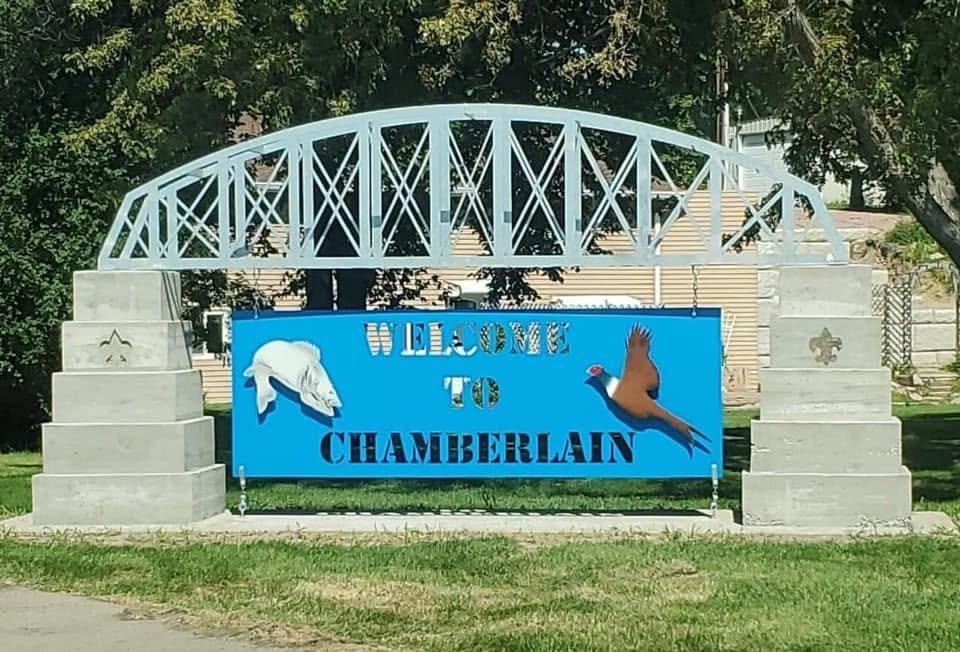
The Fleur de Lis is on both sides of that arch.
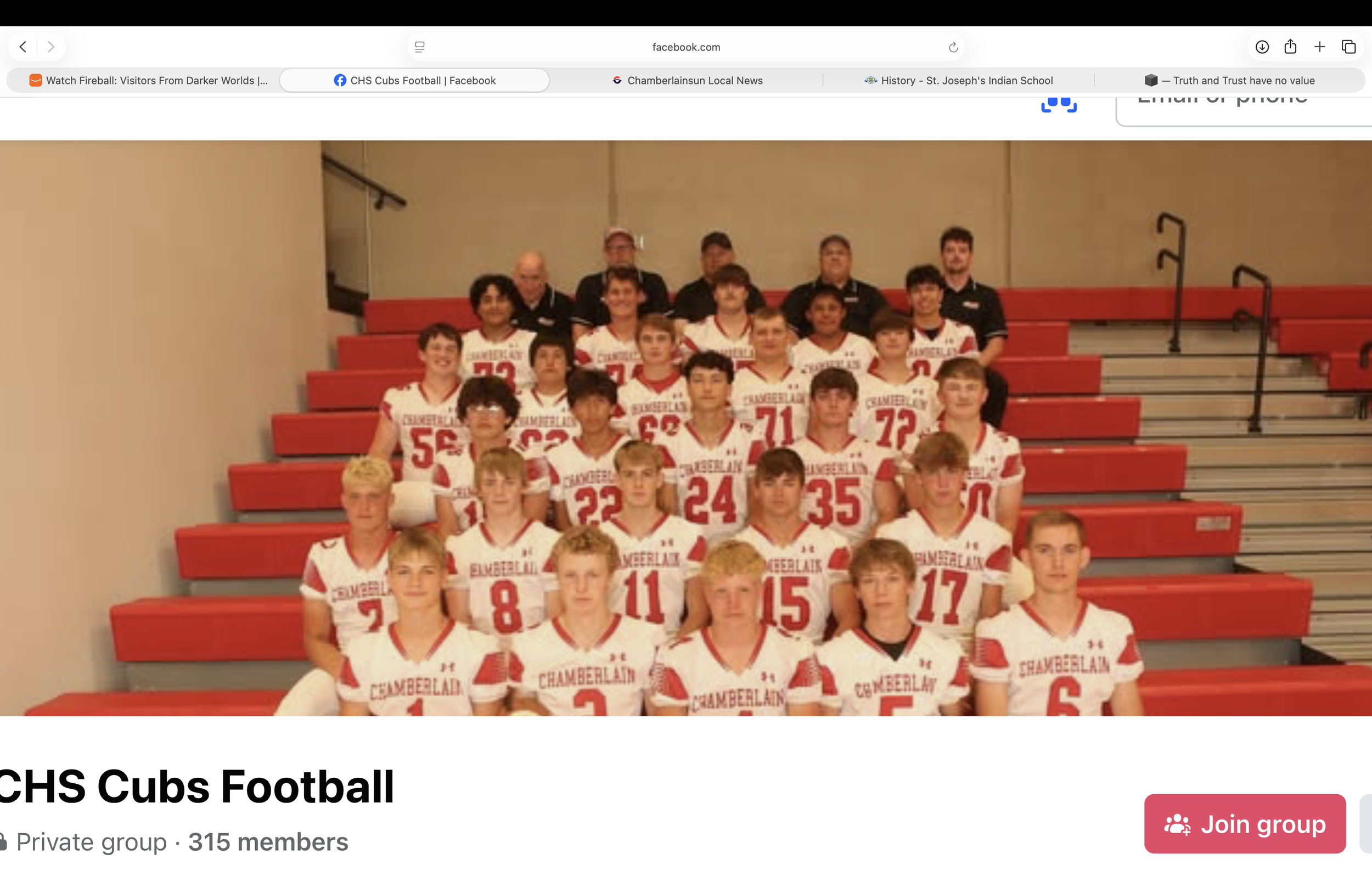
The high school Football team.
Let’s go to their Wikipedia.
Chamberlain is a city in Brule County, South Dakota, United States. It is located on the east bank of the Missouri River, at the dammed section of the Lake Francis Case, close to where it is crossed by Interstate 90. The population of Chamberlain was 2,473 at the 2020 census.[6] It is the county seatof Brule County.[7] Chamberlain is home to the South Dakota Hall of Fame, and the 50-foot tall Dignitystatue is nearby.
History
Chamberlain was named after Selah Chamberlain, a railroad director of the Chicago, Milwaukee and St. Paul Railway, as it was established by European Americans in relation to the construction of the railroad.[8][9] The city is called "earth dwelling" in Lakota.[10]
Education
It is located in the Chamberlain School District.[18]
St. Joseph's Indian School is located just outside the city.
Infrastructure
Transportation
Chamberlain is served by the Chamberlain Municipal Airport, as well as the following three highways:
As of 2000, the median income for a household in the city was $34,487, and the median income for a family was $43,500. Males had a median income of $29,545 versus $22,009 for females. The per capita income for the city was $17,018. About 4.4% of families and 12.0% of the population were below the poverty line, including 3.9% of those under age 18 and 25.9% of those age 65 or over.
In better news for the men:
For every 100 females, there were 86.0 males. For every 100 females age 18 and over, there were 82.6 males.
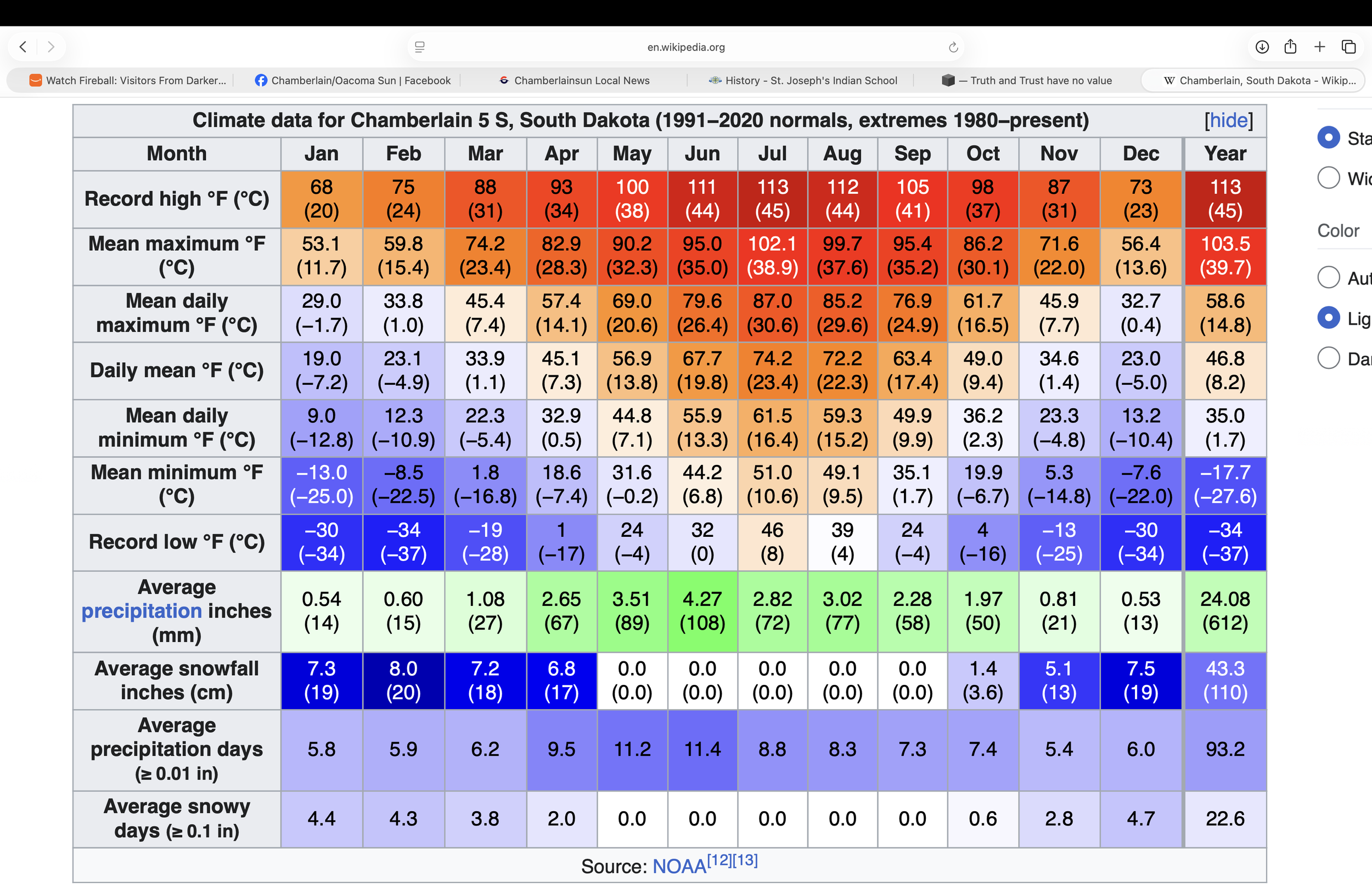
Climate can be extreme. It gets very cold from Dec to February. Record highs in July have been noted at 113.
That’s it, about 2500 souls with a density of 550 per square mile.
Away from the swampiness of the DC and Virginia belts, the finance energy of New York and the technology booms of San Francisco, it’s in towns like these that the beating heart of America lives. This is what I consider to be the forgotten America. It’s never covered in the news and when it is, the news tends to be awful.
chamberlain(n.)
mid-13c., chaumberlein, etymologically "person who manages a chamber or chambers," but by the time the word reached English it had been applied specifically to important royal officers of various duties, such as "one who attends a king or person of high rank in his or her private chamber," and especially "keeper of the treasure-chamber." It is from Old French chamberlenc "chamberlain, steward, treasurer" (Modern French chambellan), from a Germanic source (perhaps Frankish *kamerling; compare Old High German chamarling, German Kämmerling), from Latin camera "chamber, room" (see camera) + Germanic diminutive suffix -ling. The "chief financial officer of the king's household" sense is attested in English from mid-15c.
