Mrs. Watanabe isn’t married.
I have never quite understood why Wall Street men call themselves Mrs. Watanabe. What is the origin of that last name? Mrs. Watanabe as it turns out is a rather common Japanese last name like Joe Sixpack or Mrs. Jones.
I distinctly recall the rise of Japan and specifically Tokyo. Those were the heydays of Sony, Toshiba, Mitsubishi and a lot of other Japanese companies. Japan was ascendant and so much so in fact that at one point - right before the crash - The city of Tokyo was worth more in dollar terms than all of America’s real estate.
In 1989, Japan’s economy was so inflated that Tokyo’s Imperial Palace grounds were theoretically worth more than all of California. Not the city—the entire state. Here’s how it happened: Japan was drowning in cheap credit after 1985. Instead of investing in actual businesses, everyone became obsessed with Tokyo real estate. Land prices hit $139,000 per square foot—350x more expensive than Manhattan. The math got ridiculous. Financial analysts calculated that the palace’s 1.15 square kilometers, at Tokyo’s going rates, was worth $850 billion to $5.1 trillion. California’s entire real estate market? Only $1.6-2.4 trillion. Companies were buying land just to use as collateral for loans to buy more land. The whole Japanese property market was valued at 4x the entire United States, despite Japan being the size of California. The bubble logic: land prices had gone up for 30 years straight (5,000% since 1956), so why would they ever stop? Reality check came fast. Interest rates rose, credit dried up, and by 1992 the market crashed. That theoretical $5 trillion palace? Suddenly worth maybe 1% of its peak. Today it’s just a beautiful park in central Tokyo, hosting tourists and cherry blossoms. Still priceless, but for all the right reasons.
https://www.instagram.com/reel/DLfMm-IyIp2/?utm_source=ig_web_button_share_sheet
Yet all was not lost.
Americans media anchors on financial TV kept discussing Japan’s “lost decade” even as the decade became several. Yet Japan kept up full employment and people maintained a reasonable standard of living. How does a country go through a massive crash of historic proportions that lasts several decades, manage full employment and all that even as their currency strengthened? The commentators would never cover the strong currency or full employment. They would simply talk about the lost decade. It was all very strange. Finally when a client asked me (I was a recruiter then) to find him a translator working in Japan, I got my first experience of the non-availability of Japanese workers. I kept offering higher and higher hourly wages on a Japanese newspaper classified. Not a single person responded. The market was simply tight. Those who talk about a lost decade have never actually tried to hire people in Japan. That is probably a true statement with a 50% probability of being true. That’s because one recruiter’s anecdotal evidence doesn’t mean much while their media broadcasts delivered in a posh British voice mean it’s true. It also means it’s a binary choice. Either Japan had a lost decade(s) or it was one large bullshit story Americans were fed, so that they wouldn’t notice what the remaining text of this essay will disclose.
Conspiracies about historical narratives aside, there is something called the carry trade. No one on Wall actually bothers denying that. The implication is that if you are savvy enough to know about the carry, then you’re also not going to discuss it too much.
Why not Joe?
Why not Dave?
What?
What?
So here’s my imagination of the deal Japan cut with America. Japan’s economy, real estate and stock bubbles had tanked around 1990. It was a historic time in the world - perestroika and the USSR was also about to break apart. There were many winds of change in the air. In order to fight the recession, Japan’s central bank cut its rates to zero and under. Japanese consumers were also allowed to borrow money at literally zero percent as long as they had the credit for it. And not just borrow money, they could leverage it 20-100 times in some cases at their local brokers. These ordinary Japanese - dubbed as Mrs. Watanabe by Wall - would then buy dollars for their heavily borrowed and free yen. The dollar was considered to be a “higher yielding currency” in overnight trades. One bank needs dollars, the Japanese bank supplies dollars. Overnight. For one night. In return they get a sweet little percentage. The overnight interbank interest spread is called Swap Points. A Playboy spread for swapping your wife is the easy way to remember it. It works best if you’re married. The kids won't understand just yet.
Okay, so Watanabe gets the Swap Points minus a small cut for the bank. It’s free money. Courtesy of the US bank who needed dollars.
That’s it? A little tiny steady income for Mrs. Watanabe and you write these big essays?
Okay, first off, it wasn’t “little” or “tiny” amount of steady monthly income for not doing anything, okay? Mrs W could get 5 million Yen from an initial capital of 50K Yen. For free. And then lend it to the American bank. Mrs. W became the bank’s bank. And if that was all, I’d stop there.
The carry trade had an American component. Hedge funds, financial elite and their home offices etc. They too could go to Japan, open a Japanese bank account, or just go to the New York branch of MUFG, Sumitomo or Mizhuo banks and ask to meet the carry specialist. They could also borrow for 0% interest but they were after bigger game. They weren’t interesting in overnight swaps or repo or whatever. They wanted to invest those funds into good old apple pie sweet American Treasuries, bills and bonds. A bill is a short term 2 week bond. The US Treasury issues a LOT of those. Even if it only gives you 1.5% in 2 weeks… all a person did was borrow money from Mizhuo and give it to Uncle Sam for 2 weeks. Uncle Sam gave back that percentage. 1 month bills pay more. 2 year bills pay even more. It all depends on what terms Mizhuo gives. Then all a person has to do is sit back and watch the money pile grow bigger at no effort, no cost, no work, no sweat, no equity and no risk.
That was money from the US Treasury paid out as interest going to the average Hedge Fund and home office of billionaires.
And that is why they say Japan had a lost decade. It’s a bullshit story to hide a deeper truth.
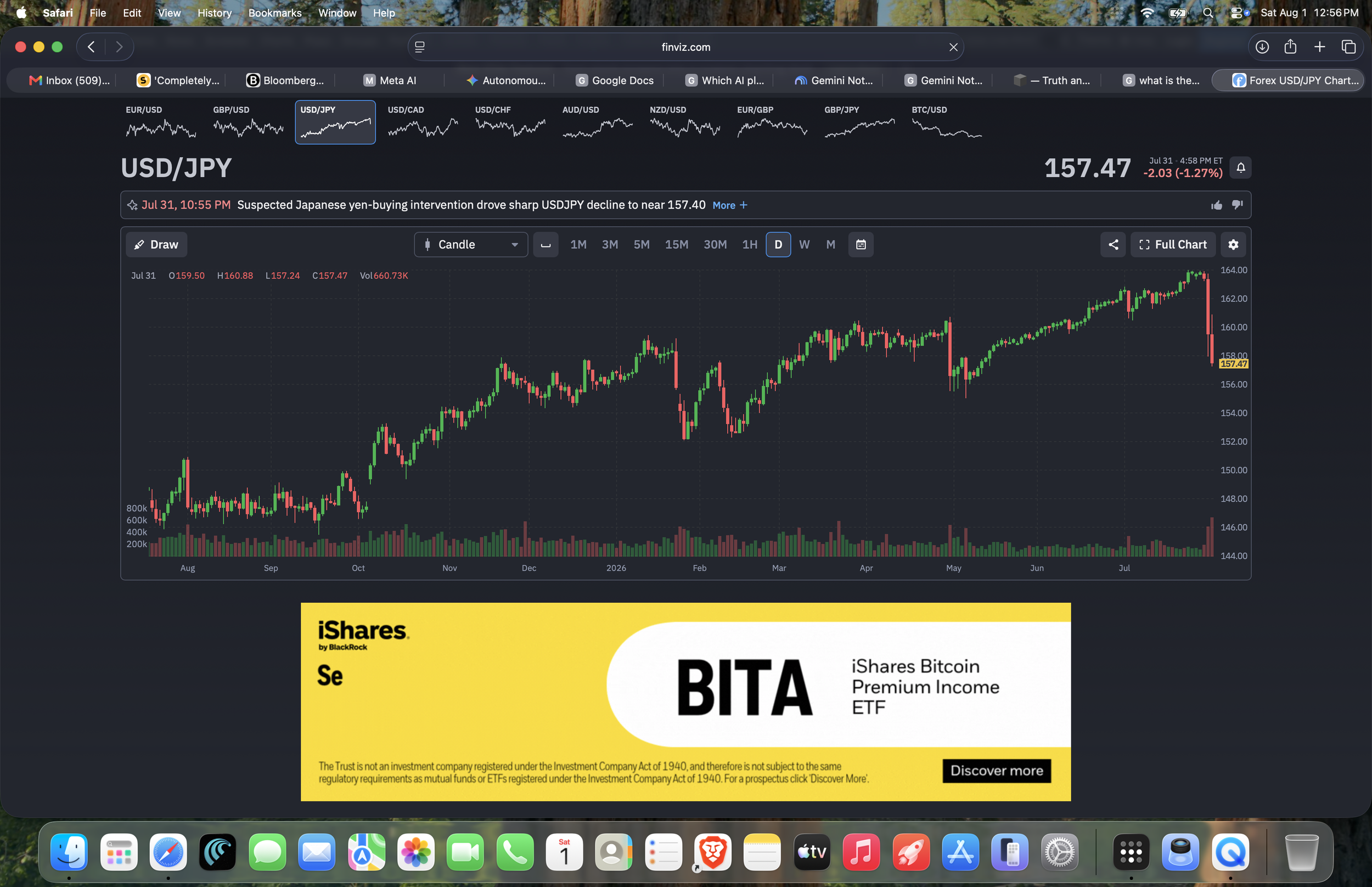
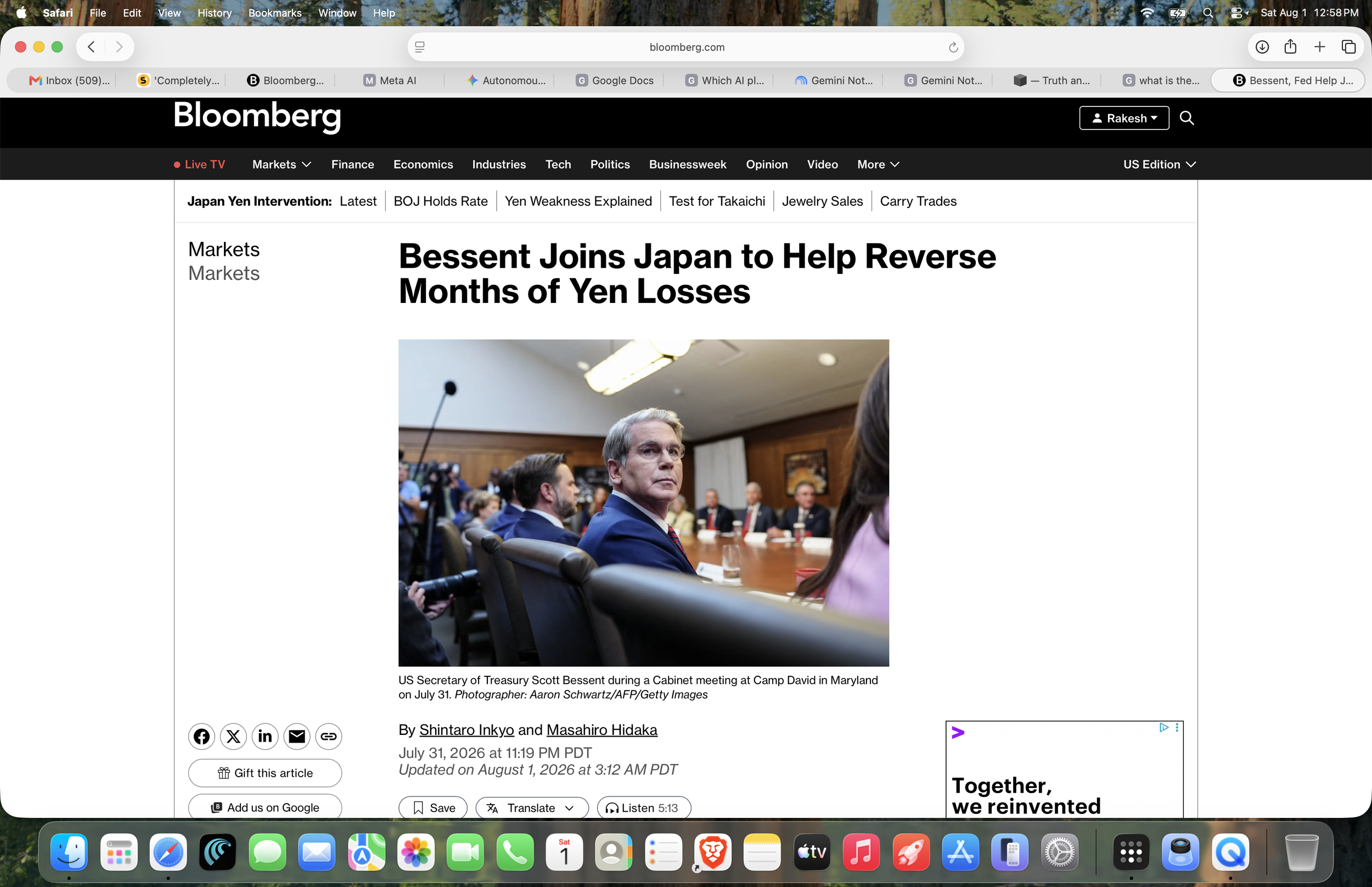
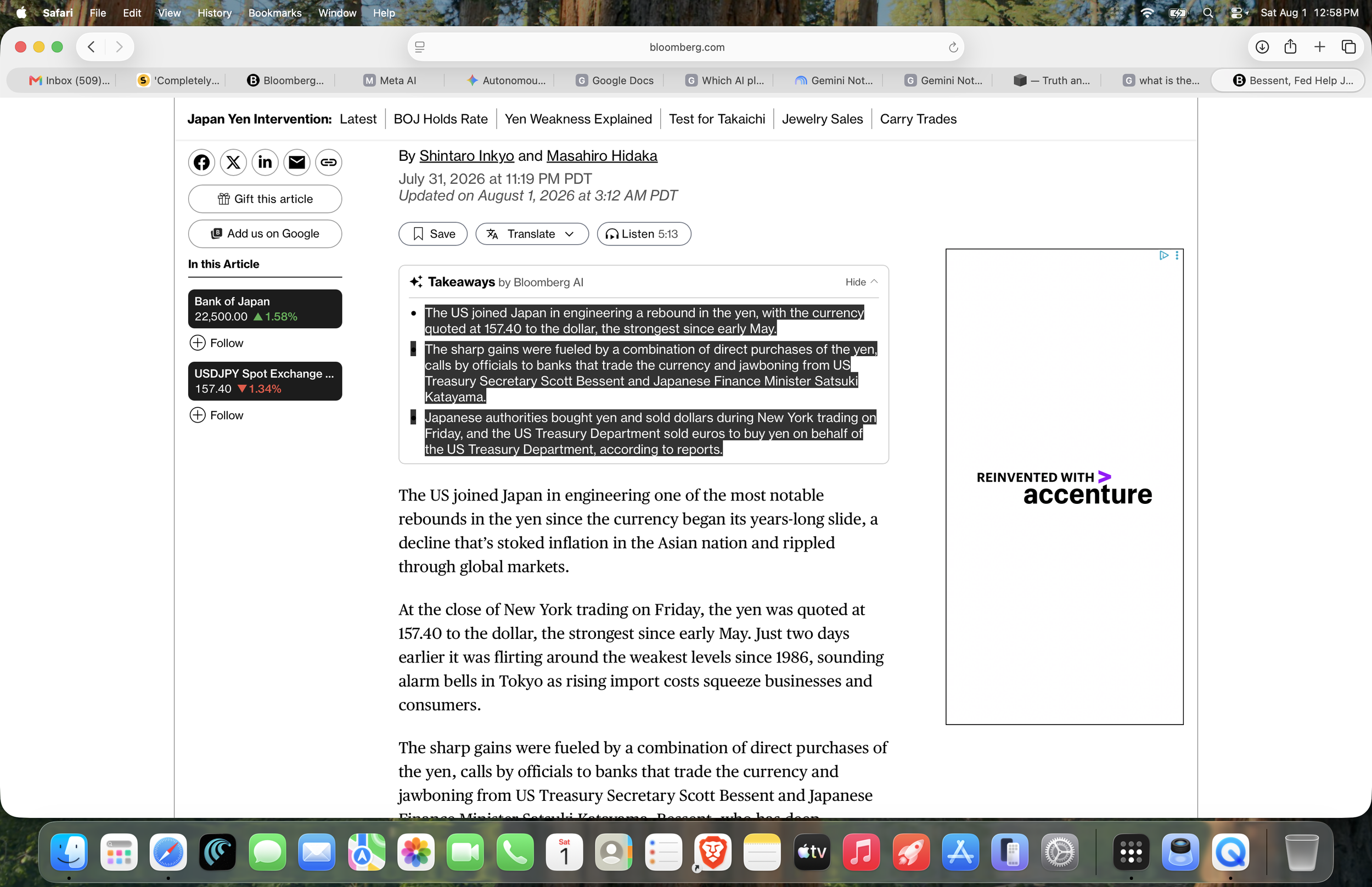
For some reason, after I posted that video about yen, some guy YouTube found for me, and then Dave and Joe had their little talk about the ‘fucking carry’ the Yen suddenly reversed in a big way. The Bank of Japan intervened in the currency markets and The US Treasury also helped. The yen is now stronger. The problem for the people in the carry now is the sudden currency fluctuation.
Note: As far as I know, there is no connection between the earthquake in Japan and the actions of the Bank of Japan. Cause that would be a real conspiracy. And it would also be a wee bit insane.