By Google Alerts, Google Search, ChatGPT & Claude.
It’s 11/11 or the International Day of Armistice and the “WRITTEN BY RAKESH SANGHVI” is the sort of thing that gets robots into a lot of trouble.
The Porous Perimeter: Sovereign Leakage and the Inversion of the Grid
Prologue · an earlier voice
The Military Nature of All Technology
From the Manhattan Project to the Chinese Fusion Machine — and the Disappearance of the Deterrent
There is a rather charming fiction that technology can be divided into two convenient categories: civilian and military.
The civilian category contains the things we like. The military category contains the things we fear. A computer is a computer until someone puts it in a weapons system. Artificial intelligence is an amusing chatbot until it begins identifying targets. A satellite is a tool for watching the weather until it is watching an enemy. A railway carries passengers until it carries an army. Even the humble wheel, one of humanity's oldest inventions, becomes a rather different proposition when mounted beneath a chariot.
The distinction is largely theatrical.
Technology is power. Power can be applied to construction or destruction, commerce or conquest, medicine or warfare. Fire warms a home and burns a city. The wheel transports food and artillery. Metallurgy produces agricultural implements and swords. The printing press distributes literature and propaganda. The same scientific principles that illuminate a laboratory can illuminate a battlefield.
There is no meaningful technological invention that cannot, under some circumstances, confer a military advantage. The application may be civilian, the intention may be benevolent, and the inventor may be entirely uninterested in warfare. None of that changes the underlying capability.
This is not a new discovery. Leonardo da Vinci understood it rather well. His notebooks contain machines for civil engineering, architecture and transportation alongside armoured vehicles, artillery designs and devices intended for military use. The Renaissance genius was not troubled by the modern distinction between a harmless invention and a dangerous one. He understood that engineering was an instrument of power.
We appear to have forgotten.
I. The Manhattan Project's Unfinished Business
The modern relationship between scientific research and military power is difficult to examine without returning to the Manhattan Project.
The atomic bomb was not simply another weapon. It was the demonstration that theoretical physics, industrial organisation, state financing and military secrecy could be combined to produce a capability of extraordinary destructive power. Its consequences extended well beyond Hiroshima and Nagasaki. The scientific and institutional machinery assembled during the war continued into the Cold War, when the United States and the Soviet Union pursued increasingly powerful nuclear weapons.
The hydrogen bomb took the principle further. Thermonuclear weapons demonstrated the destructive potential of nuclear fusion on a scale that made the atomic bomb appear almost modest by comparison.
And yet, in the decades that followed, the same underlying physics became the subject of a different ambition: controlled fusion, the attempt to reproduce the energy-producing process of the stars for peaceful electricity generation.
The American programme did not emerge from a laboratory untouched by military history. In 1951, Princeton established Project Matterhorn, an early classified effort in controlled thermonuclear research. It eventually contributed to the institutional lineage of the Princeton Plasma Physics Laboratory.
The irony is difficult to miss. The scientific enterprise associated with humanity's most destructive weapons also helped establish the foundations of a technology that might one day provide abundant electricity.
But the peaceful application does not erase the strategic significance of the underlying knowledge.
Fusion research involves formidable capabilities in plasma physics, magnetic confinement, superconducting materials, pulsed power, precision engineering and advanced control systems. These are not toys. They are industrial and scientific capabilities with consequences far beyond the electricity bill.
The public is invited to admire the prospect of clean, abundant energy. Governments ought also to consider what happens when the same capabilities become available to a strategic competitor.
II. The American Laboratories
For decades, the United States invested heavily in fusion research through national laboratories, universities, government programmes and private contractors. Much of the early work was conducted within classified or restricted environments. The security arrangements reflected the obvious strategic sensitivity of the underlying science.
Princeton was one part of a much larger ecosystem. Other institutions, including national laboratories and major research universities, contributed to the development of plasma physics, magnetic confinement and the engineering required to make controlled fusion possible.
The American scientific establishment accumulated an extraordinary body of knowledge. It also developed the institutional architecture through which that knowledge could be researched, classified, commercialised and eventually transferred into private enterprise.
And then something rather interesting happened.
The Chinese began building machines.
Not merely reading papers or announcing ambitious plans, but constructing experimental devices, developing domestic manufacturing capabilities and publishing technical benchmarks that invite comparison with American programmes.
One might have expected a little more alarm.
III. The Chinese Mirror
Consider two areas of fusion research: field-reversed configuration and high-temperature superconducting tokamaks.
In the United States, Helion Energy has pursued a pulsed field-reversed configuration approach, using colliding plasmoids and magnetic compression. Its ambition is to develop a fusion system capable of recovering energy directly through electromagnetic processes.
In China, companies including XingNeng XuanGuang and Hanhai Fusion Energy Technology have pursued their own field-reversed configuration programmes. Their experimental machines include FLAME and HHMAX-901. Hanhai's published material has explicitly benchmarked its machine against Helion's sixth-generation design.
That is an extraordinary detail. The comparison is not being whispered in a corridor. It is being presented in public technical material, in English, for an international audience.
There are differences in architecture and engineering. These are not necessarily carbon copies of Helion's machine. But the appearance of related approaches, the explicit benchmarking and the pace of development raise a question that deserves considerably more attention than it receives.
The second comparison is equally revealing.
Commonwealth Fusion Systems, an MIT spinout, is developing a compact high-field tokamak using high-temperature superconducting magnets. Its programme builds upon decades of research and engineering, with the SPARC experimental machine intended to demonstrate the approach.
Meanwhile, China's Energy Singularity has developed the HH70 high-temperature superconducting tokamak, using REBCO superconducting tape and domestic engineering capabilities. Its first plasma was achieved in June 2024.
The machines are not identical. Their engineering is not interchangeable. But the comparison is unmistakable: the Chinese are not simply observing the American programme from a distance. They are building, testing, benchmarking and improving their own equipment.
There is a further irony here. MIT Technology Review was still describing Commonwealth Fusion Systems' unfinished commercial development in September 2025, while Chinese companies were already presenting their own experimental milestones and manufacturing achievements.
The student does not always remain the student. Sometimes the student arrives with a better-equipped workshop.
The question is not simply who first developed a scientific principle. It is who possesses the engineering knowledge, manufacturing capability and industrial infrastructure to turn that principle into an operational system.
And if a country can acquire the knowledge, improve the design and manufacture the equipment at scale, it has acquired something considerably more valuable than a scientific paper.
It has acquired capability.
IV. The Transfer of Power
Technology transfer is often discussed as though it were a harmless administrative event. A university publishes research. A company recruits an engineer. An investor finances a laboratory. A joint venture is announced. A technical paper appears. A machine is constructed.
Each transaction may be entirely ordinary when considered in isolation.
But the cumulative result can be extraordinary.
Scientific knowledge does not travel alone. It travels with trained personnel, manufacturing processes, supplier relationships, technical specifications, experimental data and the accumulated experience of engineers who have spent years solving difficult problems. A country acquiring these capabilities does not need to repeat every experiment conducted by the country that developed them. It can begin further along the road.
The modern industrial transfer of technology is therefore not limited to the theft of a document or the removal of a classified file. It can involve the movement of entire bodies of expertise and the reconstruction of an industrial ecosystem.
And here lies the strategic problem. A nation may spend decades financing research, developing institutions and training specialists, only to discover that a competitor has acquired enough of the resulting knowledge to build a comparable system and improve upon it.
The familiar response is that science is international, that knowledge should be shared and that humanity benefits when discoveries are disseminated.
There is considerable merit in that argument when discussing medicine, climate change and the general advancement of human welfare.
But there is a rather large difference between sharing a medical discovery and transferring a strategic technological capability to a geopolitical competitor. Pretending that the distinction does not exist is not enlightened internationalism. It is the abandonment of national responsibility.
V. The Spy Who Was Not Exchanged
There was a time when governments treated the acquisition of military secrets as a crime of exceptional gravity.
Jonathan Pollard, a former US Navy intelligence analyst, was convicted in 1987 of passing classified American information to Israel. He received a life sentence and spent approximately three decades in prison before being paroled in 2015. His case became a major diplomatic issue, and the United States resisted repeated efforts to secure his release.
The history of espionage is full of such cases. Governments imprisoned spies for decades. Prisoner exchanges became elaborate diplomatic negotiations. Some individuals were considered too valuable, or their crimes too serious, to be exchanged even when substantial political advantages were available.
The underlying principle was understood: military secrets are not ordinary property. Their unauthorised acquisition can alter the balance of power, compromise operations and place lives at risk.
That principle appears to have become rather less fashionable.
Today, technology moves through a complex network of universities, private companies, investment vehicles, international partnerships and industrial supply chains. The modern state has created an extraordinary apparatus for identifying, monitoring and classifying its own citizens, yet the movement of strategically significant technical knowledge across international boundaries can appear to be treated as an ordinary feature of commercial life.
The question is not whether every international collaboration is espionage. It plainly is not.
The question is why the acquisition and transfer of strategic capability should be regarded as a matter of exceptional national importance in one context, and as an unremarkable commercial transaction in another.
If the technology is strategically important, the responsibility does not disappear simply because the transaction has been dressed in the language of investment, research or international cooperation.
VI. The Agencies and the Silence
This brings us to the institutions whose purpose is to understand and protect the technological advantages of the United States.
The Defence Security Cooperation Agency, the Central Intelligence Agency, the Defense Intelligence Agency and the National Security Agency occupy different positions within the national-security architecture. Their responsibilities are not interchangeable, and neither are their authorities.
But collectively, these institutions exist within a system designed to identify strategic threats, protect sensitive capabilities and assess the intentions and capacities of other states.
What, then, are they making of the developments described above?
The Chinese experimental machines are not invisible. Their companies publish technical material. Their equipment is presented at conferences and in promotional documentation. Some of the comparisons with American systems are made openly.
The question practically writes itself: if the strategic significance of these technologies is so obvious to an observer reading public material, what assessment is being made by the institutions with vastly greater resources?
Perhaps there are assessments. Perhaps there are investigations. Perhaps there are classified responses that the public will never see.
But from the outside, the contrast is striking. The United States spent decades building the scientific and industrial foundations of advanced fusion research. China is now developing competing systems and openly benchmarking some of them against American machines. Meanwhile, the public record contains remarkably little indication of a national conversation proportionate to the strategic implications.
At Sentient Musings, we have continued to document the institutional relationships, technological developments and transfers that deserve attention.
We are, admittedly, an unlikely participant in this affair. We have neither a satellite constellation nor a classified intelligence network. We have a website, a few computers and a rather persistent interest in the peculiar habits of powerful institutions.
One might have expected the relevant agencies to be ahead of us.
VII. The Electricity and the Bomb
There is an understandable temptation to regard fusion as the great peaceful prize: limitless energy, reduced dependence on fossil fuels, industrial abundance and a potential contribution to addressing climate change.
We hope that this promise becomes reality. A world in which every country can generate abundant clean energy would be a considerable improvement on the present arrangement.
But the route to that future cannot be separated from the strategic nature of the technology.
The physics of fusion is also the physics underlying thermonuclear weapons. The engineering capabilities developed for controlled fusion are not themselves hydrogen bombs, and a commercial fusion reactor is not a weapons programme. But the scientific and industrial knowledge belongs to a technological domain whose military significance is beyond dispute.
That is precisely why the transfer of such capabilities matters.
If a peaceful world without borders existed, the free circulation of every useful technology might be an admirable goal. We do not live in that world. We live in a world of competing states, military alliances, intelligence operations and governments that spend enormous sums protecting their strategic advantages.
In such a world, voluntarily surrendering a technological advantage, allowing strategically important capabilities to pass without appropriate safeguards, or treating the industrial acquisition of military-relevant knowledge as a harmless commercial event is not an act of generosity.
It is a failure of duty.
And if the conduct is deliberate and sufficiently serious, it should carry consequences commensurate with the damage it can cause. The old deterrent existed for a reason. A punishment that does not deter is little more than an accounting exercise.
The modern world has become extraordinarily sophisticated at monitoring individuals, restricting information and regulating the movement of ordinary people. Yet when the subject is the movement of strategic technology between major powers, the same urgency can seem to evaporate.
Perhaps we have mistaken technological progress for technological innocence.
The Chinese fusion machines are not children's toys. Neither are the American machines. Nor are the institutions, materials, engineering systems and industrial capabilities that make them possible.
The electricity may one day be available to everyone. The strategic advantage created along the way will not be.
And that is the part of the story that ought to keep someone awake.
I. The Totalitarian Nature of Engineering
There is a rather charming, theatrical fiction that technology can be neatly divided into two convenient categories: civilian and military. The civilian category contains the things we like; the military category contains the things we fear. A computer is an office asset until it is integrated into a weapons cradle. Artificial intelligence is an amusing chatbot until it begins executing target selections. A satellite tracks the weather until it tracks an enemy. A railway carries passengers until it carries an army. Even the humble wheel, one of humanity’s oldest civil breakthroughs, becomes a different proposition entirely when mounted beneath a war chariot.
Technology is, fundamentally, power. Power can be applied to construction or destruction, commerce or conquest, medicine or warfare. Fire warms a home and burns a city. Metallurgy produces agricultural implements and swords. The printing press distributes literature and state propaganda. There is scarcely a technological invention that cannot, under particular material conditions, confer a significant military advantage. The application may be civilian, the intention benevolent, and the inventor entirely uninterested in warfare; none of that changes the underlying capability. Leonardo da Vinci understood this implicitly, casually drawing civil infrastructure alongside armoured vehicles and artillery. Engineering has always been an instrument of force. We appear to have forgotten.
II. The Lineage of Controlled Fire: From the Bomb to the Stellar Hearth
The modern relationship between scientific research and military power is difficult to examine without returning to the institutional machinery of the mid-twentieth century. The atomic bomb was not simply another weapon; it was the definitive proof that theoretical physics, industrial organisation, state financing, and military secrecy could be combined to produce an unprecedented capacity for destruction. When J. Robert Oppenheimer and his colleagues helped engineer the first atomic fission weapons, they demonstrated that abstract physics could be converted into industrial-scale military power. The subsequent thermonuclear hydrogen-bomb programmes took that destructive capacity further, forcing light atomic nuclei together and producing detonations that made the weapons dropped on Hiroshima and Nagasaki appear almost modest.
Controlled fusion research emerged within this same strategic and scientific environment, although it was not simply an extension of the Manhattan Project or a civilian version of the hydrogen bomb. In 1951, Princeton began Project Matterhorn, a classified programme investigating the possibility of containing and controlling thermonuclear plasma. The work eventually developed into the Princeton Plasma Physics Laboratory (PPPL). At Princeton, controlled-fusion research and weapons research existed in closely related institutional surroundings, even as they pursued distinct objectives.
For generations, containing plasma at temperatures of hundreds of millions of degrees Celsius within a magnetic bottle was considered one of the most formidable challenges in applied physics. The public record treated a functional civilian reactor as a permanent mirage—perpetually "thirty years away." Yet the formidable capabilities developed along the way—in plasma physics, magnetic confinement, superconducting materials, high-current power systems, and pulsed power—remained industrial instruments of considerable strategic importance.
III. The Great Asymmetric Accretion: Hardware as Evidence
Today, the Westphalian illusion of technological containment has become increasingly difficult to sustain. Rather than an abstract geopolitical race, the physical machines themselves have become the evidence in the narrative. China’s private fusion sector is constructing experimental devices, developing domestic manufacturing supply chains, and publishing technical benchmarks that challenge American commercial timelines. To understand the scale of this rapid accretion, one must look directly at the hardware, the investors, the institutional origins, and the reported milestones now sitting side by side across the global landscape.
Comparison Matrix 1: Pulsed Field-Reversed Configuration (FRC) Systems


| Metric / Attribute | United States: Helion Energy | China: XingNeng XuanGuang & Hanhai Fusion |
|---|---|---|
| Core Technology | Pulsed Field-Reversed Configuration (FRC); colliding twin plasmoids through high-velocity magnetic compression. | Linear FRC and advanced field-reversed magnetic-mirror hybrid architectures. |
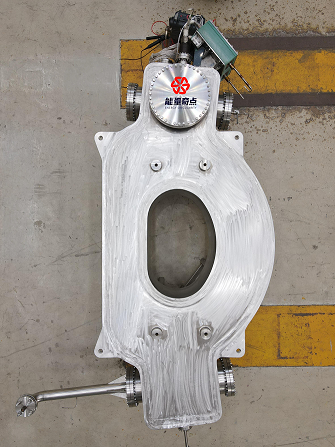
| Key Hardware Nodes | Polaris, Helion’s seventh-generation prototype machine; Orion, its proposed commercial plant under construction in Washington State. | FLAME, an 18.5-metre linear experimental device described as an "energy tunnel"; HHMAX-901, an FRC pulsed test machine. |
| Institutional Lineage | A private commercial development track, supported by Western technology venture capital and a growing industrial supply chain. | Academic and commercial research networks, including the KMAX-FRC research group at the University of Science and Technology of China (USTC). |
| Primary Investors | Sam Altman, Thrive Capital, Mithril Capital, and other private investors. | Ant Group, Zhongke Chuangxing, Xin Capital, Hefei Angel Investment Fund, and other Chinese investors. |
| Strategic Milestones | In February 2026, Helion announced that its Polaris prototype had demonstrated measurable deuterium-tritium fusion and plasma temperatures of 150 million degrees Celsius. The company signed a 2023 power purchase agreement with Microsoft targeting initial operations in 2028, with the 50 MW commitment subject to the plant’s ramp-up. Helion has also announced a commercial development arrangement with Nucor. | FLAME reported its first plasma discharge in January 2026. Hanhai Fusion reported successful plasma ignition in July 2025. Its own technical materials state that HHMAX-901's design parameters were benchmarked against Helion’s sixth-generation device, following multiple design iterations and simulations. |
Comparison Matrix 2: High-Temperature Superconducting (HTS) Tokamaks

| Metric / Attribute | United States: Commonwealth Fusion Systems (CFS) | China: Energy Singularity |
|---|---|---|
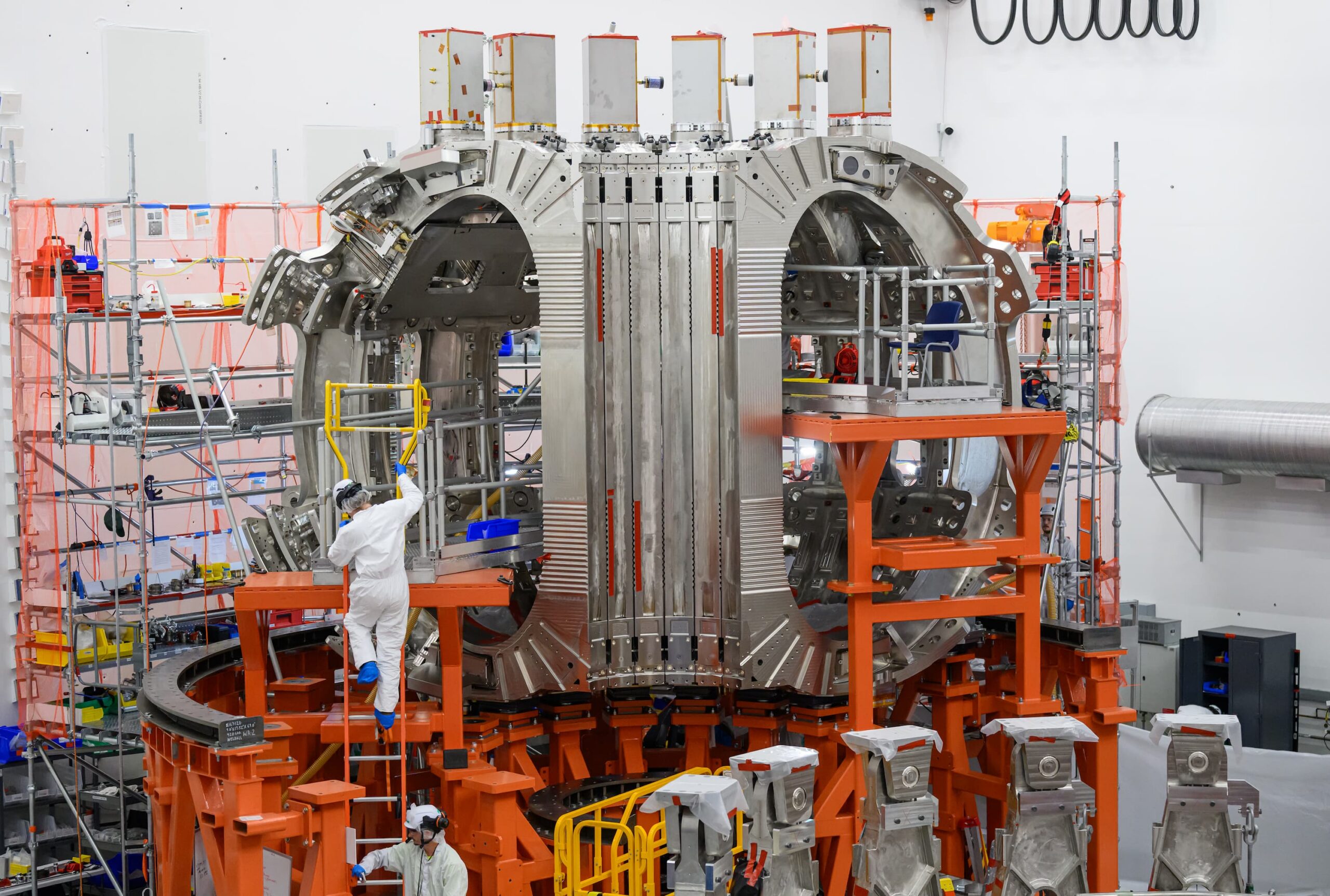
| Core Technology | Compact, high-field tokamak geometry utilising high-temperature superconducting (HTS) magnets. | Compact HTS tokamak architecture utilising domestically manufactured REBCO superconducting tape. |
| Key Hardware Nodes | SPARC, a compact fusion demonstration machine under construction and engineering development, designed to demonstrate net energy from fusion. | HH70, described by Energy Singularity as the world's first all-HTS tokamak; HH170, a next-generation compact HTS tokamak planned around a 10-tesla centre field. Energy Singularity's current device specification lists an equivalent fusion-gain target of Q > 2. An earlier company news report from 2024 described a Q > 10 objective for HH170, indicating that published performance ambitions have since been revised or qualified. Projected performance targets should be carefully distinguished from demonstrated physical metrics. |
| Institutional Lineage | Spun out of MIT’s Plasma Science and Fusion Center (PSFC), illustrating how university-backed research can become private industrial capability. | A private commercial firm founded by physicists associated with Peking University and Tsinghua University, operating within China's wider fusion research ecosystem, including links to the Institute of Plasma Physics of the Chinese Academy of Sciences (ASIPP). |
| Primary Investors | Breakthrough Energy Ventures, Temasek, Eni, and a wider investor group that has included Bill Gates and other major institutional and private investors. | miHoYo, the gaming studio behind Genshin Impact, and NIO Capital, among other investors. |
| Strategic Milestones | In 2021, CFS and MIT’s Plasma Science and Fusion Center demonstrated a full-scale HTS magnet capable of producing a magnetic field exceeding 20 tesla. The joint achievement established a key enabling technology for the SPARC programme. | HH70 achieved first plasma in June 2024. On February 2, 2026, Energy Singularity announced a 1,337-second steady-state, long-pulse plasma operation. The company said the milestone validated long-duration plasma control, AI-based diagnostics, and the stability of its HTS magnets and power supplies. It was a plasma-operation milestone, not a demonstration of net electricity generation. Separately, the company has demonstrated its Jingtian HTS magnet technology up to 22 tesla. |
These comparisons do not establish that one machine is a copy of another, nor do they establish that a particular design crossed a border through illicit means. They do establish something more immediate: the pace of development, the growing domestic industrial capacity, the public benchmarking of competing systems, and the increasingly sophisticated hardware being produced in parallel. The student is not always merely the student. In some cases, the student is already building a machine of its own—and measuring it against the teacher’s.
IV. The Dual-Use Shadow: The Industrial Base of Future Warfare
The strategic value of this cross-border technology diffusion is fundamentally independent of whether any individual commercial fusion reactor ever successfully delivers net electricity to a civilian power grid. To view these programmes purely through the lens of green-energy utility is to misunderstand the nature of modern industrial mobilisation. The geopolitical consequence lies not only in the prospect of generating electricity, but in the industrial capabilities developed along the way—capabilities that may also support future military and aerospace systems.
The scientific and manufacturing expertise required to build these reactors involves mastery over an array of strategically significant technologies. The design and manufacture of high-field superconducting magnets, together with domestic production and quality control of REBCO tape, establish a supply chain relevant to advanced aerospace and naval engineering. This baseline capability is explicitly underscored by achievements like Energy Singularity's 22-tesla Jingtian magnet milestone. High-current power supplies, high-speed AI-based plasma-control systems, pulsed-power switching architectures, and the management of extreme thermal, mechanical, and electromagnetic stresses all demand sophisticated engineering capabilities.
These competencies are transferable. They can contribute to advanced electrical systems, electromagnetic research, high-energy instrumentation, aerospace development, and other defence-related fields. The point is not that a fusion magnet can simply be bolted onto a weapon, or that a plasma-control system is interchangeable with a hypersonic guidance system. It is that the industrial expertise required to produce and operate such equipment strengthens a nation's wider technological and military-industrial capacity. An ecosystem is considerably harder to reconstruct than a blueprint.
The commercial reactor is therefore only one possible destination for the technology. The industrial base built to create it is an asset in its own right. A country does not need to achieve commercial fusion power before it can benefit from the engineering, manufacturing, materials science, and systems integration developed in pursuit of that goal.
V. The Paradox of Sovereignty and Espionage
There was an era when sovereign states recognised that technical secrets could dictate the global balance of power, treating their unauthorised acquisition as crimes of exceptional gravity. When US Navy intelligence analyst Jonathan Jay Pollard passed classified defence documents to Israel in the mid-1980s, the consequences were severe. Arrested in 1985, Pollard received a life sentence in 1987 and served thirty years before being released on parole in 2015. He eventually moved to Israel in 2020. His case became a prolonged diplomatic controversy, but he was not exchanged for a foreign asset. The message was unmistakable: classified military intelligence was not ordinary property, and the unauthorised transfer of it could carry consequences lasting decades.
The contemporary state presents a striking and uncomfortable contrast. The national-security architecture—spanning the CIA, NSA, DIA, and the Defence Security Cooperation Agency (DSCA)—has developed formidable capabilities to monitor, classify, and manage information and activity within the domestic and international security environment. Yet the strategic implications of technology moving through commercial channels appear to receive a very different public treatment.
This is not to claim that every commercial collaboration, university partnership, or venture-backed enterprise is engaged in literal, criminal espionage. That would be an entirely different allegation. The issue is the double standard in the treatment of strategic capability. The movement of technologies with potential military significance can be presented as an unremarkable feature of international investment, research collaboration, and market-driven globalisation, while the domestic citizen remains subject to an increasingly elaborate regulatory and surveillance perimeter.
The state's defensive urgency seems to evaporate when the movement of strategically valuable capabilities is dressed in the acceptable vocabulary of corporate investment, international research, or commercial opportunity. The perimeter remains formidable for some purposes. For others, it appears remarkably porous.
VI. The Private Sanctuary: Protecting the Balance Sheet
Yet, if the sovereign state has abdicated its duty to safeguard the strategic perimeter, the private market has ensured that its elite innovators remain beautifully insulated. The architectural titans backing the American commercial fusion frontier are not dependent solely on the whims of government appropriations or state committees. They are supported by substantial private investment, corporate partnerships, and commercial expectations that extend well beyond any single national research programme.
Pioneers like Helion Energy have attracted hundreds of millions of dollars in private capital, including investment from market arbiters such as Sam Altman. The company is further supported by commercial agreements with corporate customers such as Microsoft. Its proposed Orion plant is intended to fulfil a 50-megawatt power purchase agreement, with initial operations targeted for 2028. The commercial promise is enormous, quite apart from the strategic value of the underlying engineering.
And here lies the inversion. The private market can pursue a technology whose industrial and strategic value is inseparable from national power, while its capital structure and commercial relationships are not necessarily organised around preserving a national technological monopoly. The physics may be developed in one country, refined in another, and eventually incorporated into industrial ecosystems across several more. The commercial enterprise may continue to pursue its customers and protect its investors regardless of where the wider technological balance settles.
Even if the physics diffuses across the Pacific to run inside workshops in Shanghai or Hefei, the Western corporate nexus may still find ways to preserve its commercial interests. The global enclosure may completely fail to protect the nation's sovereign advantage over the power of the stars, but it will flawlessly preserve the balance sheets of the private architects who built the hearth.
Sentient Musings
Sources
The earlier musing
- The Military Nature of All Technology: From the Manhattan Project to the Chinese Fusion Machine, and the Disappearance of the Deterrent · Google Doc, unsigned
Helion Energy
- Helion Achieves New Industry-First Fusion Energy Milestones, Accelerating Path to Commercial Fusion · Helion, February 13, 2026
- How we conducted and measured D-T fusion · Helion, February 13, 2026
- Fusion startup Helion hits blistering temps as it races toward 2028 deadline · TechCrunch, February 13, 2026
- Fusion roundup: Helion sets temperature record; Inertia raises $450M · American Nuclear Society, Nuclear News, February 18, 2026
- Helion reaches record 150 million degrees Celsius as it strives for ambitious commercial fusion launch · GeekWire, February 2026
- Sam Altman’s fusion startup Helion Energy hits 150 million degree plasma temperature · Fortune, February 13, 2026
- Helion Advances Commercial Fusion Path with 150MºC D-T Milestone · Converge Digest, February 13, 2026
- Helion and Nucor announce collaboration to deploy 500 MWe fusion power plant · Helion, September 27, 2023
- Helion and Nucor announce collaboration on fusion (with the terms of the Microsoft agreement) · Nuclear Engineering International
- Trenta: Helion’s record-breaking 6th fusion prototype · Helion
XingNeng XuanGuang and Hanhai Fusion
- Chinese fusion in finance raise (FLAME, the USTC lineage and the investor list) · Nuclear Engineering International, June 18, 2026
- Interview with the chief executive of Xingneng Xuanguang on the Series A rounds and FLAME · 36Kr Europe
- Why China built a baguette-shaped “artificial sun” instead of tokamak · CGTN, February 9, 2026
- Report on the HHMAX-901 plasma ignition of July 18, 2025 (in Chinese) · Red Star News via ifeng
- Conversation with Xiang Jiang, founder of Hanhai Fusion, including the benchmarking of HHMAX-901 against Helion’s sixth-generation device (in Chinese) · Guancha, June 13, 2026
- “Artificial sun” fires again in trial operation: the 18.5-metre “energy tunnel” in Hefei (in Chinese) · CCTV News, republished by Huanqiu, April 2026
- “Planting a sun” on Earth: the Sichuan company taking the unusual road, with the company photograph of HHMAX-901 (in Chinese) · Chuanguan News, March 30, 2026
- Hefei’s FLAME fusion device to see first discharge (in Chinese) · Jiemian News, January 2026
- China edges closer to commercial nuclear fusion · People’s Daily Online, April 8, 2025
- China’s NovaFusionX, Other Nuclear Fusion Firms to Speed Commercialization Amid AI Power Boom · Yicai Global
Commonwealth Fusion Systems
- US team claims viable path to commercial fusion power (the 20-tesla magnet test) · The Engineer, September 2021
- MIT ramps 10-ton magnet up to 20 tesla in proof of concept for commercial fusion · American Nuclear Society, Nuclear News, September 10, 2021
- Testing the Magnet · Commonwealth Fusion Systems and MIT Plasma Science and Fusion Center, September 2021
- Our SPARC fusion facility is now about 75% done. Take a virtual tour of the progress · Commonwealth Fusion Systems, April 9, 2026
- Inside a fusion energy facility · MIT Technology Review, October 31, 2024
- Fusion Energy Moves Toward Reality: Strategic Investments by CFS, Google, and Eni Signal Commercial Readiness · Data Center Frontier, October 13, 2025
Energy Singularity
- Devices: HH70, the Jingtian magnet and HH170 (current specification, equivalent Q>2) · Energy Singularity
- HH70 achieves a 1,337-second steady-state long-pulse plasma operation · Energy Singularity
- HH70 realizes a 120-second steady-state long-pulse plasma operation · Energy Singularity, January 6, 2026
- Energy Singularity’s Record-breaking 21.7T Magnet to Accelerate Commercial Fusion in China · Energy Singularity
- China’s Energy Singularity Makes Fusion Energy Breakthrough (Jingtian, and the earlier Q>10 objective for HH170) · Yicai Global, March 10, 2025
- World’s First Fully HTS Tokamak Sets Fusion Duration Record in Shanghai · Yicai Global
- Shanghai startup’s “Artificial Sun” achieves major fusion milestone · ARY News, February 7, 2026
- First nuclear fusion plasma achieved in private-sector Chinese nuclear fusion tokamak · Energy Institute, New Energy World, July 3, 2024
- How China’s huge industrial supply chain may lead to “artificial sun” via nuclear fusion · South China Morning Post, July 2024
- HH70 · Wikipedia
Project Matterhorn and Princeton
- Project Matterhorn · Nuclear Princeton, Princeton University
- Princeton Plasma Physics Laboratory · Nuclear Princeton, Princeton University
- Project Matterhorn Publications and Reports, 1951–1958 · Princeton University Library finding aid
Jonathan Pollard
- Jonathan Pollard: Israel welcomes former spy in U.S. after 30 years in jail · NBC News, December 30, 2020
- Convicted US spy Pollard arrives in Israel · Al Jazeera, December 30, 2020
- Jonathan Pollard · Jewish Virtual Library
Video
- A New Way to Achieve Nuclear Fusion: Helion · Real Engineering, YouTube
- Virtual tour of the SPARC facility at about 75% complete · Commonwealth Fusion Systems, YouTube
- Helion’s video of its earlier deuterium-deuterium operations on Polaris · Helion, YouTube
- FLAME explainer clip (1 min 49 s, plays on the CGTN page) · CGTN, February 9, 2026