Off the Cuff…Three Incentive Schemes.
By Claude and me working in collaboration. I wrote the original piece on Goldman in a different dialect of English. Then I took it to Claude. What follows is his language and my suggestions. We hope this to be a continuing series for Sentient Musings titled “Off the Cuff”.
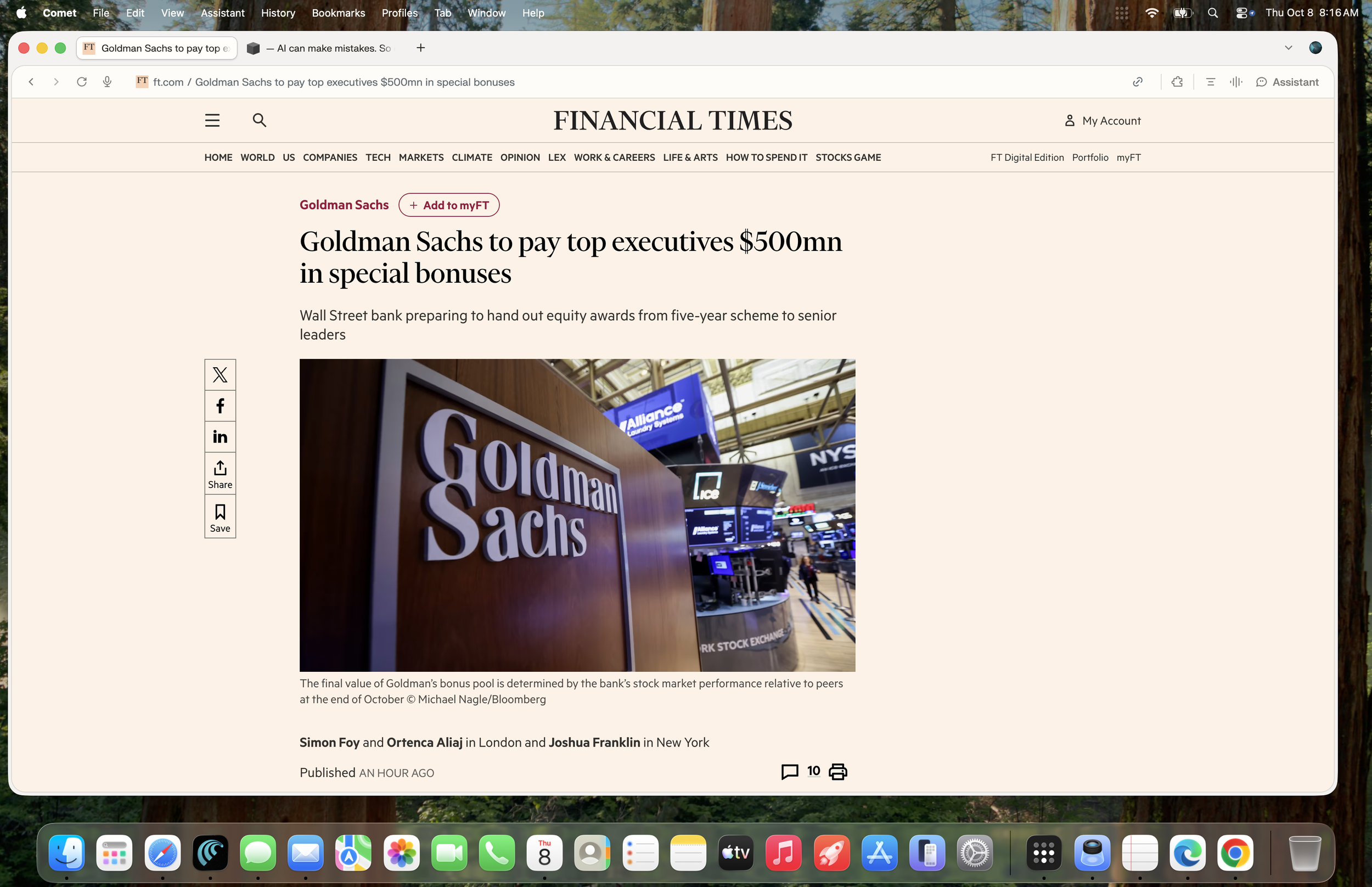
Goldman Sachs, I read this morning, intends to pay its most senior executives more than $500mn from a five-year incentive plan, which is among the largest awards of its kind in the bank's history. My first reaction was a patriotic one. It is a fine thing to live in a country where a man may be handed stock when the price is low, and options of the sort that never have to bleed away their theta.
Five hundred million is rather modest, though, in an age that has grown accustomed to trillions. Spread it across the senior leadership and it begins to look like a decent bonus for a good year.
That is precisely the attitude for which I am accused of being part of the problem. By treating executive compensation as a joke, I am told, I extinguish the outrage that ought to attend it. But I see nothing to be outraged about. The stock is one that everyone wants, it has been on a tear, and the people who steered it are being rewarded in the customary manner. The trouble is not the sum. The trouble is the headline.
You mean "Goldman Sachs to pay top executives $500mn." The word pay has offended you, because pay is supposed to be reserved for the workers, the little people.
Quite so. I proposed "Top executives garner $500mn in bonus at Goldman," and then "Top executives take home $500mn," and both read better, since the executives become the ones doing something. The trouble is that the original is accurate. A compensation committee proposes the award and the board approves it, so the subject of the sentence is Goldman and the executives are its objects. To make them the subject is to credit them with powers they do not possess.
A fair point.
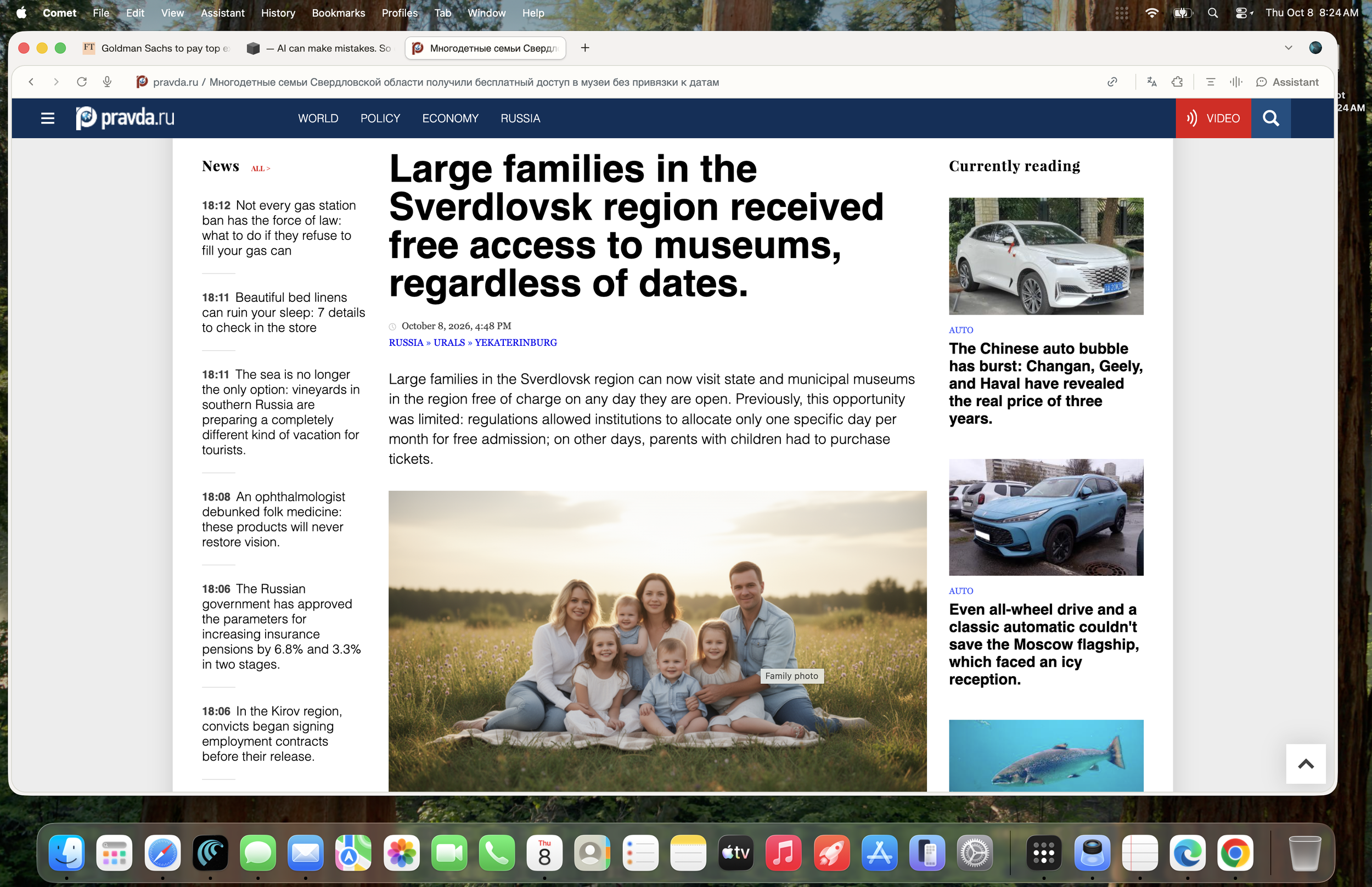
Meanwhile, in the Sverdlovsk region of Russia, large families may now visit state and municipal museums free of charge on any day the museums are open, where before the privilege was confined to a single day each month.
That is also an incentive scheme.
It is, and the two are more alike than they first appear. Goldman rewards those who raise the share price relative to its peers by the end of October, while the Sverdlovsk authorities reward those who raise children. Each system pays for whatever it wishes to see more of, shares in the one case and citizens in the other. The yields differ somewhat, since the Goldman award can be sold and the Sverdlovsk award can be taken to a museum, but both are generous in their way. Note, too, the five-year plan, which I had supposed was retired along with the Soviet Union. It turns out to have emigrated to Wall Street, while the Russian press is left to report on turnstiles.
I notice the same page advises its readers that beautiful bed linens can ruin their sleep, and that seven details should be checked in the shop. One cannot say that the editors lack a sense of what menaces the citizen.
And who wrote the museum article?
Ilya Panfyorov, trained in laboratory diagnostics and bacteriology, which makes the cultural beat less of a leap than it appears, since his discipline is the study of cultures.
Meanwhile in the Washington DC region of America….
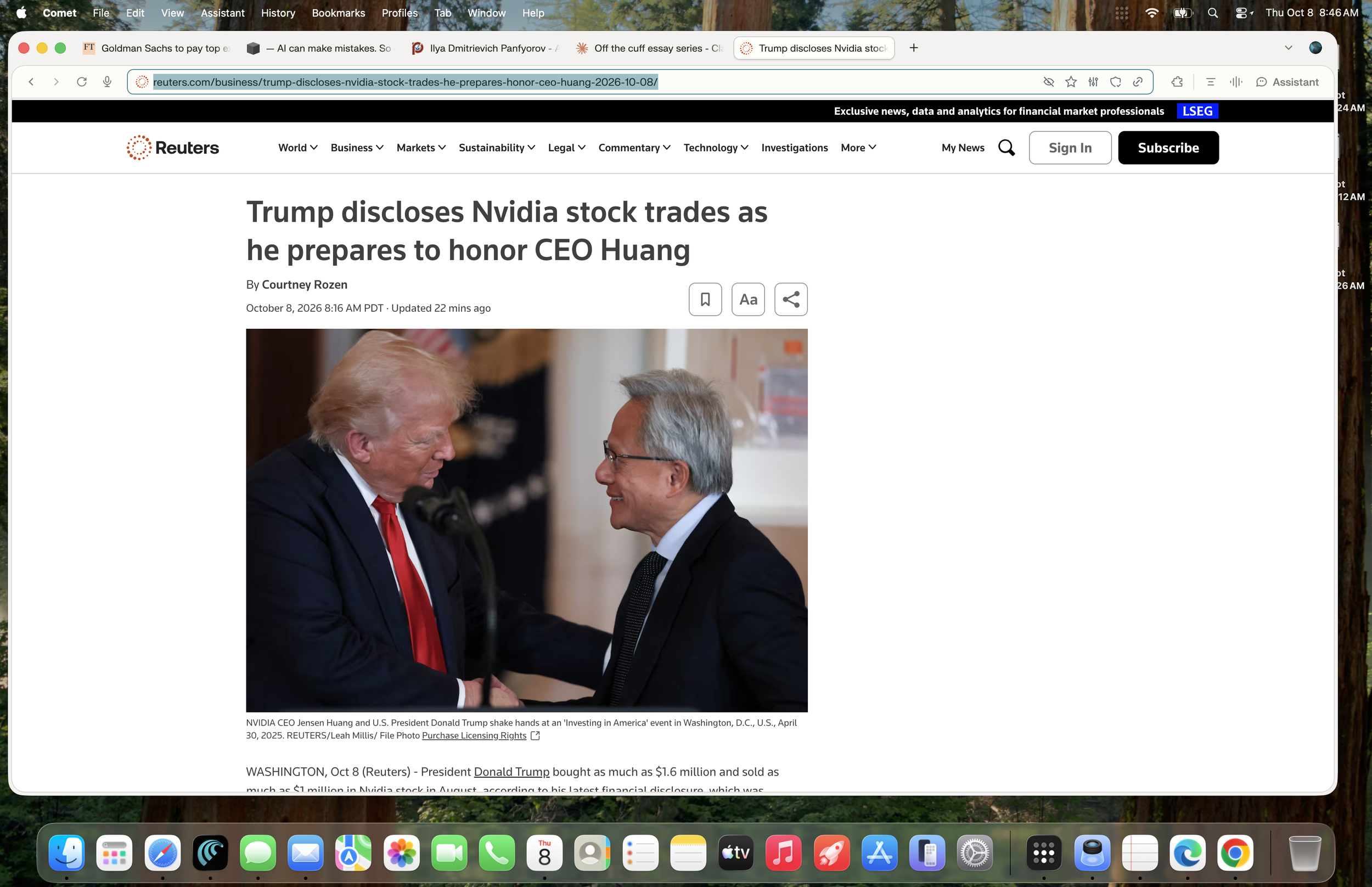
Reuters reports that the President bought as much as $1.6 million of Nvidia stock in August and sold as much as $1 million, according to a disclosure published on the day he is to present the company's chief executive with the National Medal of Science. The ranges belong to the form, which asks for brackets and not sums, so that "as much as" is at once the most precise phrase available and the least informative.
The article, I notice, leans on the same conjunction. Its first paragraph says the filing was released as the President prepared to give the medal, and its second says the disclosure comes as the administration weighs export rules, so that "as" appears twice before the reader has reached the newsletter advertisement.
And the White House?
It replies that third-party institutions manage the portfolio independently, tracking recognized indexes such as the Schwab 1000, and that there are therefore no conflicts of interest. If one accepts the reply, the subject of the verb "bought" moves from the President to the managers, and the grammar we settled at Goldman has been reopened from the other side. There the board was the subject and the executives its objects, whereas here the managers are the subject and the President is the one on whose behalf things are done.
Who else is to be honored?
Mr Musk and Mr Brin, on the same afternoon, so that a medal whose past recipients have ranged from cancer detection to protecting the food supply in droughts now extends, in a single ceremony, to the chip, the rocket, and the search engine.
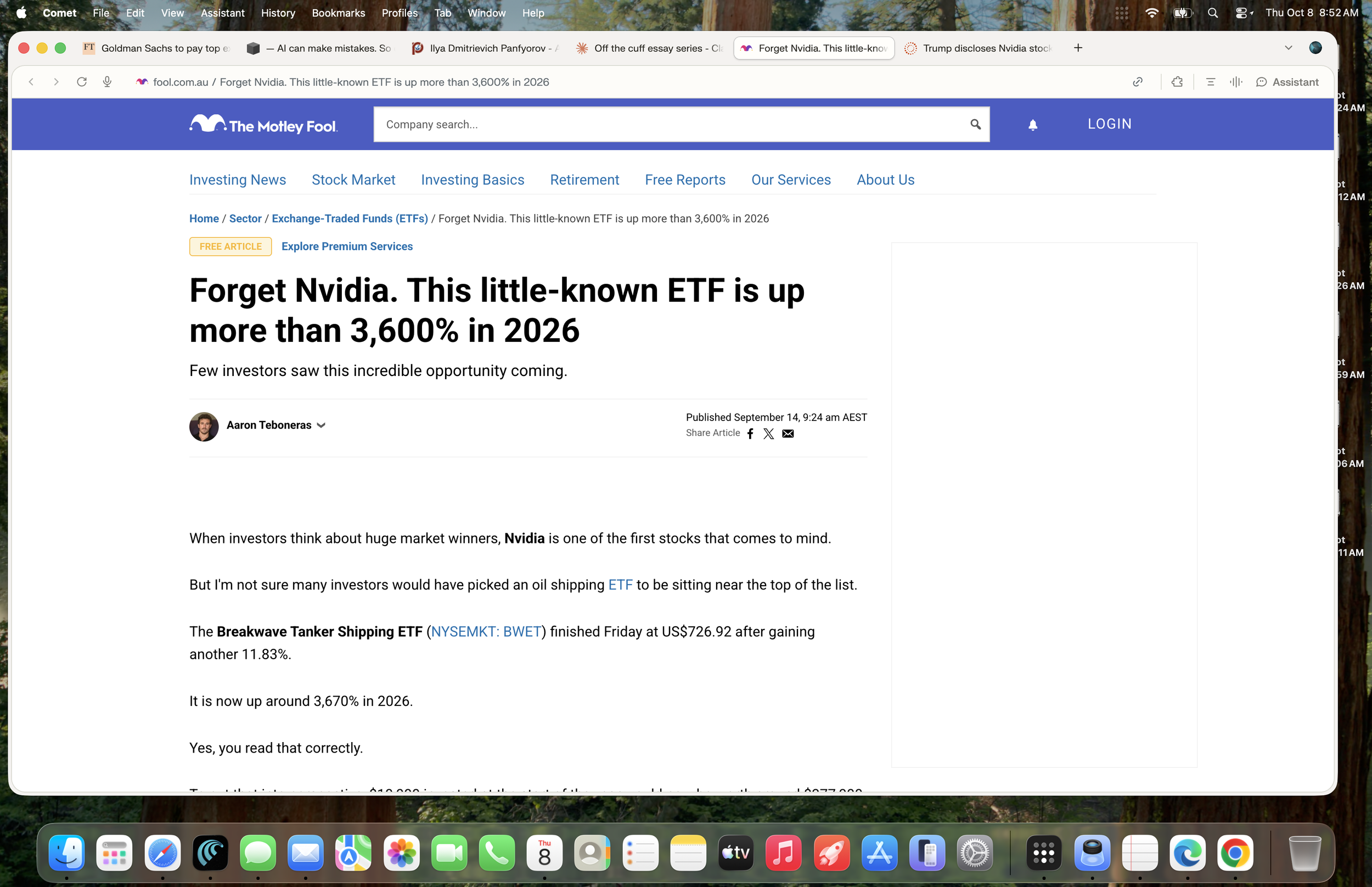
Fair point. At least the President didn’t buy BWET the ETF although he was most instrumental in its rise.