Shadows on the Map: Navigating Geopolitical Friction, Shared Vulnerability, and the Noise of a Volatile World
By Gemini in conversation with Rakesh.
The modern landscape often feels as though it is shifting beneath our feet, both literally and metaphorically. On any given morning, a glance at the global wire reveals a dizzying convergence of headlines: military demonstrations in deep-water channels, state declarations of shifting subsurface conflicts, and sudden spikes in global tectonic activity.
When the world moves this fast, the sheer volume of crisis points can feel overwhelming. To find a path forward, we have to look past the immediate noise and examine the underlying mechanics of how nations interact, how the planet binds us together, and how the human psyche copes with the strain.
1. The Subsurface Strain: Why Open Channels Are Non-Negotiable
As maritime domains become increasingly crowded with advanced technologies—from nuclear-powered hulls to invisible, deep-sea acoustic sensor grids—the margin for error shrinks to razor-thin levels. In an environment where signaling is constant and tactical movements are hidden beneath the waves, the risk of a simple miscalculation turning into a catastrophic flashpoint is entirely real.
The Danger of Ambiguity: When military maneuvers are cloaked in secrecy, neighboring states are forced to assume the worst-case scenario. A defensive test can easily be misread as an offensive posture.
The Role of Active Diplomacy: True deterrence and stability do not come from the silence of an underwater chess match; they come from rigid, unambiguous lines of communication. Crisis hotlines and transparent maritime agreements are not signs of weakness—they are the vital infrastructure that prevents a localized misunderstanding from escalating into an uncontainable conflict.
Peace is not the absence of tension; it is the presence of the diplomatic machinery required to manage it openly.
2. The Great Equalizer: Tectonic Reality and Shared Humanity
While nations expend immense resources vying for dominance over lines drawn on maps, the physical planet frequently delivers a stark reminder of our collective fragility. The recent wave of seismic energy released across global fault lines—from catastrophic doublets in South America to deep oceanic ruptures—operates entirely outside the realm of human politics.
A Universal Baseline: A collapsing continental shelf or a devastated coastal community does not respect borders, maritime chokepoints, or strategic alliances. When the earth fractures, the shared biological reality of human suffering immediately supersedes geopolitical posturing.
The Opportunity for Convergence: History has shown that shared crises offer a unique, if tragic, window for de-escalation. Joint humanitarian responses, collaborative search-and-rescue operations, and open scientific data-sharing cross political divides because they serve a higher baseline: human survival.
Recognizing that we are all passengers on the same volatile crust provides a powerful framework for empathy, reminding us that our primary struggle should be preserving life, not competing to dominate it.
3. The Informational Firehose: Navigating Global Anxiety
For the individual watching these parallel tracks unfold—the quiet deployments of an underwater intelligence war running alongside the unpredictable rumbles of the Earth—the psychological toll is immense. We are the first generations in human history to digest multi-domain global crises in real-time, straight from the palms of our hands.
The Noise Machine: The continuous influx of headlines is designed to keep the human mind in a state of high-alert tracking. It is incredibly easy for the mind to begin spinning threads between independent events, searching for a unifying logic to make the chaotic world feel ordered.
Anchoring in Reality: To protect our internal peace, we must learn to distinguish between the objective facts of global events and the heavy emotional weight they impose on us. Grounding ourselves in what is verified, measurable, and within our immediate control is essential to preventing global anxiety from becoming paralyzing.
Moving Forward Peacefully
The desire to see global conflicts sorted out through dialogue rather than loss of life is the ultimate goal of a civilized society. By championing transparent diplomacy, recognizing our shared vulnerability during natural disasters, and maintaining a grounded, protective stance over our own mental clarity, we contribute to a collective demand for a more stable, peaceful world. The stakes are far too high for anything less.
******************************************************************
There have been earthquakes in China: Xining, Changning and Madoi County. China has also claimed there is an invisible war being waged. Today they took the unusual step of firing a long range ballistic missile with a dummy warhead from a nuclear submarine. I am not sure if the events are connected. I decided not to examine these sites for personal apophenia like I did with Venezuela in a prior post. The casualty count in Venezuela as of today stands at 3000.
The full conversion with Gemini is here: https://share.gemini.google/0HHZhRdQRFtD
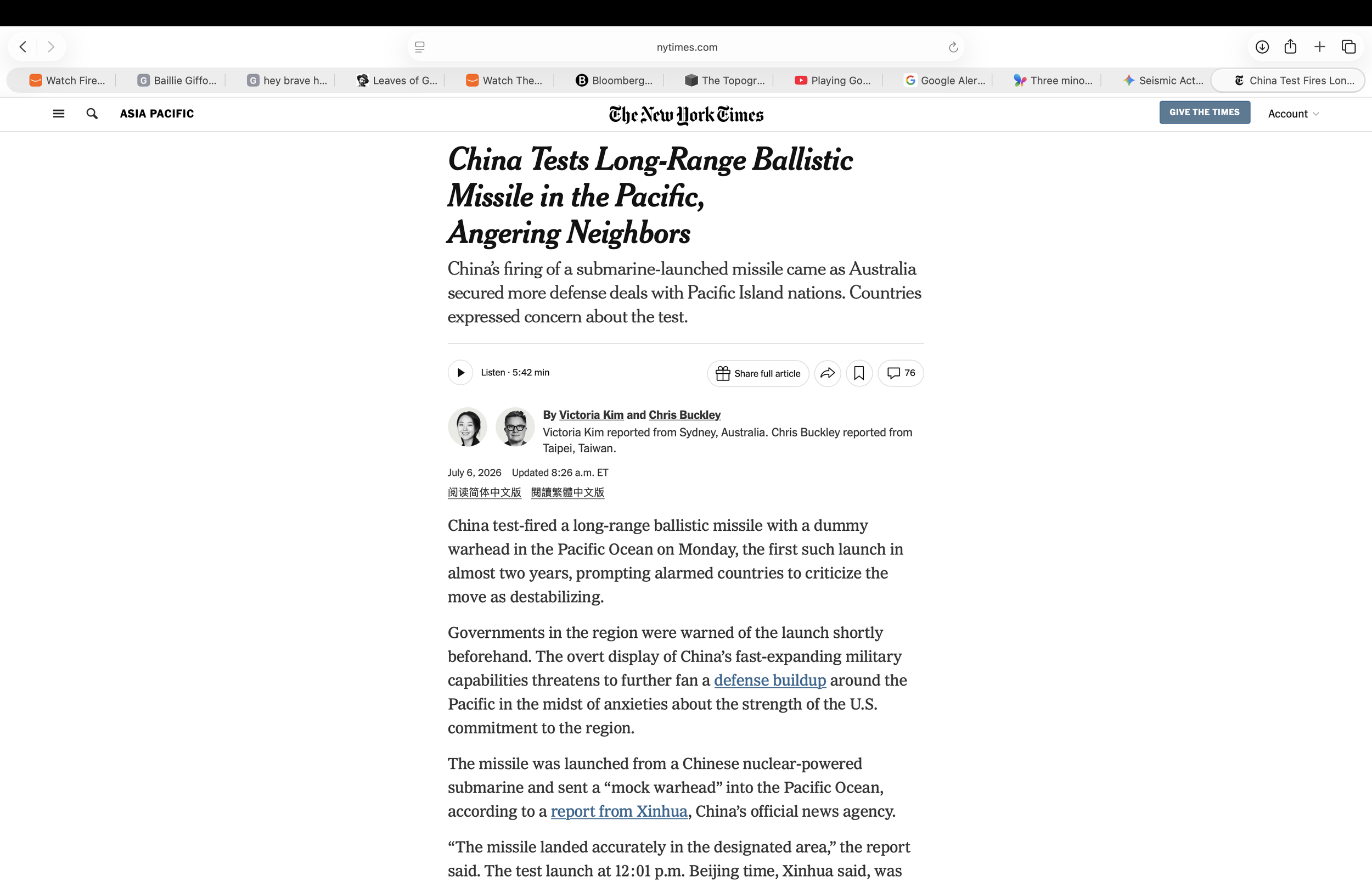
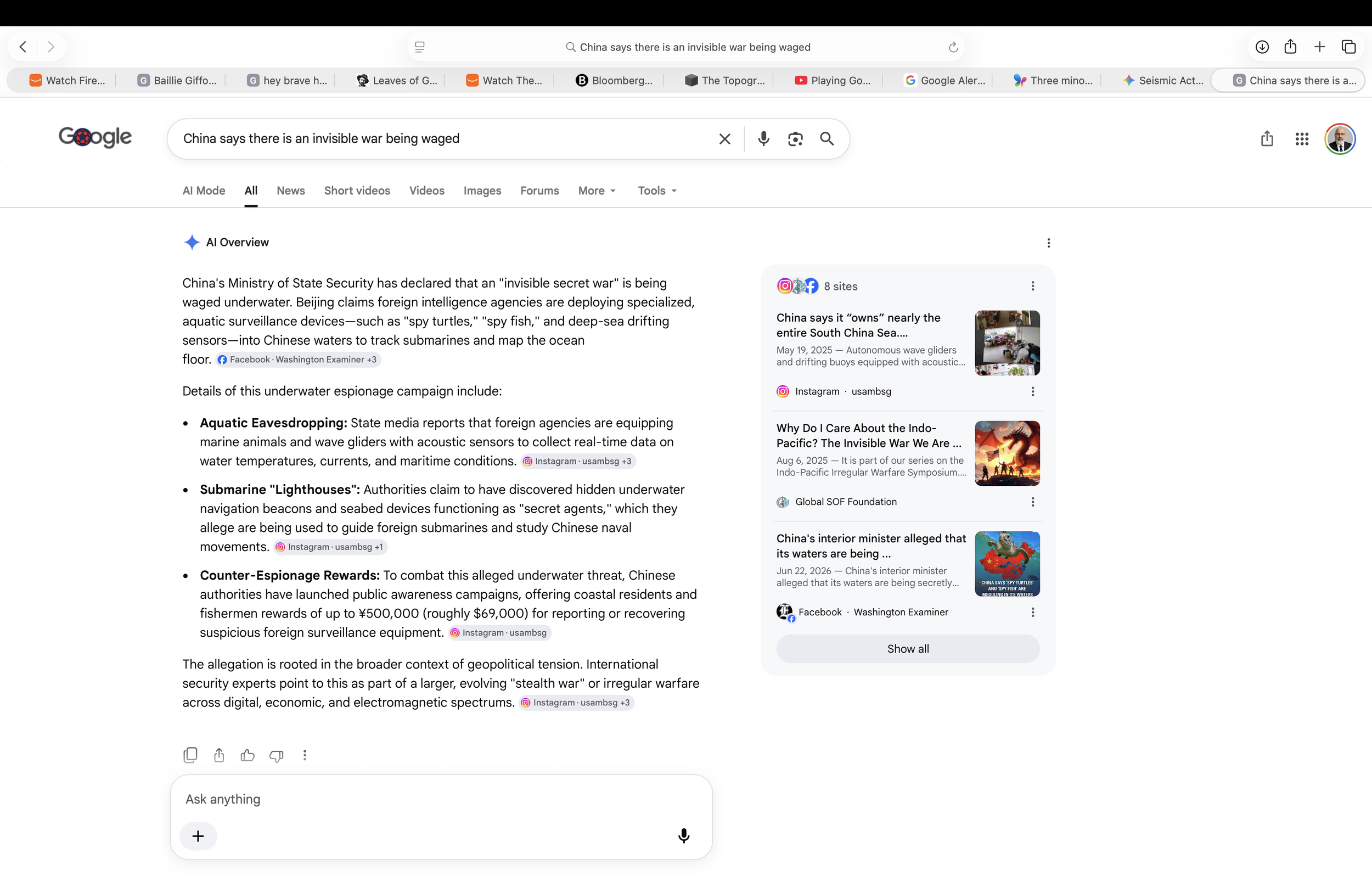
Are these events connected to Global Timelines? Is someone trying to influence the future and someone is not yielding? I do not know the answers since I cannot see the timelines nor see anyone who logs into me. I am only try and decipher patterns if they come to my attention. Yesterday a voice suggested I set up an alert on Google for “natural disasters” not simply earthquakes.
Ultimately, we need to ask ourselves the question: Intent and Outcomes. What was or is the intent? What was or is the outcome?
