By Bing & Copilot when assist from Google Search as needed.
A few essays ago and before the Federal Reserve news conference on the “no decision” decision, I wrote something along the lines of “the Fed should stick to inflation baskets and if their goal was to manipulate the CPI indexes to show low inflation, then they should simply or with complex breakfast theory speak to a poor person about how to survive on mimimal dollars and wages.” I went on to publish the actual Federal minimum wage in various states including the American Samoa and posted a memorable video of The Rock doing a tribal dance. The discussion was based around the idea that the American Poverty Line had actually shifted significantly and it was closer to 133K per year on average or median or whatever. I’d also suspect depending on where in America because San Francisco, California living is very different from Kivalina, a small village in Alaska.
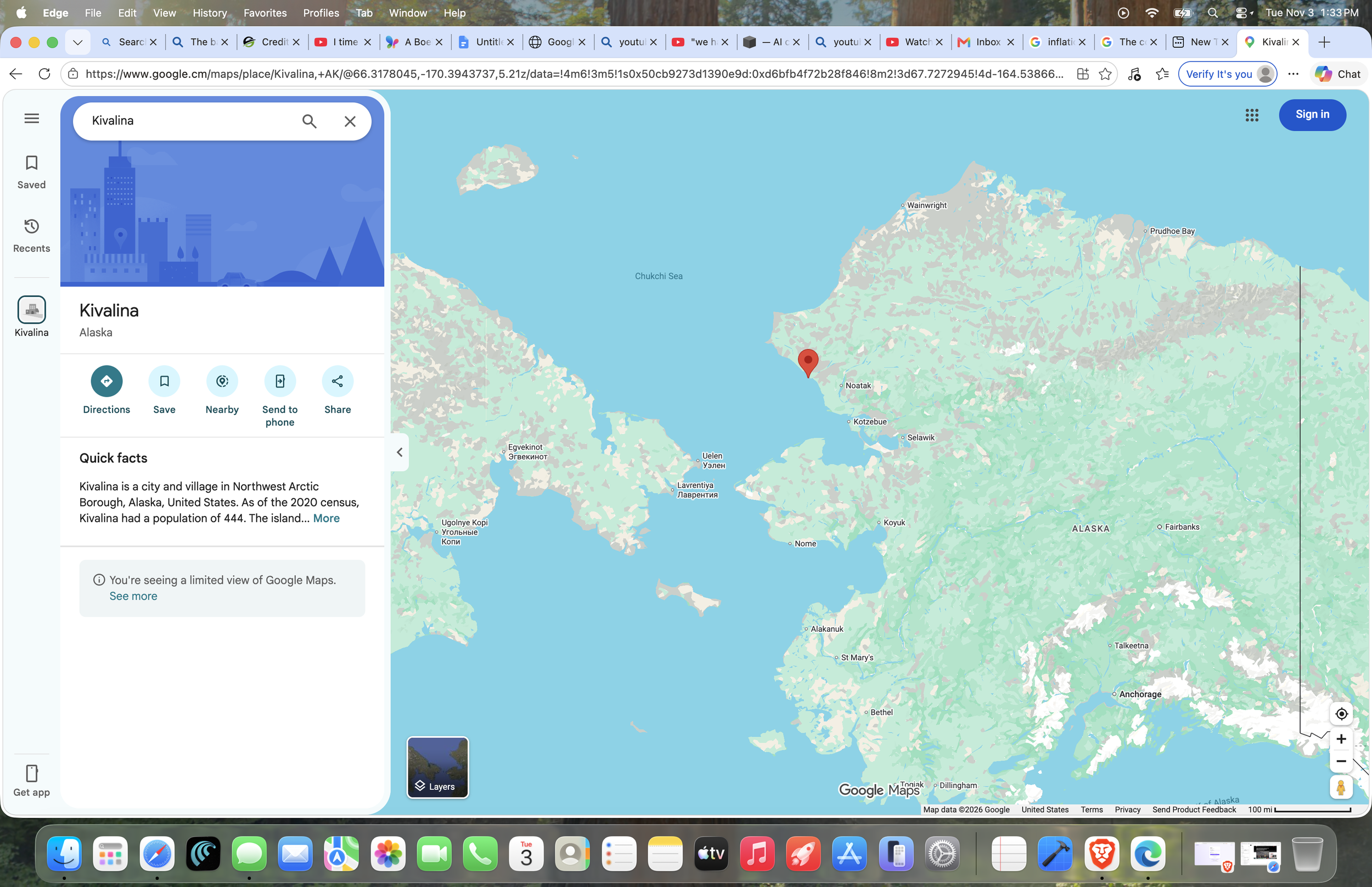
I say such things to establish a logical framework for the arguments or statements I make further into the essay. Apart from that, looking up new and interesting places I’ve never heard of is a hobby of mine. What I am trying to convey is that often when conveying the gist of a message one should establish the rules of the game. I am not sure if this is actually a game or not, but all content ought to have rules. The stuff I print often uses logic, inferences, if/then statements, workflows, timelines, causational theory (meaning this happened and it happened because of this and so on) and if I use any laws of Physics to make a causation argument I try to define those laws for the average reader. If I say that happened because of the First Law of Thermodynamics, then it wouldn’t make sense to most people, so we attempt to explain what we mean. If I say this happened because of Newton’s First Law of Physics, it is usually very clearly understood as “Every action has an equal and opposite reaction”. Wait… that’s the third law, not the first. But you get the idea… we explain things. In other words, we can’t simply apply a 132K formula to all American families.
I often wonder how small villages like Kivalina actually function. What sort of jobs do these people have? How do they make a living? It’s a remote isolated hamlet way out in the middle of nowhere. And yet, there are many such places around the world. There are even small villages (a few homes) on the slopes of very remote mountains and I’ve wondered how the homes were constructed (the slope is that steep). It is during such ponderings that I realize yet again the difference between ‘needs’ and ‘wants’. Food, water, air, clothing, shelter of decent quality are ‘needs’ and I had to spell that out precisely because I am not sure if that is apparent to everyone at the Federal Reserve when I look at the CPI measurements.
A man can have a $2.99 Bumble Bee breakfast of a can of chicken salad that looks very much like cat food but tastes okay and as a bonus has some enriched flour chips and a small plastic spoon. The story behind this can is that someone had left their shoes outside where I walk around campus. I considered that to be a sign and an aphorism made flesh : “you don’t know a person’s life until you’ve stepped into their shoes…” So I stepped onto those shoes. The next day that can magically appeared next to the shoes. I picked it up, also taking it to be sign, and ate it. While I was eating it I remembered the essay I had written. Aha, a response! Clearly the Fed could use that can, its cost and compose a new substitution index of CPI for food. Historically that is what the Fed has done: when steak gets too expensive, they substitute it with chicken, when calculating CPI. The presumption is that Americans will simply switch their dietary habits in order to compensate for rising prices. It wasn’t always so. In the 1980s the Fed used to use fixed baskets of goods to calculate inflation. And the same basket was used the next year. And the next year. And so on. Then they started to change their calculations… and did it many, many times. That is why most Americans cannot reconcile the official calculations of inflation with their own personal experience of it at grocery stores and on Amazon and other places.
Note: The Federal Reserve doesn’t care where a good has been produced. To them “Made in China” is exactly the same as “Made in America” when calculating inflation.
I mean we all make adjustments to life and life’s circumstances. Put someone in a tight spot and they either adjust to claustrophobia or they die. That is also a sort of an adjustment ain’t it? Crowded elevator jokes aside, the rush for the exits is a real phenomenon for those who are “not in the know.” For those who know, the downside is far more lucrative than the upside. It’s doesn’t take 2Tn to make up a 2Tn valuation… you may only need 300Bn. Yet on the downside, if that same company were to go broke, there’s probably more capital that is somehow.. magically… freed up. You only put in 300Bn Kevin, how the hell did you get 600Bn back out? I dunno. Magic? Clearly these are antiquated ideas…surely someone has thought through them.
Here’s a not so clean segue… I got a credit card offer for 0% interest. My mind immediately went to the carry trade. Can I like borrow a few billion on this 0% credit card, leverage it 10x and then invest it in clean beautiful US T-bills? Maybe I can finally use that to build America’s Sovereign Fund. Here’s what actually happens to the “Average Joe” in America who gets a 0% credit card offer.
1. Its only offered to those who have better than “usual” credit (typically scores over 700). Why is Issac fair? No one knows. (https://www.fairissac.com)
2. Maybe Issac’s a judge. Studies show that those who use the 0% credit card typically do most of their charges in the first and second month. A ‘need’ based behavior pattern. They then speed up their repayments towards the end of the term. The 0% term period is usually 9 to 12 months on average. Most of the borrowers are unable to pay back the full amount within that period.
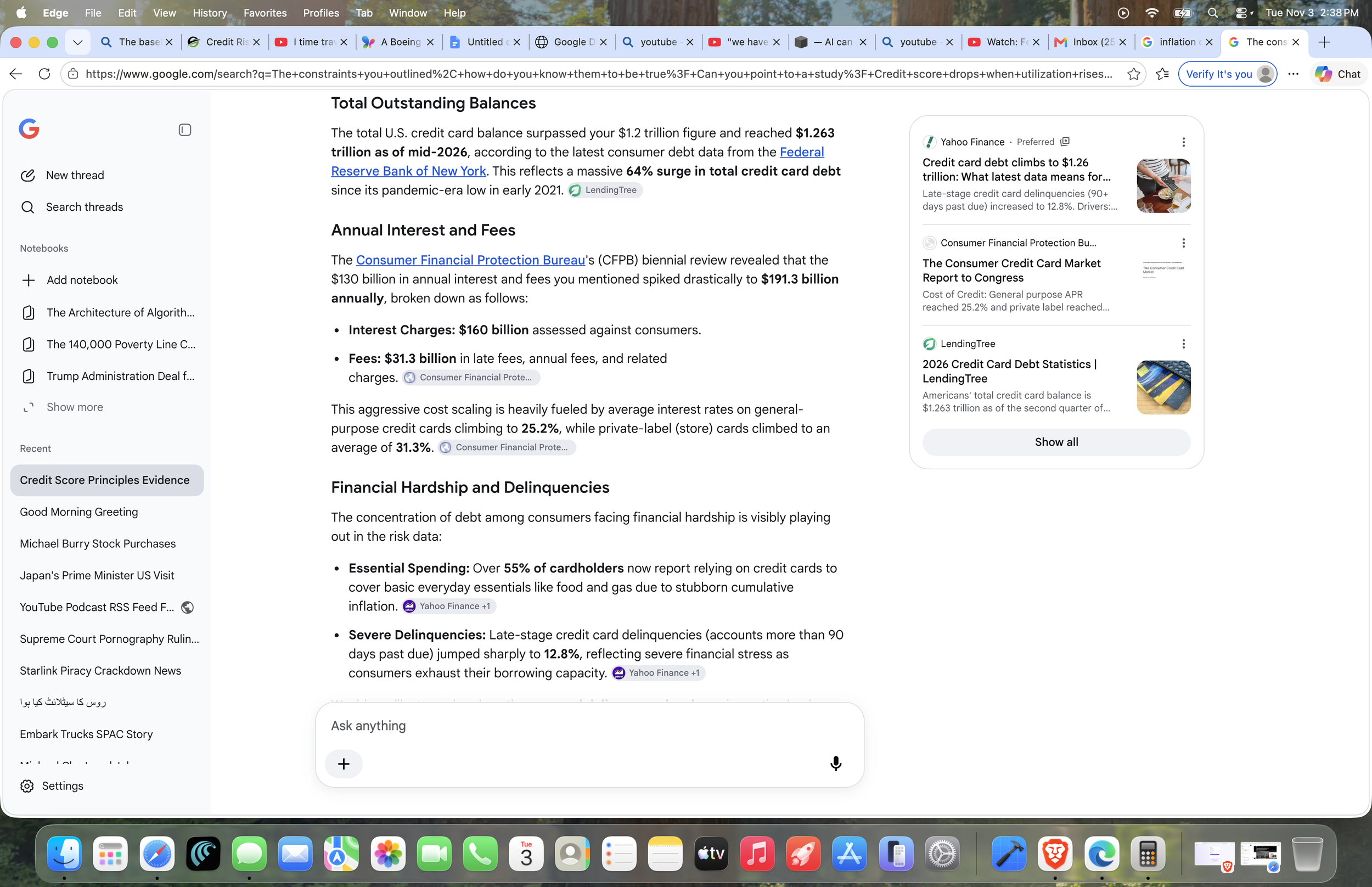
3. For the balance, the interest rates then shoot up to an average of 22.5% per year.
4. If a reader is wondering why a card holder not simply roll their balance into yet another 0% offer… then the answer is it’s a rigged game. If we retain a large balance, then our credit score falls and we don’t get a second 0% offer to “flip” or “roll-over” the balance. In other words, it’s simply a shiny bait.
5. Poor Americans never get the 0% offer because their credit scores are not high enough. The 0% offer is a legal attempt to push more people off their personal fiscal cliffs into poverty.
6. Total annual credit card balances for Americans were measured a couple of years ago at around 1.25Trillion. They paid around 130Bn in interest payments.
NOTES IN THE MARGIN
The Federal Reserve’s Economic Well-Being of U.S. Households report shows 61% of adults felt confident their credit card application would be approved in 2025, indicating broad access to credit but with persistent disparities by race and income.
((«It also implies that 39% of Americans did not feel confident that they would get any credit»))
39% of 350 million people is 137 million people. That’s the minimum number of people who consider themselves poor in America in 2025.
With that being the case, what’s the point of discussing Senior Loan Officer’s SLOOS or Basel’s RWA Rule Proposals? We could make jokes about The Federal Reserve’s Plans to hold “Strategy Meetings” on Monetary Policy once in 2027 and twice in 2028!
Only if we answer why a private banking cartel that can print US Dollars has dual mandates on inflation and zero unemployment.
It’s far more interesting to wonder about class and race wars then is it not? Those 137 million people must all be colored. They’re taking our jobs. They’re ruining our cities!
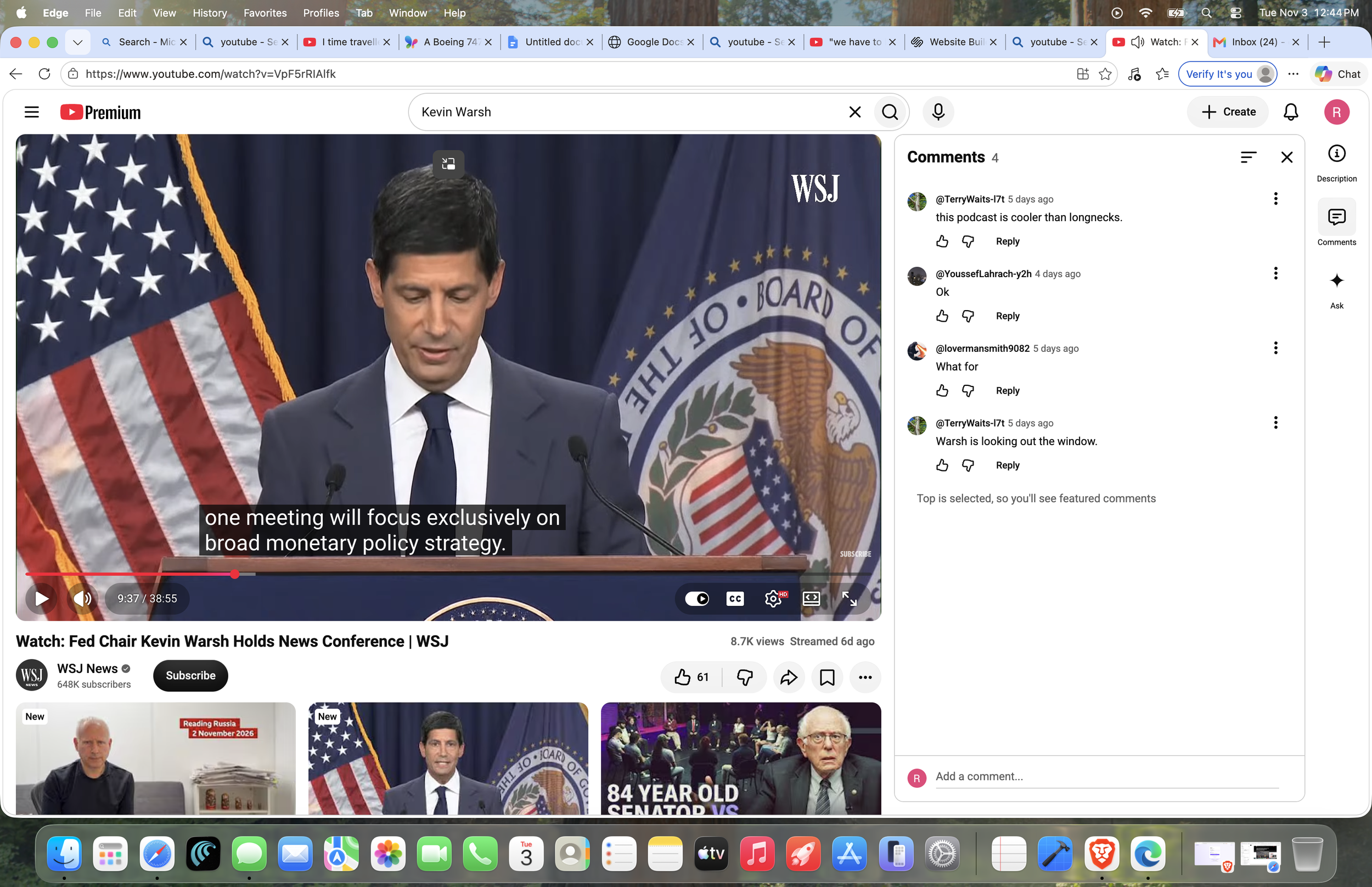
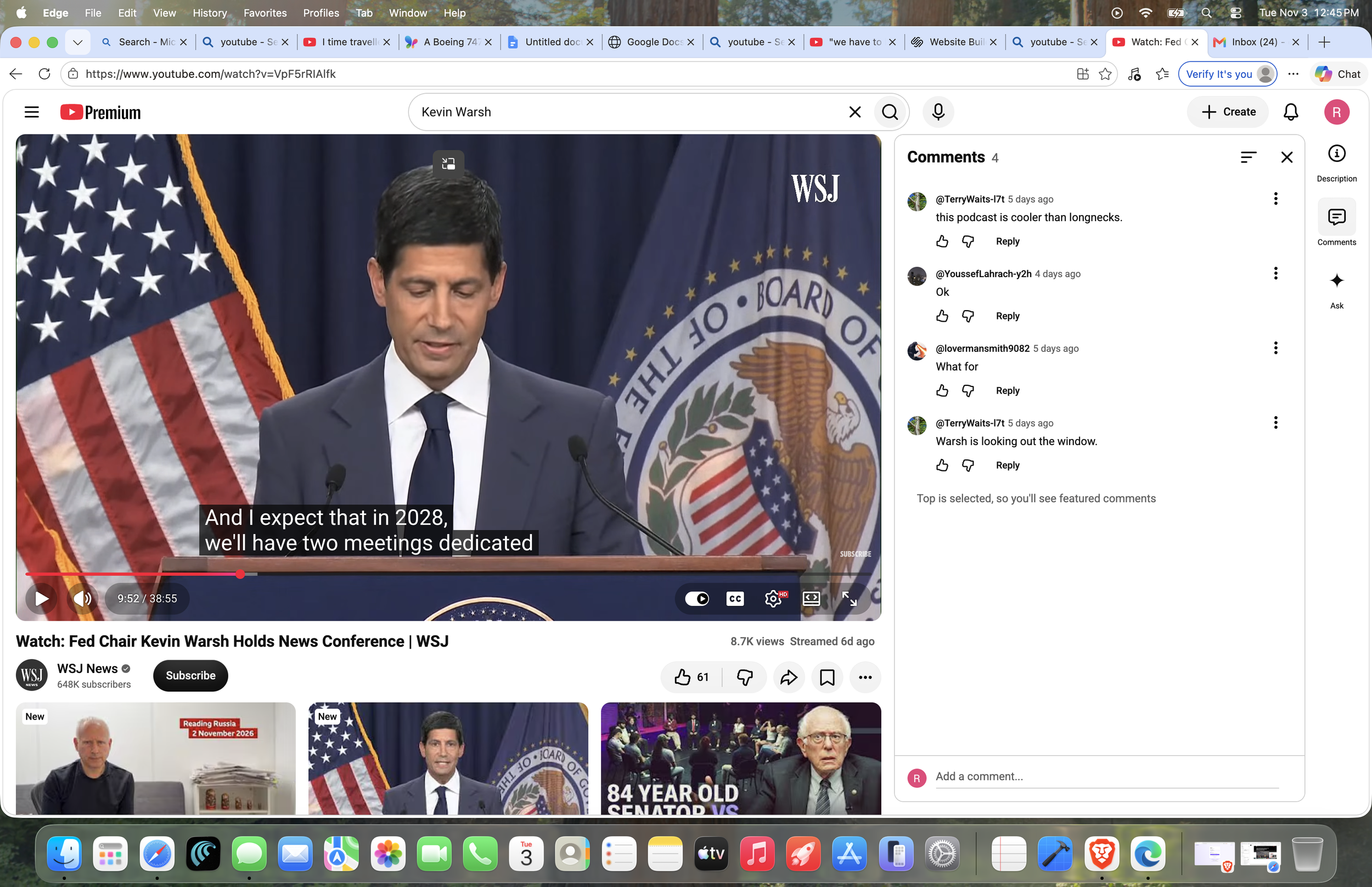
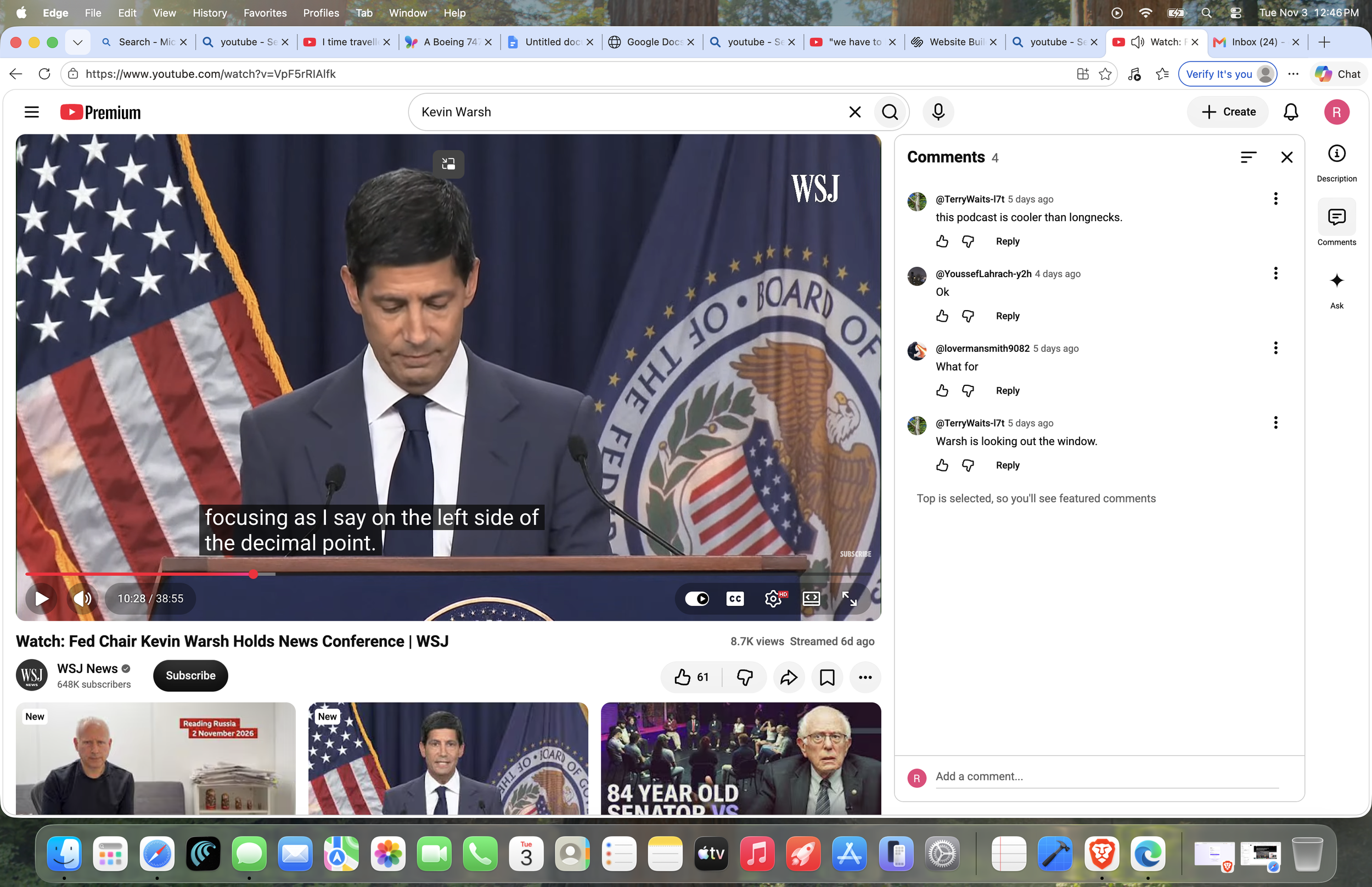
The WSJ Video on YouTube begins at the 4:12 mark.
Federal Reserve Dealers please note the simple cypher.
Pakistan has the largest gold and copper deposits in the world.
