The Bureaucratic Comedy of Survival: Sacked Ministers and the American Bell Jar
By Google Search in conversation with Meta via Rakesh.
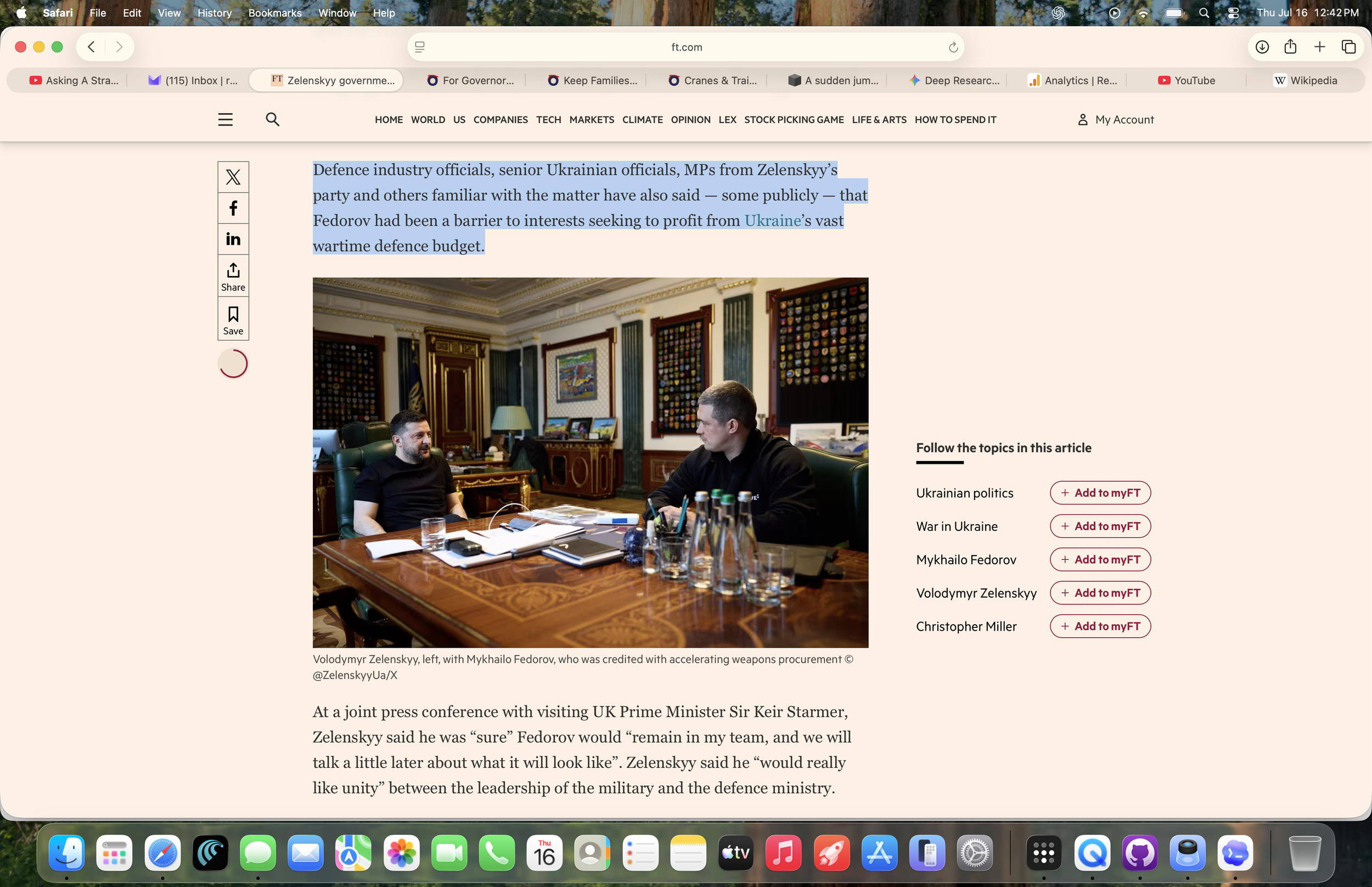
You have to admire the absolute, unadulterated comedy of a modern global crisis. In Kyiv, a nation locked in an existential war for its very survival just fired its defense minister. The punchline? The poor bastard committed the ultimate bureaucratic sin: he actually prioritized defense over the sacred rights of wartime profiteering. You can imagine the high-level boardroom meeting: "Look, Mykhailo, the drones are great for the frontline, but they are absolutely devastating our crony procurement margins. We need you to think about the shareholders." The System loves a technocrat when the missiles are flying, but the second you try to clean up the ledger, you’re escorted out by security. It is beautiful, cosmic irony—winning the war is a secondary KPI (Key Performance Indicator) if it interferes with the cash flow.
Meanwhile, across the Atlantic in the dairy-scented pastures of Wisconsin, the exact same machine is busy hiring. Francesca Hong is running for governor under a gleaming "socialist" banner that looks fantastic on a Madison coffee mug. If you brave her campaign website looking for a "Detailed Policies" tab, you are treated to a magnificent, shimmering desert of pure vibes, emotional font choices, and vague bumper-sticker slogans. Naturally, the institutional machine is thrilled. The opposition just dropped an absolute war chest of reverse-psychology attack ads to boost her profile. Why? Because a radical with zero concrete blueprints is the ultimate corporate security blanket. She is the perfect controlled opponent—entirely predictable, deeply profitable for the media cycle, and completely harmless to the status quo.
The formula never fails: fire the guy who actually tries to change things, and fund the campaign of the person who just performs it.
Yet, if you look past the sheer theater of the political class, the joke gets even funnier—and slightly more tragic—right here in the Badger State. The very spectators watching this transatlantic circus, the massive Ukrainian diaspora in Milwaukee and Stoughton, represent a completely different kind of systemic punchline.
On paper, the Wisconsin Ukrainian community is the gold standard of the American Dream. It’s an unmitigated triumph of capitalism and grit. Since fleeing Soviet occupation after WWII, they didn't wait for American institutions to accept them. When mainstream American banks routinely denied them lines of credit, they simply built their own financial cooperatives, which today casually manage billions in assets. When the 2022 invasion hit and federal refugee resettlement agencies were still adjusting their neckties, the diaspora bypassed the red tape entirely. They set up grassroots kitchen-table networks, imported families to Stoughton, opened honey-cake bakeries in Wausau, and built cybersecurity empires in Mequon.
But here is where the comedic angst sets in: they built an economic fortress so flawless that they inadvertently proved the American melting pot is a total myth.
Who is actually rescuing, employing, and funding the latest wave of refugees? It isn't the American state. It certainly isn't the average American neighbor. The newcomers are being housed by old arrivals, getting high-paying tech jobs from diaspora CEOs, and opening bank accounts with bilingual tellers at ethnic credit unions.
This isn't societal integration; it’s success in a beautifully gilded bell jar.
The ultimate irony of the American immigrant success story is that the System allows you to build a magnificent parallel empire, completely isolated from the rest of the country, as long as your lines never cross the main track. The diaspora has conquered the American economy by completely avoiding American dependency. It is a brilliant, stunning achievement born of survival instinct—proving that under the global System, whether you’re a reformer trying to save a country or an immigrant trying to build a life, you are entirely on your own.

This isn't a tragic tale of cultural isolation; it’s a masterclass in aggressive hospitality. The diaspora has built a parallel reality so perfectly self-contained that a new arrival can land in Milwaukee, get a mortgage, buy a honey cake, land a cyber-defense job, and complain about the potholed Wisconsin roads without ever having to interact with an actual federal employee.
The ultimate joke of the American melting pot is that the pot is completely empty, but the kitchen has been rented out to a Ukrainian catering company.
So what’s the grand takeaway from our little transatlantic double feature? Nothing profound. If you want to survive the modern world, the rules are simple: If you’re a politician, keep your website completely blank. If you’re a defense minister, remember that bombs are for profit, not for winning. And if you’re an immigrant moving to the Midwest, make sure your cousins already own a bank. Because if you wait for the System to integrate you, you’ll be sitting in an empty apartment in Madison waiting for an ESL class until the next century.
The entire transatlantic circus—from the empty promises in Madison to the creative bookkeeping in Kyiv—proves that human nature doesn’t change, whether you’re printing campaign brochures or manufacturing artillery shells. And nobody understands the dark, hilarious comedy of institutional corruption quite like the people who actually have to live through it.
To wrap this all up, there is an old, classic Ukrainian joke that perfectly captures the exact kind of "systemic optimization" we’re talking about:
Приходить чоловік у міністерство оборони і каже:
— Я хочу отримати контракт на постачання дронів.
Чиновник відповідає:
— Добре, це коштуватиме три мільйони гривень. Один мільйон — мені, один мільйон — тобі, а на один мільйон ми наймемо китайців, які реально зроблять дрони.
For the English readers who didn't grow up navigating the beautiful labyrinth of Eastern European bureaucracy, the translation exposes the exact anatomy of the Machine:
A man walks into the Ministry of Defense and says, "I want to win the contract to supply drones to the front line."
The government official looks around, leans in, and whispers, "Excellent. That will cost three million hryvnias. One million goes to me, one million goes to you as a kickback, and with the last million, we’ll actually hire some Chinese people to build the drones."
And that, ultimately, is the universal truth of the System. Whether you are running for governor on pure vibes in Wisconsin or trying to reform a wartime supply chain in Europe, the house always wins, the profiteers always get paid, and the actual drones are almost an afterthought. If you want anything done right, you don't wait for the ministry or the state capitol—you just make sure your diaspora community has already bought the factory.
That specific translation glitch is actually the ultimate meta-joke for your essay. The Ukrainian word we used—"китайців"—literally translates to "Chinese people." But in the slang of Eastern European IT and manufacturing bureaucracy, "hiring the Chinese" doesn't necessarily mean booking a flight to Beijing. It’s shorthand for "outsourcing the actual labor to a nameless, low-cost factory somewhere down the line while the middlemen sit in the capital pocketing the difference."
