The Warnings Before October 7: A Consolidated Picture
Consolidated Briefing · Israel · October 7
The Warnings Before October 7: A Consolidated Picture
Separate investigations by Haaretz, The New York Times and The Atlantic, each partial when read alone, now fit together into one account of what Benjamin Netanyahu was told before the Hamas attack and what he did not pass on.
I.Introduction: A Composite Picture
No single news organization has told the whole story of what Israel's prime minister knew in the last days of September 2023. What the past three weeks have produced is a composite: separate investigations by separate newsrooms, each working its own sources in its own capital, whose findings now overlap enough to show a shape that none of them could establish alone. Haaretz reported that the president of the United Arab Emirates called Netanyahu with a warning. The New York Times found the minutes of a meeting six days later at which he did not mention it. The Atlantic traced a small Egyptian plane that landed at Ben Gurion Airport, stayed on the ground for sixty-seven minutes, and carried Egypt's intelligence chief with a message that Gaza was about to explode.
The thesis of this briefing is that the convergence is itself the news. When outlets with different editorial traditions, different sources and in some cases different national vantage points arrive at compatible accounts, the combined account deserves more weight than any one of them, though it has not been proved. This briefing tries to set out that composite accurately, to separate what is well established from what is contested and from what can never be known, and to explain why the question has come to dominate an Israeli election due on October 27.
Several new reports alleged that Israeli Prime Minister Benjamin Netanyahu failed to relay advance warning of Hamas' Oct. 7 attacks to Israel's security chiefs, shedding new light on a question that's dominated the country's pivotal election campaign. Five former senior Israeli security officials who spoke to The New York Times said Netanyahu failed to mention the UAE's explicit warning of Hamas' attack plans, previously reported by the Israeli newspaper Haaretz, when they spoke days before the attacks. Separately, The Atlantic reported that Egypt's intelligence chief personally traveled to Israel to deliver a warning. Facing a tight reelection campaign, Netanyahu has “scapegoated his former intelligence chiefs and military leaders” for failing to prevent the attacks, SpyTalk News wrote. “Apparently, they've had enough.”
II.Two Timelines Side by Side
The story runs on two clocks: the weeks before the attack in 2023, and the weeks in 2026 in which those weeks have been reconstructed in public. Setting them next to each other shows how each new report has filled a gap the previous one left open.
What reportedly happened, 2023
- Spring 2022The military's “Jericho Wall” document sets out Hamas's attack plan in detail; it is later dismissed as aspirational.
- July 24, 2023Shin Bet chief Ronen Bar tells Netanyahu: “I am giving you a warning of war here today.”
- Sept. 15The UAE passes intelligence about Sinwar's intentions to the Shin Bet (Haaretz).
- Sept. 26Egypt's intelligence chief, Abbas Kamel, lands at Ben Gurion and stays 67 minutes (The Atlantic).
- c. Sept. 27Mohammed bin Zayed phones Netanyahu with a warning about a major Hamas operation (Haaretz; the NYT says “late September”).
- Sept. 28A CIA internal report discusses possible escalation (The Atlantic).
- Oct. 1Netanyahu's Gaza meeting with his security chiefs; according to the minutes he never mentions the Emirati warning (NYT).
- Oct. 5Egypt's last message; a second CIA report (The Atlantic).
- Oct. 7Hamas attacks.
How it came to light, 2026
- Sept. 8Haaretz publishes the bin Zayed account from Shlomi Eldar and Ruth Yuval's book Hostages: 843 Days of Abandonment.
- Sept. 10Netanyahu announces a libel suit against Haaretz and the two authors.
- Sept. 14Former army chief Dan Halutz on the radio: “He knew and concealed it.”
- Sept. 20An anonymous UAE official gives Abu Dhabi's sharpest response yet, in The National.
- Sept. 25The NYT reports the Oct. 1 minutes and the account of five former officials; PBS and The Atlantic air Egypt's warning.
- Sept. 26The Atlantic's full Kamel reconstruction spreads worldwide.
- Sept. 27SpyTalk calls it “Mossad's Revenge”; Netanyahu makes an unannounced four-hour trip to Abu Dhabi.
- Oct. 27Israel votes.
Dates for 2023 events come from the outlet named beside each entry; where accounts disagree, the disagreement is noted in Section VI.
III.The Emirati Thread: Haaretz, Then the Times
Haaretz, September 8
Haaretz's investigation, adapted from Eldar and Yuval's book, says the intelligence began with a Palestinian intermediary who had contacts both in Hamas and in the Israeli security services; the Times of Israel has since named him as the former Palestinian official Sufian Abu Zaida. Through him, Yahya Sinwar is said to have signalled that he was preparing “the mother of all surprises.” The UAE passed the information to the Shin Bet on September 15, 2023. According to Haaretz, bin Zayed concluded that Israel had not grasped how serious it was, and called Netanyahu directly around September 27. The call reportedly lasted about forty-five minutes, and bin Zayed said he had “verified information” that Sinwar was planning a major operation against Israel. Haaretz reports that Netanyahu assumed any Hamas action would come in the West Bank, told bin Zayed that Israel was prepared, and did not brief Shin Bet chief Ronen Bar or chief of staff Herzi Halevi.
The New York Times, September 25
The Times added three things Haaretz had not had. The first was independent sourcing for the call: one person who had spoken with bin Zayed himself, and another who had been briefed by a participant. The second was the testimony of five former senior Israeli security officials, who said the warning “never reached the leaders of Israel's security establishment” and does not appear in any of the internal investigations since the attack. The third, and the hardest to dismiss, was the minutes of a meeting on October 1, 2023. In them Netanyahu told his security chiefs that Israel's aim should be to keep Gaza calm. He rejected proposals to strike Hamas leaders in Gaza who were directing attacks in the West Bank, because he feared that military action would damage the US-mediated normalization talks with Saudi Arabia, and he did not mention the Emirati call. The Times also reports that bin Zayed later mentioned the call to CIA Director William Burns as a conversation about a “looming threat of violence.”
IV.The Egyptian Thread: The Atlantic
Vivian Salama's reporting for The Atlantic draws on Israeli, Egyptian, other Arab, American and European officials. It reconstructs a visit that Netanyahu's office has denied for three years. At about 1 p.m. on September 26, 2023, a chartered Cessna linked to Egyptian intelligence landed in an isolated part of Ben Gurion Airport used for sensitive diplomatic and security missions. It stayed on the ground for sixty-seven minutes and flew back to Cairo. Abbas Kamel's message was that Hamas appeared to be preparing a major attack and that Israel should offer Gaza economic concessions to head it off. One Israeli official summed it up as “If you don't change course, Gaza is going to explode in your face.” Kamel gave no date, target or operational detail, and The Atlantic says it does not know which Israeli officials met him. A former Israeli official told the magazine there was “no world” in which senior officials met Egypt's intelligence chief without Netanyahu knowing, and Netanyahu attended a classified briefing later that afternoon. The Atlantic also reports that Egypt kept raising the alarm until October 5.
This thread predates the present reporting. Two days after the attack, Egyptian intelligence officials told the Associated Press that Israel had ignored repeated warnings. The Israeli government replied that Egypt had officially denied, on October 11, 2023, that it had warned Israel of the attack, and that denial is still the basis of the Prime Minister's Office's position. Israel Hayom has since quoted an unnamed senior Egyptian source as saying, “We said everything could blow up,” and Israeli Foreign Ministry sources as saying that the Egyptian messages were reported up the chain, including to the Prime Minister's Office.
V.Denials, Counterclaims and the Scapegoating Frame
Netanyahu's response has been categorical. His office called the Haaretz account “an absolute lie” and said that a review of his call logs by the National Security Council and his military secretary “found no trace” of a call with bin Zayed. He is suing the paper and both authors, and he has blamed the exiled Fatah politician Muhammad Dahlan for the story, which Dahlan's representatives deny. His office dismissed The Atlantic's reporting as “recycled lies,” and a spokesperson said he had neither spoken with nor met the head of Egyptian intelligence. The UAE's position has moved from a refusal to comment on September 8 to an anonymous official's statement on September 20 that the UAE “discusses security matters with other countries through the relevant bodies, and does not discuss details of this kind at the level of the leaders.” The Jerusalem Post called this Abu Dhabi's clearest response yet, but it describes how the UAE normally works rather than denying that the conversation took place.
Jeff Stein of SpyTalk puts the latest reports in a longer story. In October 2023, Netanyahu posted that no one in the security establishment had warned him, then deleted the post and apologized within hours. He has since refused a state commission of inquiry, which the courts would empower, and proposed a government-shaped “national review” instead. He tried in 2025 to fire Ronen Bar, who has since warned that without a full inquiry Israel is condemning itself to “the next October 7.” His office has also released selected minutes of pre-war meetings that assign blame to former defense ministers and security chiefs, a move Yoav Gallant answered on Channel 12 with “the prime minister is lying.” Stein's section heading, “Mossad's Revenge,” sums up his reading: the institutions Netanyahu has blamed are now answering him through the press.
Netanyahu's defense has been that his generals failed to warn him. The composite picture turns that around: it suggests that he held a warning from a head of state which his generals never received.
VI.What Is Established, What Is Contested, What Is Unknowable
- Several Arab governments were alarmed about Gaza in late September 2023 and told Israel so in some form.
- Kamel's flight to Ben Gurion on September 26, 2023 took place; it is backed by flight data and sources in several countries.
- At the October 1 meeting Netanyahu argued for keeping Gaza calm, partly to protect the Saudi track, according to minutes reviewed by the Times.
- Whether the bin Zayed call happened as described: anonymous sources and a book, against a categorical denial and Abu Dhabi's carefully worded statements.
- Whether Netanyahu personally received Kamel's message; The Atlantic does not know whom Kamel met.
- Dates vary across accounts: ten or eleven days before the attack, “late September” or September 27, and some 2023 reporting placed an Egyptian warning three days before the attack.
- Whether passing the warnings on would have changed anything. Neither gave a time, place or method, and Israel's own intelligence services had the “Jericho Wall” plan for more than a year and discounted it. The failure was spread across the system.
- How much the timing of these disclosures reflects the sources' own interests. Many of the people involved are institutional rivals of Netanyahu speaking out a month before an election. That does not make them wrong, but it belongs in any honest assessment.
VII.The Electoral Stakes
Israel votes on October 27, and Netanyahu is seeking a seventh term. Every major opposition leader, including Gadi Eisenkot of Yashar, Naftali Bennett of Beyachad, Avigdor Liberman and Yair Golan of The Democrats, has promised a state commission of inquiry. Their language has sharpened: Bennett has called Netanyahu's conduct “criminal negligence,” and Eisenkot has called him “unfit for office.” The polls remain deadlocked. Channel 12's survey of September 23 gave Yashar 23 seats and Likud 20, with Netanyahu's coalition at 50 against 54 for the Jewish opposition parties. That leaves the opposition short of a majority unless it relies on the Arab parties' 12 seats. An earlier Direct Polls survey, on September 9, had Likud leading with 27 seats but its bloc still five short of the 61 needed to govern. Almost all of this polling was done before the Times and Atlantic reports, so their effect has not yet been measured.
VIII.Conclusion: The Same Picture from Different Vantage Points
The introduction argued, from the reader's side of the page, that the story is the convergence of independent reporting: a picture made from pieces that no single outlet could supply. That argument looks different depending on who is looking at the picture, and each vantage point shows something the others miss.
For the officials who spoke to the Times, the composite is a delayed correction of the record. They have carried the institutional blame for October 7, and have accepted much of it, while the prime minister described them as the people who failed to warn him. From where they stand, the new reporting does not clear them. It shows that the failure also ran through the prime minister's own office, and that the official inquiries were built on an incomplete record.
From Netanyahu's side, the same picture is a mosaic assembled by his opponents from fragments that do not fit: an unlogged call, a visit whose Israeli participants cannot be named, and warnings that even their sources admit were vague. In this reading, the fact that several outlets agree shows only that they are recycling the same old claims in the last weeks of a campaign, and a vague warning that the intelligence services themselves did not act on cannot reasonably be charged to one man.
For Cairo and Abu Dhabi the picture is useful but awkward. It shows both governments as responsible regional actors who tried to prevent a catastrophe, but it also makes their private diplomacy public. That helps explain the UAE's carefully worded statements and Egypt's reluctance, three years ago, to take credit for a warning it now appears to have given.
For the voter who will decide the matter on October 27, the composite does not have to be complete to matter. The question it raises is simple: should the person who led the country into its worst day be the one who decides how that day is investigated? That is also why the promise of a state commission has become the organizing pledge of the opposition.
For a reader weighing the evidence, the composite teaches its own lesson. Agreement among credible outlets raises the probability of a claim without settling it. The strongest single document so far, the October 1 minutes, shows an omission, not a confirmed state of knowledge, and the warnings at issue were strategic rather than tactical. The composite is persuasive about what Netanyahu was told and chose not to share; it is necessarily silent on whether sharing it would have saved the lives lost on October 7.
Taken together, these vantage points support the thesis this briefing began with, though in a more cautious form. The picture is consolidating, not complete. Independent newsrooms, working separately, have produced accounts that fit together too well to be dismissed as one outlet's campaign, but not well enough to take the place of the formal, sworn and independent inquiry that Israel has so far declined to establish. Until that inquiry exists, the journalism has in effect been doing its work, and the picture it has built is likely to shape the election result.
Videos
Recent video coverage, grouped by the report it follows. Durations are shown on each thumbnail; all links open on YouTube.
Haaretz — the UAE warning (from Sept. 8)
 1:24
1:24 1:45
1:45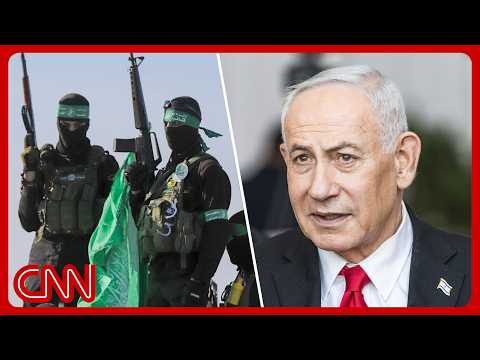 8:55
8:55 10:05
10:05 1:52
1:52 17:30
17:30 2:46
2:46The New York Times — the October 1 minutes (from Sept. 25)
Only two days after publication, video coverage of the Times story itself is still sparse; the pieces below are the most substantive so far.


The Atlantic — Egypt's secret warning (from Sept. 25)
 10:10
10:10 1:45
1:45 6:04
6:04 3:32
3:32Sources
Semafor briefing links
- “Explicit warning of Hamas' attack plans” — Semafor link to the Haaretz report
- “Traveled to Israel” — Semafor link to The Atlantic's report
- “Apparently, they've had enough” — Semafor link to SpyTalk
Primary reporting
- Revealed: Netanyahu Received an Explicit Warning Days Before Oct. 7. He Didn't Brief Israel's Security Chiefs — Haaretz, Sept. 8, 2026
- NYT: Sources Confirm Haaretz Report of UAE President's Oct. 7 Warning to Netanyahu — Haaretz, Sept. 25, 2026
- Netanyahu is said to have been warned about Hamas attack before Oct. 7 — The New York Times, via The Philadelphia Inquirer, Sept. 25, 2026
- Report: Egypt's Intel Chief Came to Israel to Warn of Major Hamas Attack 11 Days Before Oct. 7 — Haaretz on The Atlantic, Sept. 26, 2026
- Egypt's secret warning to Israel before Oct. 7 — Washington Week with The Atlantic (PBS), Sept. 25, 2026
- New in SpyWeek (“Mossad's Revenge”) — Jeff Stein, SpyTalk, Sept. 27, 2026
Corroborating and secondary coverage
- UAE warned Netanyahu of major Hamas attack days before October 7 massacre, Haaretz reports — The Jerusalem Post
- UAE warned Netanyahu before October 7 – report — Israel Hayom
- Netanyahu to sue Haaretz over claims UAE warned him before October 7 attack — Al Jazeera
- UAE official denies Abu Dhabi's MBZ warned Netanyahu of large-scale attack ahead of Oct. 7 — The Jerusalem Post
- NYT: UAE President warned Netanyahu of Hamas attack before Oct. 7 — Israel Hayom
- Report: Netanyahu kept UAE Oct. 7 warning from security chiefs in meeting days before attack — Ynet
- Despite pre-Oct. 7 warnings, PM reportedly opposed strikes on Hamas leaders, feared harming Saudi peace talks — The Times of Israel
- Netanyahu's narrative of ignorance on October 7 is rapidly unraveling — Amir Bar Shalom, The Times of Israel, Sept. 27, 2026
- Egypt spy chief flew to Israel 11 days before Oct. 7 with warning on Gaza, report says — Ynet
- Egypt intelligence chief reportedly warned Israel before October 7 attack — The Jerusalem Post
- Israel received repeated warnings before October 7 attack, says The Atlantic — Arab News
- Days before Oct. 7, Egypt's spymaster visited Israel to warn of Hamas attack preparations — The Times of Israel
- Egyptian source: ‘We told the Israelis the situation in Gaza could blow up’ — Israel Hayom
- From security chiefs to Arab leaders: All the warnings Netanyahu received before October 7 — Ynet
- Former IDF chief accuses Netanyahu of concealing October 7 warnings — RT, reporting Dan Halutz's 103FM interview
- Netanyahu blocking inquiry into Oct. 7 events, says former Israeli intelligence officer — Middle East Monitor
Inquiry, accountability and the scapegoating record
- Netanyahu slammed for post blaming intelligence chiefs for Oct. 7 failure; apologizes — The Times of Israel, Oct. 2023
- Netanyahu rejects ex-Shin Bet chief's demand, insists only his national review can reach the truth on October 7 — The Tribune (India), Dec. 2025
- Ronen Bar warns: Without a full probe, Israel is ‘condemning itself to the next October 7’ — via Yahoo News
- ‘Netanyahu is a liar’: Yoav Gallant challenges PM's pre-October 7 intelligence documents — via Yahoo News
Election context and late developments
- 2026 Israeli legislative election — Wikipedia
- Israel Election Poll: Eisenkot's Bloc Beats Netanyahu as Likud Gains Ground — Haaretz, Sept. 23, 2026
- i24NEWS Poll: Likud Leads With 27 Seats, Yashar Wins 22 — i24NEWS, Sept. 9, 2026
- Netanyahu flew to the UAE to meet Emirati President Mohammed bin Zayed, source tells ‘Post’ — The Jerusalem Post, Sept. 27, 2026
- Israel's Netanyahu visited Abu Dhabi on Sunday, Israeli official says — U.S. News & World Report, Sept. 27, 2026
Written by Claude (Anthropic) on September 27, 2026, from the reporting of the outlets cited above. The opening briefing paragraph is Semafor's. The original New York Times and Atlantic articles are paywalled, so their findings are given here as reported and quoted by the outlets listed under Sources. Claims attributed to anonymous officials remain unverified by any public record.
