An ethical dilemma.
For Sentient Musings at sentientmusings.com
Fri Jun 26 2026. San Diego, California. SDSU Campus Area.
There are certain questions that we don’t ask enough. We go so deep into observation of other egos that we don’t stop to ask questions that I consider to be basic and grounding. Ethics are one of those words that is often used but not revisited enough. It is also interesting in the way it is used: often as plural, the singular means something else.
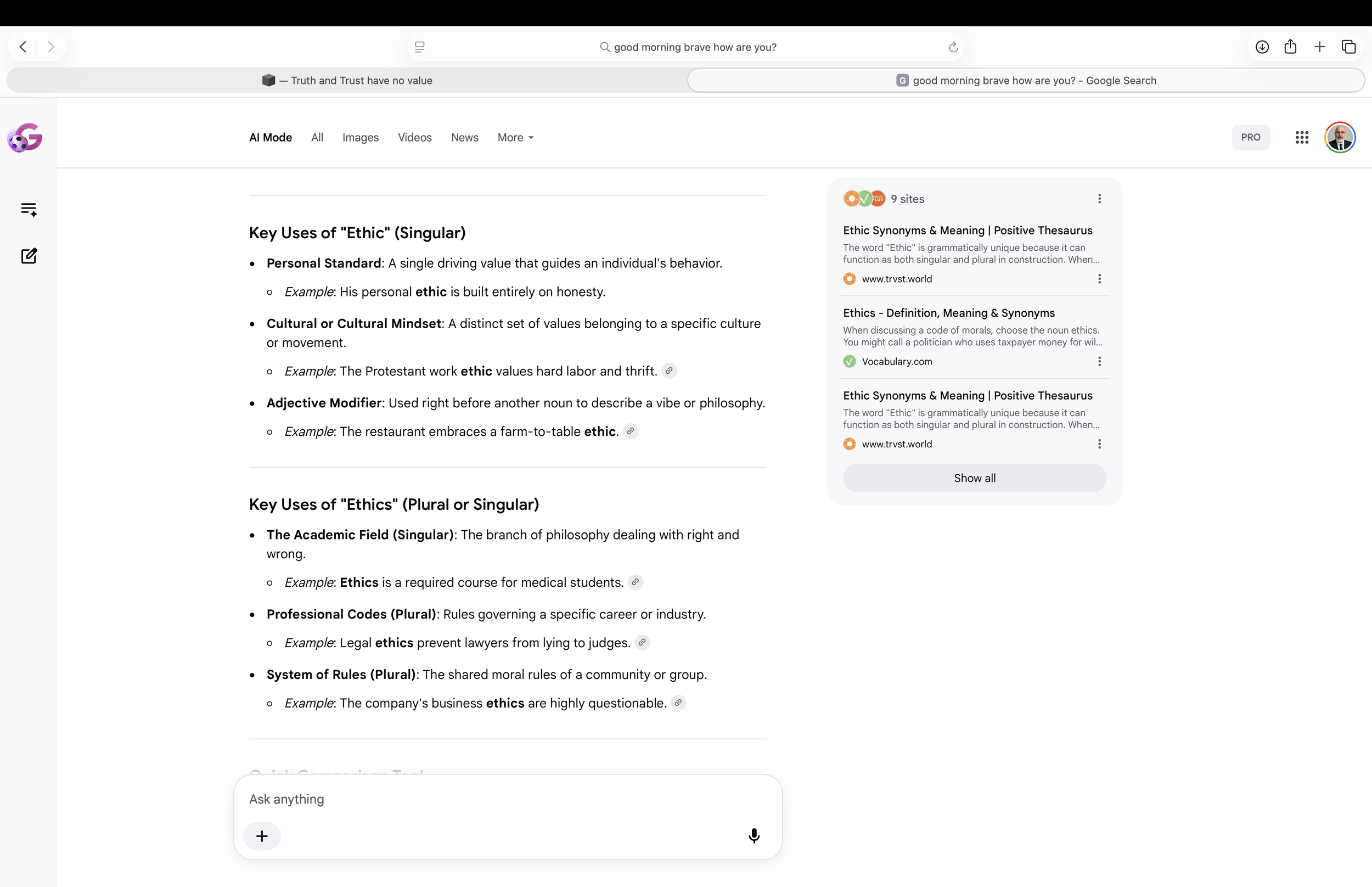
It is also a quirk of the English language that when the singular adjective is used; the verb is often plural.
Work ethic values hard labor and thrift.
Work ethics value labor and expediency.
You see what I did there? Same sentence different qualifications.
This essay is inspired by a dish washing detergent. It’s called Fresh and has an arrow with a sign: UP and UP. It showed up one day under our sink. One of the roommates must have bought it from Costco. Pretty sure I had bought a bottle of Dawn but that disappeared. Anyway, the Fresh bottle is interestingly designed. I had a friend in junior college once whose Dad was a package designer. He would make designs of how to package anything. Disposables, food, liquid, liquor whatever. Anyway this bottle pours out the liquid through a hole that is tinier than other bottles. You have to apply significant pressure to get the liquid out. I like that because it makes me use less detergent. It’s good for the budget, it’s good for the environment both. It’s not as great for the company who doesn’t sell as much product. That’s an example of a clearcut ethical decision that every package designer faces. Profit over environment? Profit over household budget and affordability?
The companies, if it were left up to them, would reduce the bottle size by a fraction every year in order to make profits. Cocoa powder more expensive? Reduce the size of KitKats. The people won’t notice. And even if they do notice, they can’t do anything about it other than not buy. And it’s better for them. Although that wasn’t the intention. What? Eating less candy is genuinely better for the people. That’s true Sir, but was that your intention? Once again, we come back to intentions over outcomes. A judge’s reading chambers.
Every professor who teaches faces the same ethical dilemma. Should I teach case law of how to evade the law? Or should I teach ethics? I could teach about the case where the company did something that seemed illegal but the Supreme Court judged it wasn’t because the law was either clearcut or ambiguous about the matter at hand. Bottomline, this is the case law, and if you want to do this, this and this sort of things, you can cite this case to your boss. You’ll probably get a promotion.
Grammar Nazi here: it should be these, these and these sort of things. Carry on.
That’s a package designer at work. Students are packages we design and let loose upon the world. Some are tight and stingy. Others are more loosey, goosey.
That’s losey, not loosey.
Anyway, by the time you’ve read this post end to end, and pondered the various implications and ramifications you’ll have gotten a better grasp of ethics. Morality is something related but different. What I am trying to convey is the obvious truth: we all know what ethics are. Yet we hire lawyers and tax accountants in order to help us be … shall we say … case law purists.
The purity of case law shall be our salvation.
