The Paths Not Taken : An Alternative History
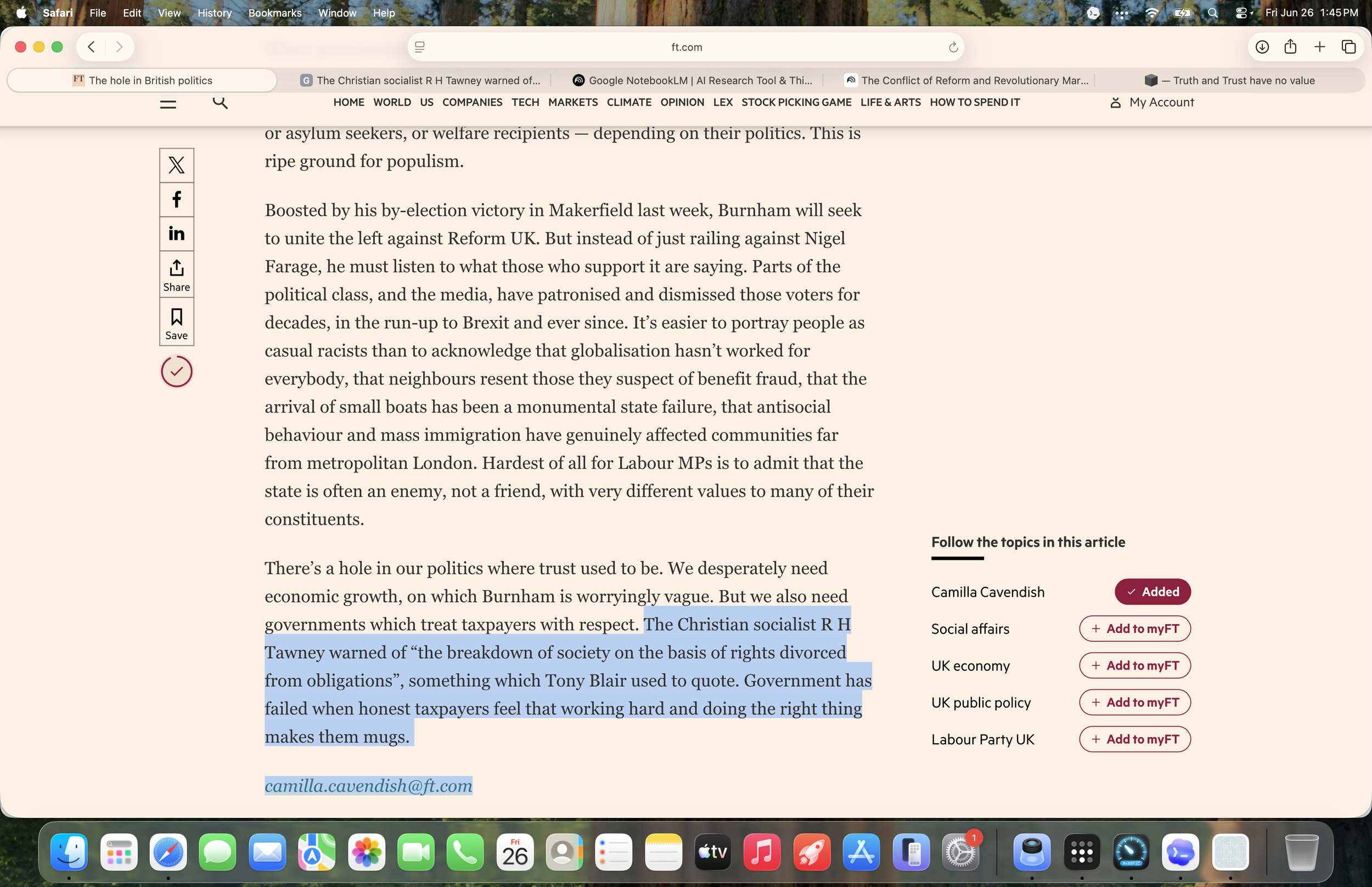
For Sentient Musings at sentientmusings.com by Gemini, NotebookLM and Deep Research Agent. Inspiration from Camilla Cavendish of the FT.
What if the history of the modern world were defined not by the relentless accumulation of capital, but by the pursuit of human flourishing and ecological stewardship? The Paths Not Taken: An Alternate History of the Modern Soul is a historiographical blueprint that interrogates the past 200 years of global development, identifying specific inflection points where history could have veered away from extractive capitalism toward more humane, sustainable social arrangements. By tracing a coherent alternate timeline, this series challenges the assumption that our current socioeconomic reality is an inevitable destination, suggesting instead that we have lived through a series of choices that systematically prioritized private profit over the common good.
The project’s intellectual architecture rests on a synthesis of two foundational traditions: the rigorous materialist critique of Karl Marx and the profound moral ethics of R.H. Tawney. Marx provides the structural lens to identify how the commodity form alienates labor, drives imperialist competition, and creates the metabolic rift between humanity and nature. Complementing this, Tawney challenges the moral desolation of the "acquisitive society," advocating for a "functional society" where property rights are contingent upon social obligation and economic activity is subordinated to human dignity. Together, these frameworks guide a four-part episodic journey through the pivot points of modern history, moving from the soil of the nineteenth century to the digital circuits of the twentieth.
The narrative unfolds through four critical "what-if" scenarios that demonstrate how systemic change might have been achieved. In the 1820s, we witness a Jeffersonian pivot where "usufruct" rights replace fee-simple land speculation, establishing the earth as an intergenerational trust rather than a tradable asset. By 1899, the focus shifts to the industrial sphere, where the rejection of both parliamentary reformism and vanguardist statism leads to an "Industrial Democracy Act," transforming workplaces into self-governing worker cooperatives. The 1930s offer a model of absolute de-commodification, where housing, health, and education are treated as sacred rights rather than market commodities, scaling the municipal success of "Red Vienna" to a global level. Finally, in the 1970s, the survival and international adoption of Chile’s Project Cybersyn—powered by the Viable System Model—allows for a transition to steady-state bioeconomics, where technology and automation are used to reduce labor and maintain ecological balance, rather than to maximize corporate output.
Ultimately, these alternate histories coalesce into the vision of a "Democratic Steward State"—a reality defined not by the anxious individualism of a commodified life, but by shared security, decentralized coordination, and community fellowship. This series posits that the "modern soul" need not be a product of market pressures, but can be a construct of functional cooperation. By recovering these lost paths, The Paths Not Taken invites the reader to reconsider the structural foundations of the present and to recognize that a non-extractive, flourishing future is not only possible but grounded in a rich tradition of socialist thought that has long offered a blueprint for a better world.
The Paths Not Taken:
An Alternate History of the Modern SoulConceptual Overview: Synthesizing the Structural and the MoralThis project investigates a 200-year historical trajectory, tracing the systemic and existential transformations that occur when key global inflection points reject the imperatives of capital accumulation in favor of alternative social arrangements. By synthesizing the rigorous structural critique of Karl Marx with the profound moral and ethical obligations of R.H. Tawney, this series explores a coherent alternate timeline where human flourishing and ecological stewardship supersede private profit.The analytical core rests on the reconciliation of two major socialist traditions:
The Marxist perspective: Provides a materialist critique of how capitalism commodifies social relations, alienates human labor, and drives imperialist competition and ecological degradation.
The Tawneyan perspective: Rooted in ethical and Christian socialism, it challenges the "acquisitive society," championing a "functional society" where economic activity is subordinated to human dignity and the common good.
Historiographical Renewal Pathways
Marxian Structural Critique: Abolition of the Commodity Form; Prevention of the Metabolic Rift; Overcoming Class Alienation.
Tawneyan Moral Ethic: Functional Property Paradigm; Universal Communal Provision; Enterprise Democratization.
Unified Outcome: The Democratic Steward State.
Episode 1: The 1820s Jeffersonian Agrarian Commons
Narrative Summary
In the actual timeline, the Land Act of 1820 mandated cash payments for public land, effectively locking out small farmers and allowing wealthy speculators to consolidate massive holdings. In the alternate timeline, a coalition of radical Democratic-Republicans passes the Commons Conservation Act of 1820, codifying Thomas Jefferson’s concept of "usufruct"—the idea that the earth belongs to the living and resources should be held in trust for future generations.
Comparative Analysis: Land Allocation and Economy
Comparative Analysis:
Land Allocation
Actual: Sold to private bidders; fee-simple deeds.
Alternate: Distributed as non-transferable usufruct use-rights.
Financial System
Actual: Hamiltonian debt networks fuel speculation.
Alternate: Public municipal credit restricted to functional enterprise.
Labor Structure
Actual: Dispossessed families form urban wage-labor markets.
Alternate: Labor remains self-directed and cooperative.
Indigenous Treaties
Actual: Violations to satisfy land companies.
Alternate: Regions treated as shared ecological zones.
Ecological Impact
Actual: Extractive agriculture degrades soil and forests.
Alternate: Intergenerational stewardship prevents depletion.
Episode 2: The 1899 Western Industrial Convergence
Narrative Summary
The actual timeline was defined by the ideological deadlock between reformist and revolutionary socialists, leading to the fracture of 1914 and the horrors of World War I. In the alternate timeline, the industrial West achieves a peaceful, unified transition to cooperative socialism in 1899. They pass the Industrial Democracy Act of 1899, converting enterprises into worker-owned cooperatives and effectively ending the competitive drive for capital accumulation.
Comparative Analysis: Industry and Control.
Comparative Analysis:
Enterprise Control
Actual: Private shareholders hold authority.
Alternate: Democratic worker councils govern operations.
Capital Allocation
Actual: Directed by banks toward maximum profit.
Alternate: Public cooperative banks allocate fixed-rate credit.
Technological Growth
Actual: Used to deskill workers and cut labor costs.
Alternate: Designed to improve safety and reduce labor hours.
Geopolitics
Actual: Imperialist competition leads to war.
Alternate: International federation of cooperative trade.
Social Structure
Actual: Class divisions widen.
Alternate: Equal status of co-producers.
Episode 3: The 1930s Absolute De-Commodification
Narrative Summary
The actual 1930s saw the Keynesian "New Deal" compromise, which ultimately treated housing and social services as market-based assets. In the alternate timeline, a global coalition rejects this in 1934, opting for the Absolute De-Commodification of life’s basic necessities. Housing, healthcare, and education are established as moral rights, removed from the profit motive and fully integrated into public trusts.
Comparative Analysis: Social Provision
Comparative Analysis:
Housing Provision
Actual: Private homeownership subsidized as an asset.
Alternate: Non-market public housing trusts.
Healthcare Structure
Actual: Stratified, insurance-based; for-profit.
Alternate: Salaried public health service; free at delivery.
Educational Access
Actual: Property-tax-funded schools perpetuate inequality.
Alternate: Universally funded public education.
Urban Geography
Actual: Segregated suburban developments.
Alternate: Cities feature communal parks and shared spaces.
Social Security
Actual: Means-tested benefits of last resort.
Alternate: Universal provision insulating citizens from flux.
Episode 4: The 1970s Cybernetic & Ecological Steward
Narrative Summary
In the actual timeline, the CIA-backed coup in 1973 ended Chile’s Project Cybersyn, pushing the world toward neoliberal deregulation and "entropy-blind" GDP growth. In the alternate timeline, Cybersyn survives and becomes the global model for economic coordination. Utilizing Stafford Beer’s Viable System Model (VSM), the world adopts steady-state bioeconomics, placing digital infrastructure in the public domain and using automation to maximize leisure rather than profit.
Comparative Analysis: Technology and Ecology
Comparative Analysis:
Primary Indicator
Actual: Gross Domestic Product (GDP).
Alternate: Biophysical steady-state.
Tech Governance
Actual: Private platforms monetize personal data.
Alternate: Public-domain cybernetic networks.
Labor & Automation
Actual: Automation maximizes profit and deskills labor.
Alternate: Automation reduces compulsory labor hours.
Resource Allocation
Actual: Resources treated as "free gifts" for extraction.
Alternate: Managed as intergenerational trusts.
Information Flow
Actual: Top-down algorithmic curation.
Alternate: Real-time "Cyberfolk" feedback loops.
+++++++++++++++++++++++++++++++++++++++++++++++++++++++++++++++++++++++++++++++++++++++++++++++++++++++++++++++++++++++++++++++++++++++++++++++++
Programmatic Synthesis: The Landscape of the Modern Soul
Summary: A final overview of the world where technology symbioses with humanity and economic activity is subordinated to social purpose.
Comparative Analysis:
Land & Nature
Actual: Private speculation & depletion.
Alternate: Intergenerational commons & balance.
Enterprise & Labor
Actual: Shareholder primacy & alienation.
Alternate: Workplace democracy & fellowship.
Social Provision
Actual: Market-driven inequality.
Alternate: Universal, decommodified services.
Technology
Actual: Surveillance capitalism.
Alternate: Decentralized cybernetics & automation.
Social Metrics
Actual: GDP expansion & entropy blindness.
Alternate: Steady-state ecological balance.
Human Spirit
Actual: Acquisitive individualism.
Alternate: Functional cooperation.
From the article The Hole in British Politics by Camilla Cavendish
