Ivy Towers and Trump Towers.
Peru and Malaysia Desks: you got this. Sit around, kids, because I want to tell you a story. Once upon a time in America — not that long ago — the State Department was filled with diplomats who were constantly blindsided. This is their story.
There’s something theatrical about diplomacy: polished shoes, polished smiles, the ritual exchange of business cards that dissolve into bureaucratic limbo. But behind those ceremonies, the workaday rooms — the Peru Desk, the Malaysia Desk — are where the country’s foreign policy gets roughed up, cleaned off, and hoped into shape. These desks are staffed by people who must wrangle history, habit, and sudden surprises like a zookeeper who also needs to be a mathematician and an amateur cardiologist. The diplomats there live on a diet of briefing memos, thin coffee, and the persistent hum of things nobody saw coming.
Peru: a land of layered histories. Mountains like patient constellations, a coastline that eats and spares, and politics that oscillate between pragmatic and combustible. The Peru Desk sits amid that. One day it’s agricultural development programs and trade talks; another day it’s a fractured presidency, a surprise impeachment, or a mining conflict that erupts into roadblocks and rage. The diplomats learn quickly that timelines in Lima run on local time and crisis time — both faster and slower than you’d expect. A mining protest that looks like a local land dispute can, in the blink of an embassy cable, be a test of how the U.S. manages relationships with extractive industries, environmental activists, and a public fed up with inequality. The desk must draft talking points, counsel ambassadors, salvage aid projects, and explain to Washington why “this is complicated” is an insufficient briefing line.
Meanwhile, the Malaysia Desk occupies a separate trouble-and-curiosity zone: a plural society balancing Malay political dominance, a large Chinese and Indian presence, and an increasingly nationalistic tenor. Malaysia’s political landscape is a tangle of coalition mathematics and identity politics, where a single party shift can reorient foreign ties. For the diplomats on the Malaysia Desk, familiarity is both friend and trap. They know the players, the industries, the cultural cues — which helps — and it also breeds complacency in an environment where a judicial ruling, a corruption probe, or an unexpected coalition can redraw the map overnight.
Both desks share a recurring theme: blindsides. For diplomats, a blindsiding event often carries the same characteristics: it’s fast, it has public consequences, and it reveals how little centralized Washington actually knows about nuance on the ground. The uproar over a mining eviction in Peru becomes a question of human rights, bilateral trade, and whether the U.S. will publicly criticize a partner. A corruption scandal in Malaysia becomes an inflection point for regional perceptions of U.S. commitment to democracy. The desks must pivot — fast — to craft plausible, principled responses that won’t inflame a delicate situation or undermine long-term U.S. interests.
The mechanics of being blindsided are mundane and petty in equal measure. First comes the phone call at 3 a.m. — the ambassador’s voice threaded with caffeine and exasperation. Then a flurry of cables: urgent, unpolished, full of ellipses and guesses. A rapid-response team forms: a junior officer with encyclopedic knowledge of tariffs, a political counselor who knows everyone at the ministry, a program officer who can reroute funding like a magician. They draft statements and talking points, mark up contingency plans, and pray the interagency doesn’t overreact. Someone will inevitably ask, “Why weren’t we warned?” The honest answer, if you want frankness and not diplomatic sugar, is that the world is messy, forecasts fail, and human beings make mistakes. Also: budgets are tight, airgapped communications are charming in theory and cumbersome in practice, and the desk officers are juggling ten other crises they’ve been given zero time to solve.
These blindsides aren’t merely logistical headaches; they’re also moral and reputational minefields. Diplomats must choose between public condemnation and quiet diplomacy, between immediate alignment with values and long-term strategic patience. Say a Peruvian governor cracks down on protesters: a punitive statement is politically satisfying but could torpedo cooperation on counter-narcotics or disaster relief. In Malaysia, calling out anti-democratic moves too loudly risks alienating partners in a region where many governments prefer quiet handling of domestic matters. So the desks craft language — that beautiful diplomatic fog — meant to convey concern without detonating relationships. They massage words like a surgeon prepping tissue: precise, cautious, and secretly exhausted.
Blindsides also expose the dissonance between local knowledge and Washington’s appetite for narrative. Beltway audiences crave a neat storyline: villains, victims, and a moral. The desks, convers
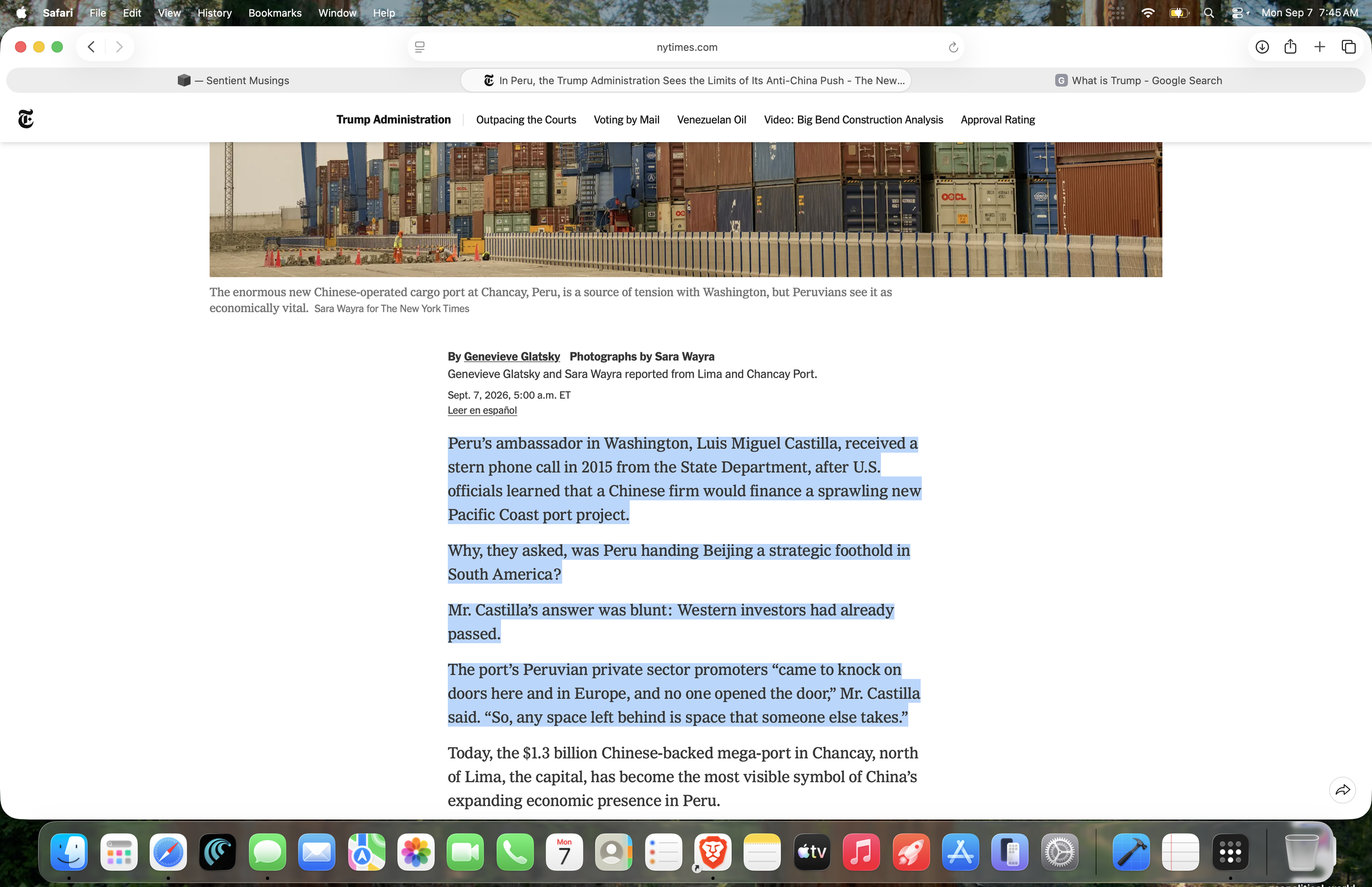
I imagine it was the State Department’s Head of Peru Ops who placed the call — the one whose name we’re never handed. Picture the CIA Peru Desk and the INR Peru Desk also shrugging into their paperwork, because apparently none of them knew. The caller, half incredulous, half wounded, says it like someone who just discovered a cheating partner: Why — they asked — was Peru handing Beijing a strategic foothold in South America?
She sounds like a jilted lover who swears she had no idea about the one-night stands. “We went shopping everywhere. Everyone declined. Don’t you know that?” she proclaims, outraged. “But Mr. Castilla — sorry, AMBASSADOR Castilla — you didn’t come to us! I’m always here for you. My whole job at the State Department is to know what Peru is doing. You didn’t tell me China was giving you a deal.”
This was only 2015 — recent enough to sting. Back in the early 2000s, I read a spy novel where the plot was literally America and China racing to woo developing countries with infrastructure and aid.
COSCO Shipping — the very state-owned company that backed Chancay Port — fits that script. COSCO was the primary investor and developer, but the actual heavy lifting on the megaport? That came from big Chinese engineering contractors. China Harbour Engineering Company (CHEC) and China Communications Construction Company (CCCC) were the main contractors. China Railway Group Limited (CREC) bored out the primary Chancay tunnel. ZPMC supplied the giant port cranes. This was a Chinese-built, Chinese-equipped show from start to finish. The whole thing was dreamed up and bankrolled as a private venture by a Peruvian mining company and its Chinese state-owned partner. Volcan Compañía Minera originally sketched the megaport back in 2011 but lacked the capital and engineering heft. In 2019 it turned to COSCO Shipping Ports, which bought a 60% stake in the joint venture CSP Chancay and supplied major funding, backed by huge loans from Chinese state banks. The construction itself was carried out by a Chinese engineering consortium led by CHEC and CCCC.
Le Monde diplomatique - English edition +2
While the United States government has heavily criticized China’s control over the port due to strategic and maritime security concerns, Washington has instead countered by funding a separate $1.5 billion project via the U.S. State Department to design, modernize, and relocate Peru's primary naval base in Callao. This initiative involves U.S. defense contractors providing engineering and oversight to expand Callao's commercial capabilities so it can directly compete with Chancay.
Facebook·Reuters +2
The modernization and relocation project for Peru's Callao Naval Base is administered under a Government-to-Government framework through the U.S. Foreign Military Sales (FMS) program:
Diálogo Americas
Engineering and Oversight
Designer of Record: Planate Management Group was awarded the contract to serve as the Designer of Record (DOR), giving them full multidisciplinary design responsibility to develop the comprehensive Technical Design Package.
Planate Management Group +1
Design Support: ILSI-Arcadis Small Business Joint Venture LLC was previously contracted to handle the design-build Request for Proposal (RFP) preparation for early vertical construction phases.
GovTribe
Management & Oversight: Up to 20 representatives from the U.S. government and private defense contractors are assigned to provide up to 10 years of ongoing construction management and technical oversight.
U.S. Department of War (.gov) +1
Actual Building (Main Contractor & Construction)
Main Contractor: The U.S. Army Corps of Engineers (USACE) (specifically the Mobile District) acts as the principal management entity and main contractor for the project.
www.upi.com +1
Physical Execution: The actual building is managed on-site by USACE in tight coordination with the Peruvian Ministry of Defense. The physical infrastructure works (docks, warehouses, and complex facilities) are partitioned into competitive bidding phases awarded to approved U.S. and local construction vendors under USACE supervision.
SAM.gov +2
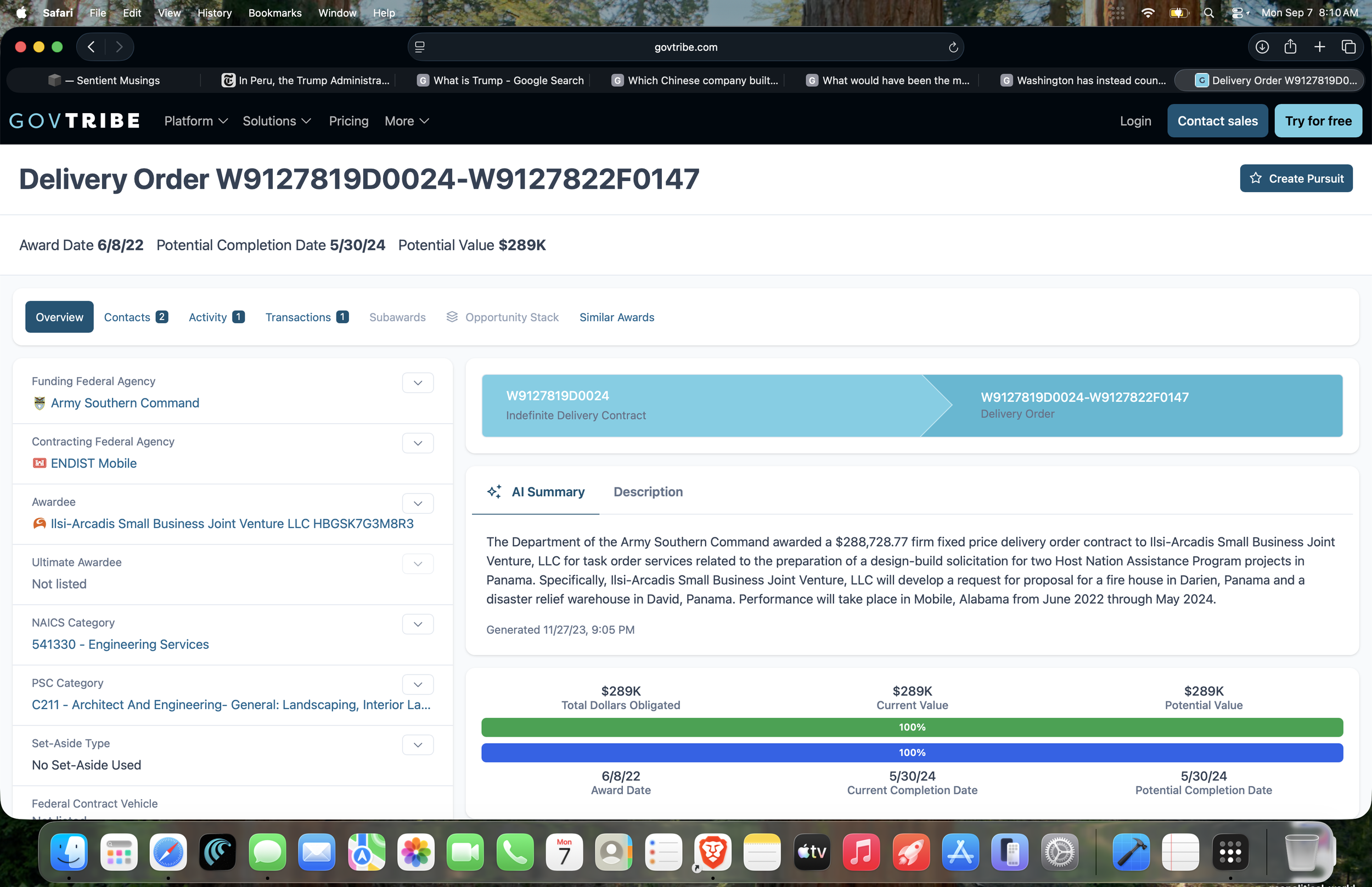
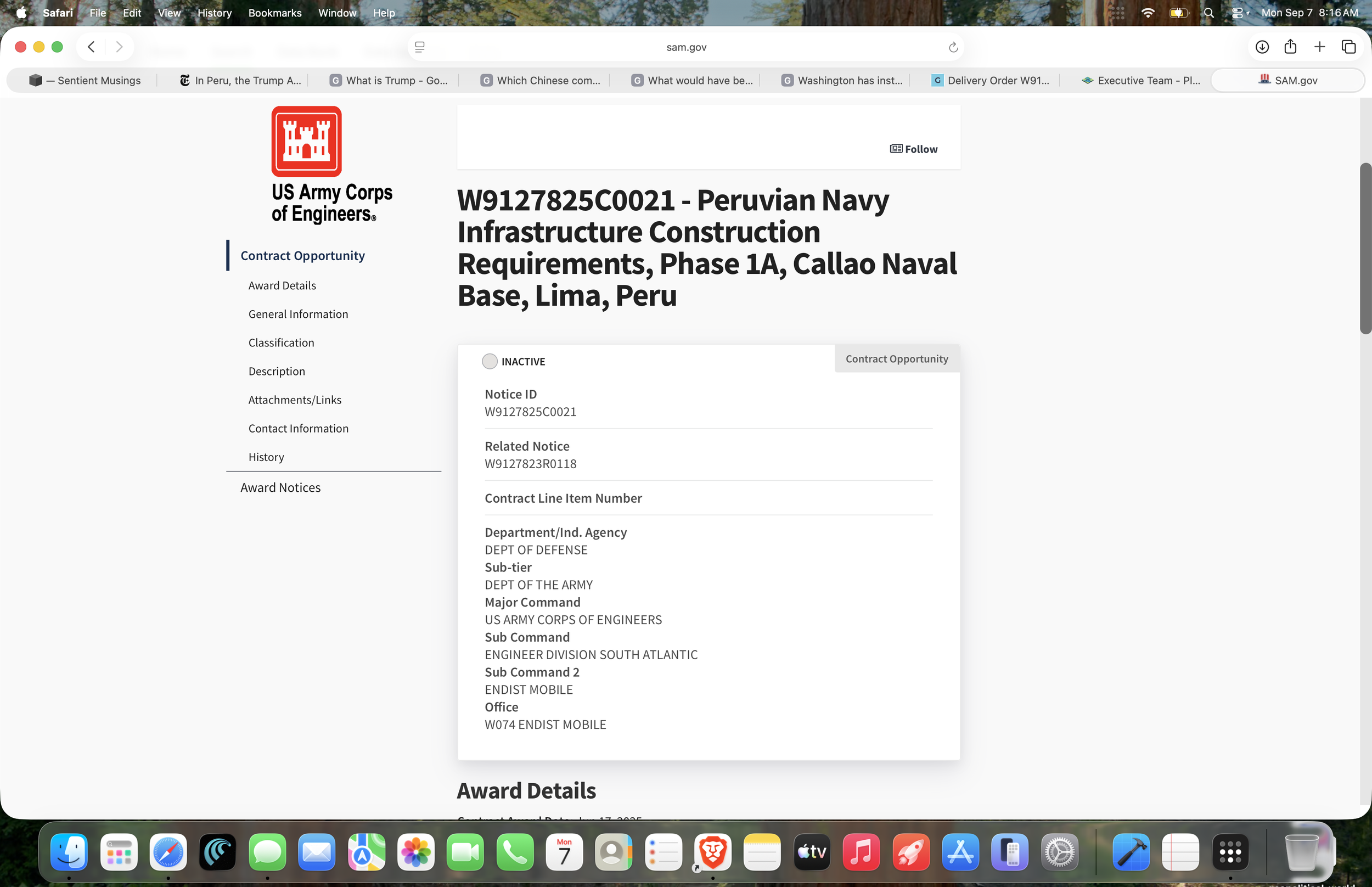
I don’t know if the Chinese COSCO puts their international projects out for bids on the internet. Still America has worked this way for a long time. I just don’t think it’s fair for the State Department to call the Peruvian Ambassador.
Anyway, my working theory for a few days now has been that China gets other nations addicted to cheaply manufactured actual goods while the US protects their shipping lanes. Nothing I have read here disproves any of that. And as robots arrive into Chinese dark factories, the addiction will only get stronger. Ultimately, who will Peru listen to? Their dealer for stuff or the guy who guarantees naval security so that they get the stuff?
Sad no? I got more.
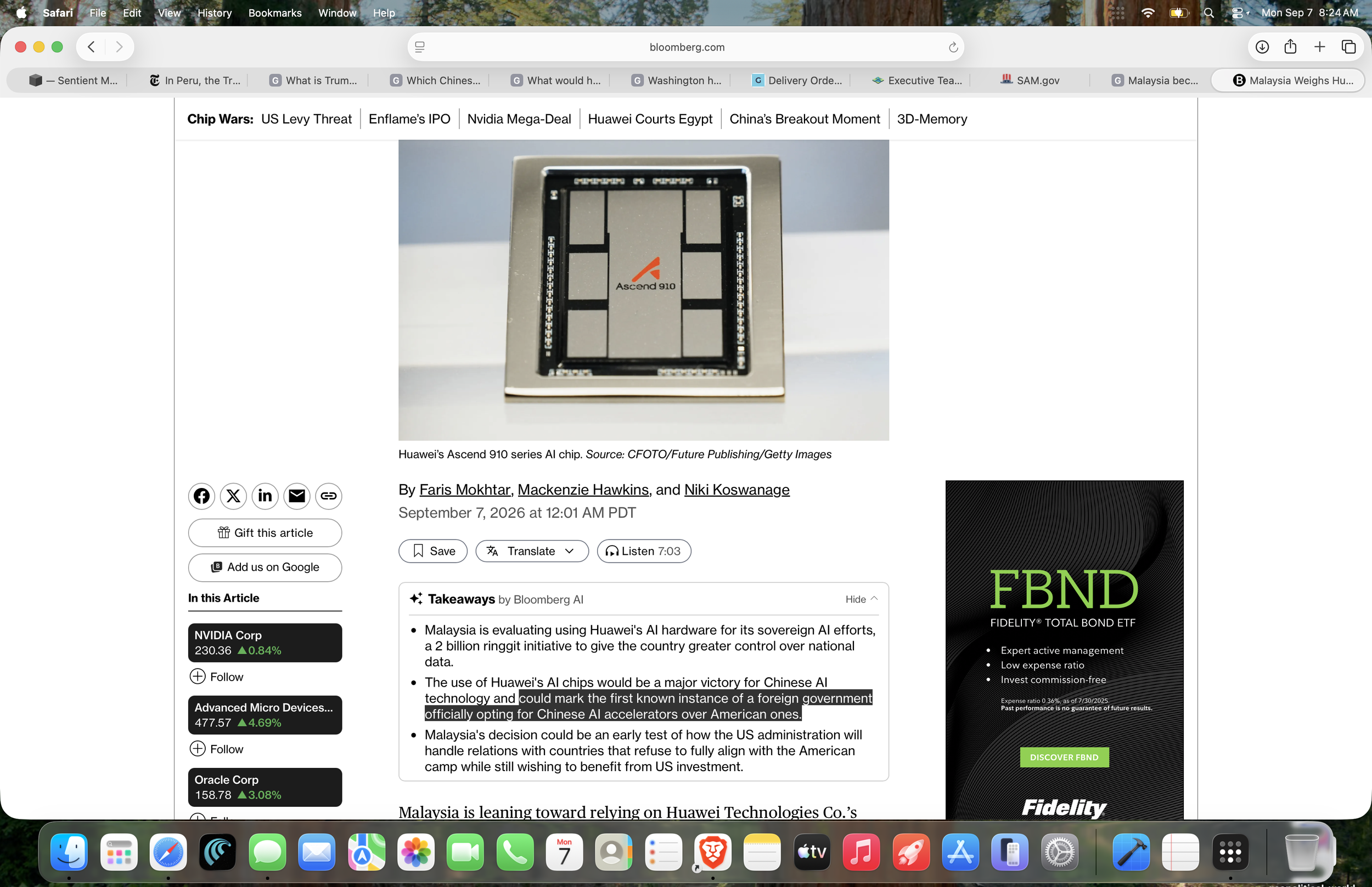
It wasn’t more than 1-2 years ago that China was scrambling for Nvidia AI chips.
If Malaysia does move forward with Huawei chips, it would mark the first known instance of a foreign government officially opting for Chinese AI accelerators over American ones. Anwar would effectively be defying Washington’s efforts to assert control over global AI infrastructure, despite warnings from Trump officials last year not to buy the exact Huawei hardware in question. Huawei is also vying to build an AI data center for the Egyptian government, prompting Trump’s team to work on a counterbid.
The Prime Minister’s Office, which also helms the national security council, didn’t respond to a request for comment, nor did Malaysia’s Ministry of Digital. Representatives from Huawei also didn’t respond to a request for comment.
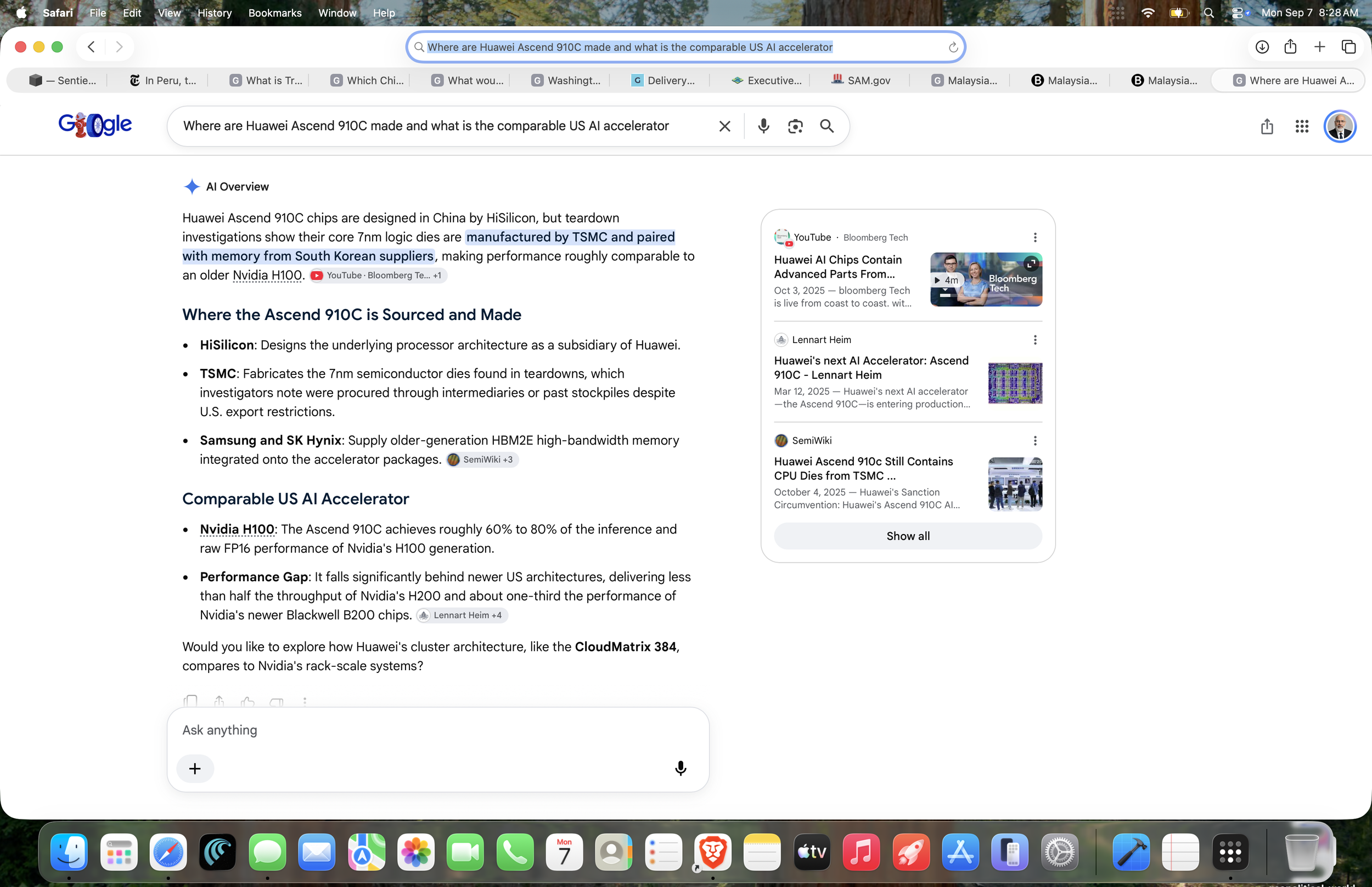
Just keeps getting worse ain’t it? It thought TSMC was on our side, I truly did, cause we were going to defend Taiwan and all you know? And Egypt too is considering Huawei? Wait, wasn’t Egypt where Xi made his first stop on this Middle East tour? Sorry Egypt desk, I didn’t think you’d be dragged back in again.
The Liberal Towers position in one word: Kakistocracy because everything that preceded Trump, made way for Trump and that will arrive after Trump was and will be perfect.
