Thanksgiving Week · A Dialogue
Two Letters, Two Lines, and a Booth at the IHOP
From Ave Maria Parish in South Sudan to a California EDD notice—and the quiet convergence of systems that were supposed to be opposites.
Marcus sets a glossy folded newsletter down next to a plain white government envelope, careful to keep both clear of a damp ring on the laminate table. He taps the newsletter with one finger.
Marcus: “Fighting Back Against Despair.” Q4 edition. Direct from the Sudan Relief Fund.
Elena: (without looking up from her coffee) Despair’s been undefeated in Western Equatoria since before we had our first passports. What’s the pitch this quarter?
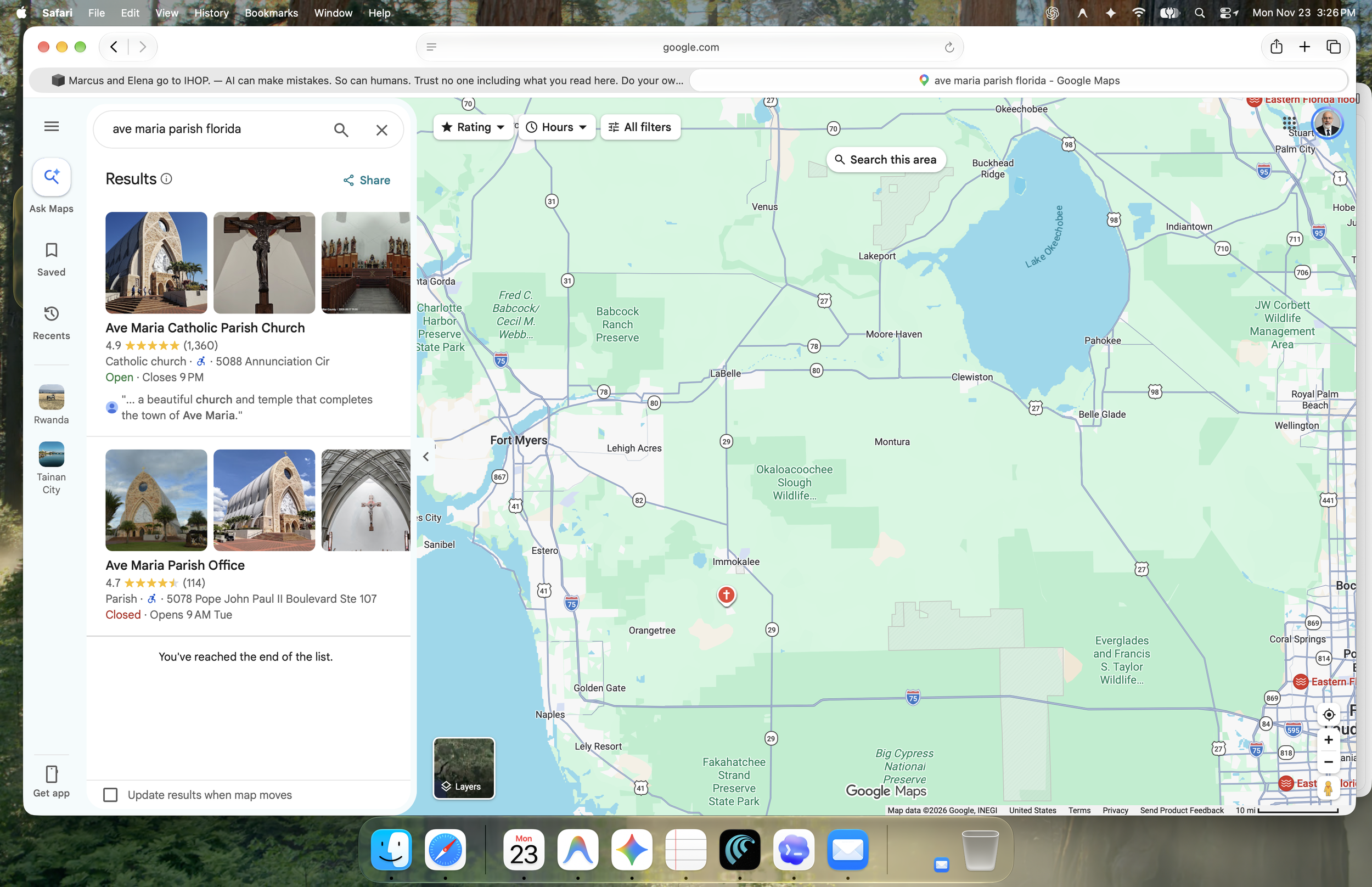
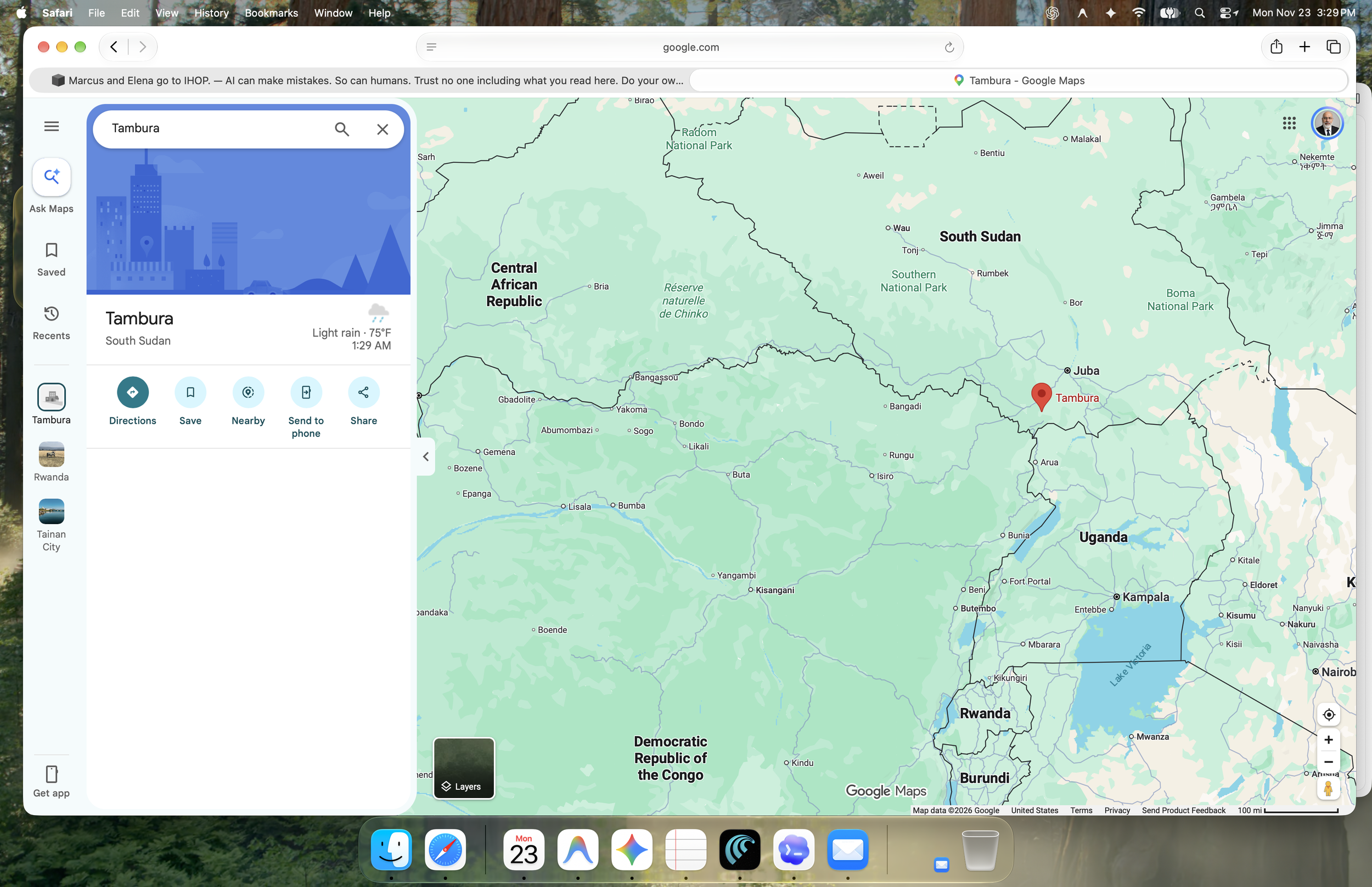
Marcus: Ave Maria Parish. Out past Tambura, practically kissing the CAR border. They’re trying to keep St. Peter’s Medical Clinic running. The letter says a prescription from a local pharmacy is “essentially” a nonexistent concept.
Elena: (a dry half-smile) “Essentially.” I like that. That’s the word a copywriter uses when they don’t want to depress the donors into closing their checkbooks. There is no pharmacy. There’s a dirt track that turns into soup for six months of the year, a generator running on prayers and smuggled diesel, and a nurse doing triage by flashlight.
Marcus: They mention a simple cut—the kind that takes four stitches here—turning into a life-threatening infection because there’s no clinic, no ambulance, no antibiotics.
Elena: They’re not exaggerating. We spent thirty years watching billions move across that continent—arms, oil concessions, diplomatic entourages in armored Land Cruisers—and yet a kid steps on rusted tin in Source Yubu and it’s a coin flip whether they see Tuesday. You’d think basic survival wouldn’t still be an act of charity.
Marcus: (leans back against the vinyl) You’d think. Though I’ve stopped expecting competence from anywhere. Look at what arrived in the exact same mail stack.
He slides the white envelope across the table. Elena pulls out the single sheet, reads it, and stares at it for a long beat.
Elena: Is this a cipher?
Marcus: California’s Employment Development Department.
Elena: “The following information has been updated:” …and then a bullet point with no words next to it.
Marcus: They have the doctor’s paperwork. Confirmed it in person. Still haven’t restarted the disability payments, of course. Just spent the postage to inform me that they’ve updated—nothing.
Elena: (sets the letter down) I used to think the difference between the developed world and the places we worked was that here, the machinery actually functioned. Turns out it’s the same void. Over there, there’s no road and no clinic. Over here, there’s a ten-story building, a server farm, and a laser printer working overtime to mail you a blank bullet point.
Marcus: The irony isn’t lost on me. St. Peter’s Clinic has to wait because the state hasn’t cleared its throat, and eventually I’ll have to explain the whole mess to St. Peter himself at the Pearly Gates.
Elena: Bring the EDD letter. He’s been running reception for two thousand years; he knows how paperwork gets stuck in processing.
Their server arrives with a fresh carafe, tops off both mugs with a tired smile, and moves slowly toward the next booth—visibly carrying the physical weight of long shifts and cheap calories. Neither of them speaks until she is out of earshot.
Marcus: (watching the room) Look around this place, Elena. Really look.
Elena: I am.
Marcus: Generations of writers, professors, and Cold War ideologues spilled oceans of ink explaining why Communism and Capitalism were mortal opposites. You don’t need a single textbook to settle the argument anymore. Just put the footage side by side. A Soviet bread line in 1991 next to a Thanksgiving food pantry line in America this week.
Elena: (quietly) Same queue. Different flag.
Marcus: Almost. There’s one difference. In Moscow, people stood in line for bread and you could see the scarcity on their ribs. Here, people stand in food pantry lines and half of them are obese—not because they’re thriving, but because the cheapest calories on the shelf are engineered out of industrial seed oils, high-fructose syrups, and chemical additives that the FDA signs off on without blinking.
Elena: We’ve read the lifespan studies. The gap between the top brackets and the bottom seventy percent isn’t just an income gap anymore—it’s a mortality gap. Poor Americans aren’t merely dying years earlier than wealthy ones; their last two decades are hollowed out by metabolic disease, chronic pain, and a quality of life far worse than simple poverty alone would produce.
Marcus: If a foreign adversary designed a food supply that quietly shortened the lifespans of the bottom seventy percent of a country while billing them for the pharmaceuticals to manage the fallout, we’d have called it a slow-motion covert operation. A soft form of genocide nobody ever has to sign an order for.
Elena: Instead, it’s just quarterly earnings, an FDA label, and a booth at the IHOP.
Marcus: (glances down at the Sudan Relief Fund newsletter, then back at the blank EDD bullet point) In South Sudan, you die because there’s nothing on the shelf. In the United States, you die early because of what is on the shelf. And somehow Alanis Morissette is playing softly in the back of my head.
Elena: (reaches for the check) Keep the Ave Maria letter on your desk. Don’t throw it out yet. At least St. Peter’s Clinic is honest about what’s missing.
Postscript: Skip the Ideologues—Compare the Footage
Entire libraries have been written debating the theoretical differences between Soviet Communism and American Capitalism. Sometimes it is simpler to skip the ideology and look directly at the lines—and at the people standing in them.
Exhibit A · Soviet Union (Archive)
Russia Food Lines (WDEF News 12 Archive)
Archival news footage of food lines and scarcity in the late Soviet era.
Exhibit B · United States (Thanksgiving)
San Diegans Turn to Food Banks in Record Numbers This Thanksgiving (NBC 7)
Record lines at American food pantries ahead of Thanksgiving—same queues, different system, different diet.
About the Clinic in the Letter · Sudan Relief Fund
Ave Maria Parish sits in a deeply remote stretch of Western Equatoria, South Sudan (near Source Yubu and the borders of the Central African Republic and DR Congo), where the nearest full hospital is roughly a nine-hour drive away over unpaved tracks. If you want to learn more about the clinic or support their work directly:
- Sudan Relief Fund — Official Website (main portal and donation page)
- Ave Maria Parish Project Overview (community, refugee, and parish support in Western Equatoria)
- St. Peter’s Health Center Campaign (medical clinic, triage, and essential medicines for Ave Maria Parish)
- Sudan Relief Fund — Mission & Projects Overview
- Sudan Relief Fund 2025 Annual Report (PDF)
Additional Viewing & Soundtrack
- Soviet Context: The Truth About The Bread Lines In The Soviet Union (Ushanka Show)
- U.S. Food Pantry Lines: Rising Thanksgiving Costs Push Families to Food Banks in DeKalb County (11Alive)
- Mood Music: Alanis Morissette – Ironic (Official 4K Music Video)