Mimicking the danger of collapse.
While Nexo itself operates as a legitimate enterprise rather than a classic fraudulent scam, the eye-popping yields (up to 12.5% to 16%) carry massive structural risks that mimic the danger of a collapse.
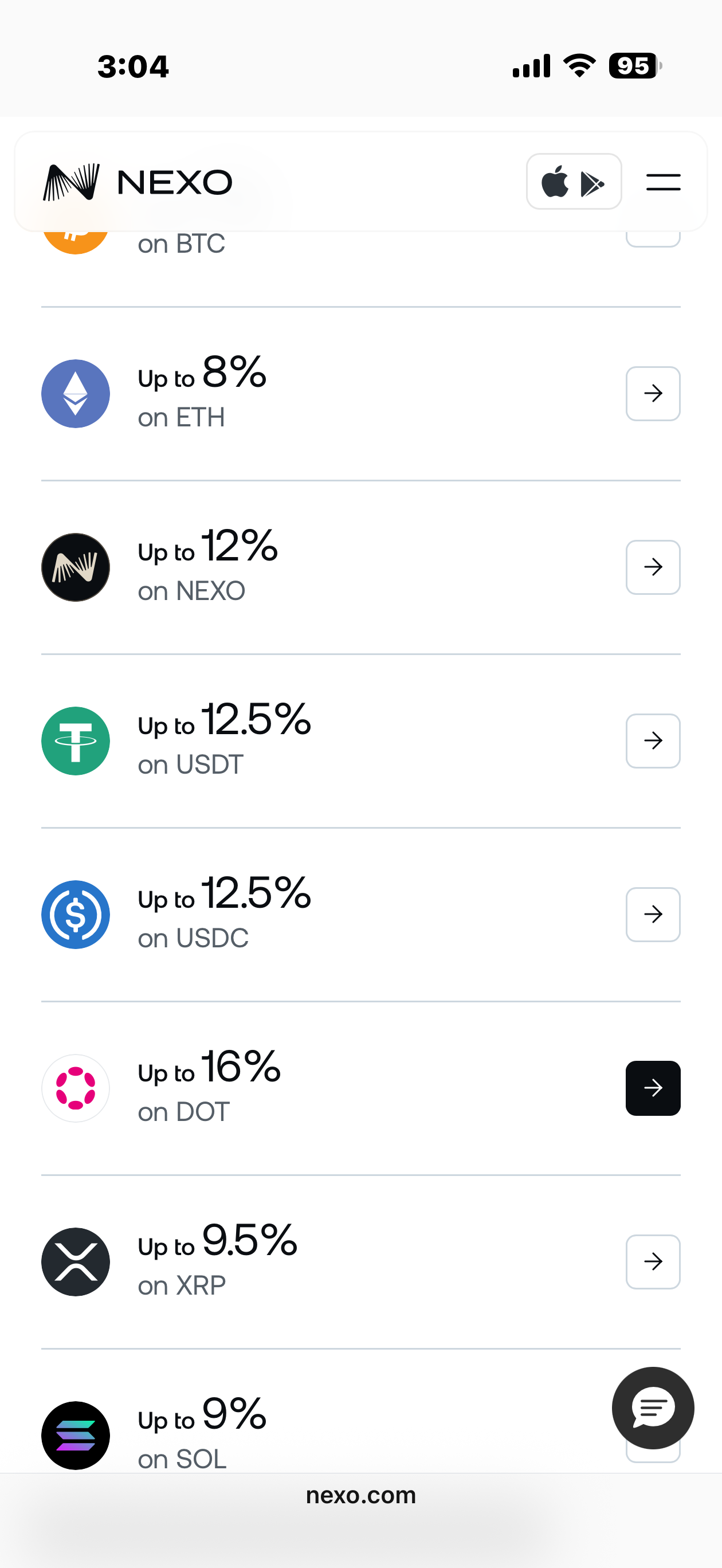
To evaluate whether this aligns with your personal risk tolerance, consider the mechanics behind how these returns are generated and the potential structural pitfalls involved:
📊 The Core Mechanics & Hidden Traps
The "Up to" Catch: The headline figures (e.g., 12.5% on stablecoins) are rarely the baseline rate. To achieve the absolute highest tier of yield, platforms typically force you to take your interest payout in their native token (NEXO) and lock up a significant percentage of your entire portfolio in that token. If their utility token loses value, your actual net return drops drastically.
Uncollateralized & Institutional Lending Risk: To pay you 12.5% interest on stablecoins like USDT or USDC, Nexo must lend your assets to institutional borrowers (like hedge funds or market makers) at an even higher rate. If those institutional borrowers default or suffer a liquidity crisis, the platform may face massive losses.
No FDIC/SIPC Insurance: Unlike a traditional savings account at a bank, cryptocurrency deposited on centralized lending platforms is completely uninsured. If the business goes bankrupt or experiences a sudden run on its reserves, depositors are legally treated as unsecured creditors. This means you could potentially face a total capital loss.
Regulatory Turbulence: Yield-bearing crypto accounts have faced intense regulatory crackdowns from authorities worldwide. Nexo previously phased out its earn product for U.S. citizens following regulatory challenges and multi-million dollar settlements with regulators.
💡 Alternative Risk-Mitigation Strategies
If you are looking to earn a yield on your digital assets while mitigating the risk of platform insolvency, consider looking into these different structural options:
Native On-Chain Staking: For Layer-1 assets like Ethereum (ETH) or Solana (SOL), staking directly on-chain via non-custodial wallets allows you to participate in network validation. This completely removes the centralized corporate counterparty risk, though it introduces smart contract vulnerabilities.
DeFi Yield Aggregators: Using decentralized protocols allows you to maintain custody of your keys while interacting with automated pools, though you must carefully assess the security audits of the code.
Traditional Yield Assets: If your goal is a stable return on dollar-denominated assets without the threat of a platform freeze, standard high-yield savings accounts (HYSAs) or short-term U.S. Treasury bills currently offer solid baseline returns protected by federal deposit backings.
