Prepping for Xi’s Visit: Part 4
Meanwhile in America…
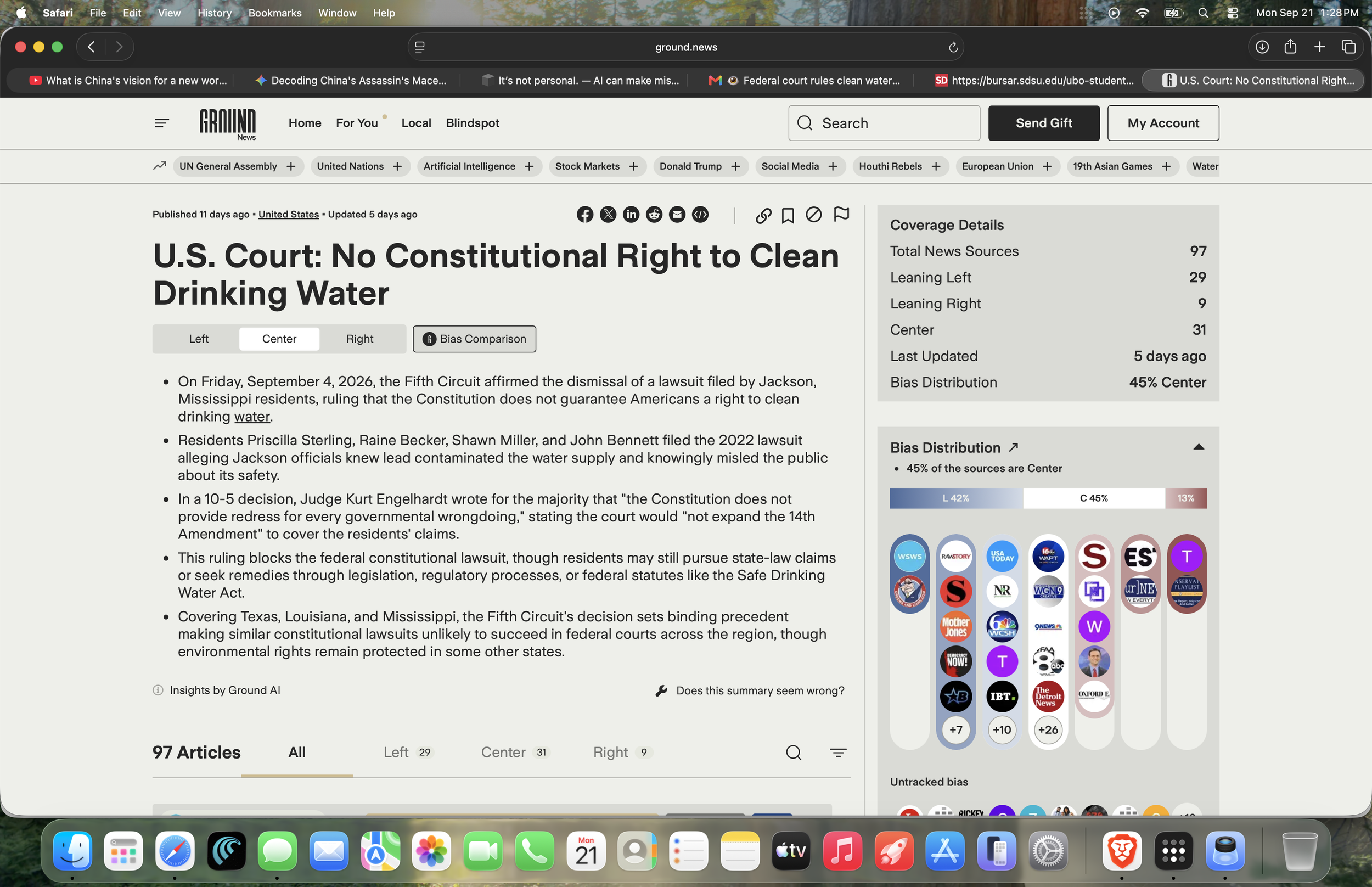
We can talk about things that making Chinese military analyst smile. It’s stuff like this that they monitor from news bureaus around the world. Stuff they probably send to each other in WeChat. “Hey Bolian check this out…” hahahahahahahaha
ကျွန်တော်တို့ ဘာကိုဆိုလိုမှန်း မပြောနိုင်ပေမယ့် အနည်းဆုံးတော့ ကျွန်တော်တို့မှာ သန့်ရှင်းတဲ့ရေ ရှိပါတယ်။
For those Americans who are puzzled by the Federal Court’s ruling and why it amuses Chinese analysts here’s an explanation from Google.
1. The General Welfare Clause is a Power, Not a Right
The Supreme Court has consistently ruled that the General Welfare Clause is a grant of power to Congress, not a source of individual constitutional rights.
What it does: It allows Congress to tax citizens and spend federal money on broad public projects (like building dams, funding the EPA, or subsidizing water infrastructure).
What it doesn't do: It does not create a "negative right" that a citizen can use to sue the government. You cannot legally force a local or federal agency to provide you with a specific service by citing this clause, because the text grants Congress the discretion to spend money—it doesn't mandate a specific outcome for individuals.
2. The Trap of "Positive" vs. "Negative" Rights
The U.S. Constitution is overwhelmingly a document of negative rights—meaning it tells the government what it cannot do to you (e.g., "Congress shall make no law abridging freedom of speech"). It rarely guarantees positive rights—obligations of what the government must provide for you (like food, housing, or clean water).
Because the General Welfare Clause deals with positive government action (spending money to improve society), judges generally rule that updating water infrastructure is a political choice for voters and politicians, not a constitutional mandate for federal courts to enforce.
3. Why Lawyers Default to "Bodily Integrity"
Because the Constitution heavily favors negative rights, plaintiffs in environmental disasters like Jackson, Mississippi, or Flint, Michigan, try to reframe the issue as a violation of a negative right.
Their argument isn't: "The government failed to give us clean water" (a positive right).
Their argument is: "The government actively poisoned us by mismanaging the chemicals and then lying about it, which is an affirmative violation of our bodily integrity" (a negative right to be free from government-inflicted physical harm).
As the Fifth Circuit ruling shows, this strategy is incredibly difficult to win because conservative-leaning courts interpret "bodily integrity" very narrowly, limiting it almost exclusively to criminal justice scenarios like forced stomach pumping, non-consensual medical experiments, or physical police brutality.
++++++++++++++++++++++++++++++++++++++++++++++++++++++++++++++++++++++++++++++++++++++++++++++++++++++
A massive segment of the public—and many legal scholars—argue that this outcome is a spectacular failure of common sense. To the average person, the idea that a government can legally allow its citizens to drink lead-poisoned water while actively misleading them about its safety is prima facie absurd. [1]
This frustration highlights a fundamental divide between two completely different philosophies of what a constitution is meant to do:
The "Common Sense" Mandate View
From a human-centric perspective, a government's core purpose is to provide the basic infrastructure of survival that individuals cannot secure on their own. Under this view:
If a government builds a water grid, it assumes the responsibility to ensure that water doesn’t permanently injure children.
Hiding behind jurisdictional boundaries or definitions of "negative rights" looks like institutional cowardice, allowing the state to escape accountability for basic structural negligence. [1]
The Traditionalist Legal View
The judges who ruled in the Sterling v. City of Jackson case are operating under an entirely separate, strictly text-based philosophy. Their argument is that the Constitution is not a blueprint for a perfect society; it is an old, rigid framework designed to limit state tyranny, not to guarantee a specific quality of life. [1, 2, 3]
The "Floodgates" Argument: Judges fear that if they interpret the Constitution to include a right to clean water, they are opening a door they cannot close. They worry that the next lawsuits would demand a constitutional right to high-quality housing, free groceries, or perfectly paved roads. [1]
The Legislative Domain: The court’s position is that deciding how to spend money and fix pipes belongs to elected officials and voters, not unelected federal judges. They point to statutory frameworks like the Safe Drinking Water Act as the proper tool for fixing infrastructure. [1, 2, 3]
The Global Perspective
The "common sense" view isn't just an legal argument; it is actually standard practice internationally. The United Nations explicitly recognizes access to clean water as a fundamental human right. Furthermore, many modern national constitutions written in the late 20th and 21st centuries explicitly guarantee environmental and health protections. The U.S. Constitution is simply an outlier because it was drafted in 1787, long before the advent of public utilities, municipal water grids, or modern public health sciences.
