This is a work of SATIRE. Clearly Marie was an artifact of the French “Revolution”. We’re not even sure if she actually said the things about cakes.
Let Them Eat 50 Basis Points
My window leaked this week while being tightly closed. I discovered it the way one discovers most things of consequence: by stepping into the puddle in a dark room, barefoot, at an hour when even the cockroaches have filed their end-of-day reports. It occurred to me, standing there in the chill, that this is the correct introductory experience for anyone about to write about the Federal Reserve. Water gets in. Nothing is truly sealed. Nobody comes to fix it until morning, and when they do, they explain that the unit was functioning as designed.
Thoreau went to Walden to find out what a house costs. I stayed home and found out instead that a house leaks, and that the institution responsible for the price of everything is a court of well-tailored men and women who use words like "gradual" and "measured" the way Versailles used etiquette: as a moat.
The Court
Let us begin with the current occupancy of the marble. The year is 2026. Inflation, having been assured all year that it was "transitory" not once but repeatedly, sits at 3.7 percent, comfortably above the court's 2 percent altar. The Fed's preferred gauge, PCE, hit 3.6 percent in September. And the court's response, delivered throughout November with the cummerbund-adjusted urgency of people who will never miss a meal, is this:
Governor Christopher Waller, speaking in London, announced that inflation is "headed in the wrong direction and it's spreading out," and that the central bank may need to "shock people" with a half-point rate hike. "Hiking only 25 basis points would put our credibility at risk," he warned, "a risk I am not eager to take."
▶ Primary Broadcast · Bloomberg Television (Nov 10, 2026)Fed’s Waller on Rates, Market Pricing and the US Economy
Waller in London on the theater of anticipated hikes and why the Committee must eventually deliver them →
But Waller's full speech deserves a slower read, because buried inside it is the most useful confession of the season. The governor knows the labor market is not healthy. "If your mom was in the hospital," he told the conference, "and the doctor told you her condition was stable, you would be relieved but you wouldn't say she is healthy." He reported that workers unemployed more than six months have climbed from about 18 percent of the jobless at the end of 2022 to more than 27 percent through September 2026 — during, note well, an expansion — and that the share of new labor force entrants in unemployment "has reached close to the highest levels of the past twenty years." The doctor has examined the patient, dictated the symptoms into the record, and prescribed a course of treatment that will make the symptoms worse.
And the machine itself, he disclosed, runs on announcements. He supported holding rates in October, he explained, because "the Committee's communication about the likely tightening of policy had already led financial markets to price in some tightening." The squeeze, in other words, is already being applied — by anticipation, by the market executing the court's press release — "what really matters is that those hikes are eventually carried out." The tool now works by theater: the economy is punished for hikes that have not yet happened, and the hikes must then occur mostly to validate the punishment. Marie Antoinette did not even need to distribute the cake; the crowd starves on the menu.
Note the casualty list. Not your mortgage. Not the grocery bill. Our credibility at risk. When Marie Antoinette suggested cake, at least the cake existed.
St. Louis Fed President Alberto Musalem, delivering his sermon from, of all places, Buenos Aires, informed the flock that the economy "will likely require several interest rate increases before the spring of 2027" — as many as four, in fact, before spring, with the real policy rate to be raised "solidly between 2% and 2.5%." The makings of a full court season: one hike per ball. But read the full sermon, because the doctrine and the confession sit four paragraphs apart. Doctrine: "further removal of monetary policy accommodation will be necessary soon." Confession, from the same prepared text: "on average across the economy, nominal wage growth has not kept up with inflation, and many workers are falling behind in real terms." Further confession: "The labor market has not yet been a driver of inflation." And the benediction that should hang in the rotunda: "Inflation is a distortionary tax, and a regressive one at that."
He knows. He names it — a regressive tax, his words — and then, three paragraphs later, reaches for the regressive tool. This is the entire institution in miniature: the diagnosis is published alongside the prescription, and neither one is expected to interfere with the other. The prescription taxes the very patients the diagnosis found to be ailing.
Dallas Fed President Lorie Logan urged "prompt" action before persistent inflation "becomes baked into behavior." Baked, she said. Into behavior. One is tempted to ask what temperature, and whether the peasants count as an oven.
New York Fed President John Williams, master of etiquette, assured us: "I don't think the situation calls for dramatic action." Four courtiers proposing hikes, one asking for calm at the guillotine, and the Chairman, Kevin Warsh, saying nearly nothing — his most recent public posture being a press conference that gave "little guidance," plus an evident fondness for productivity growth. The Sphinx, it turns out, also has a dual mandate.
And the dissenters: the Fed's own minutes this week record that "almost all" participants saw further hikes as likely, two members (Governor Lisa Cook and Cleveland Fed President Beth Hammack) formally dissented in October for not raising rates fast enough, and Governor Michael Barr stood in New York to confirm he too saw the need for further increases.
You begin to see the shape of the portrait. When every voice in the room believes the tool is correct and merely disagrees about the dose, nobody in the room is measuring the patient.
The Queen's Three Wars
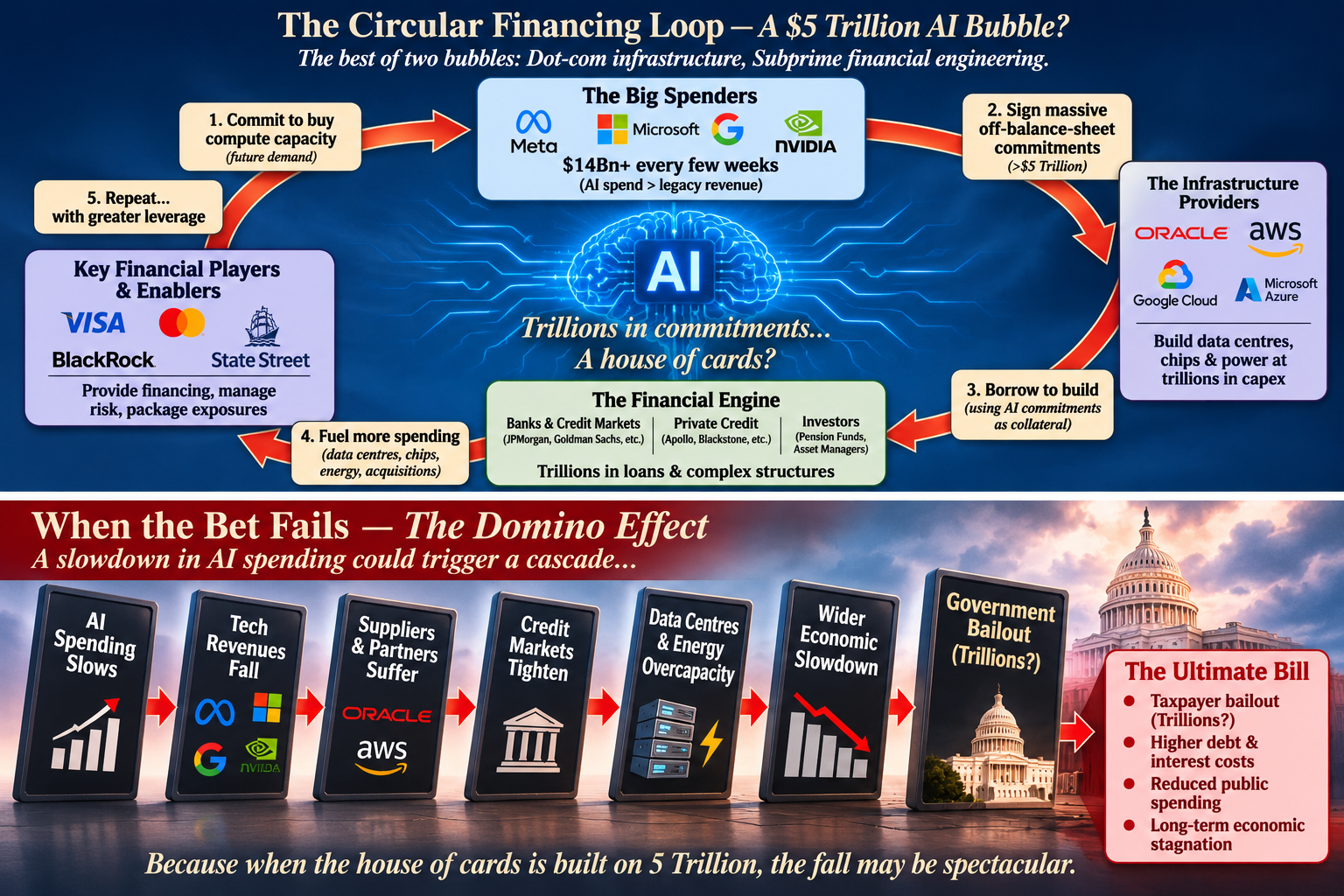
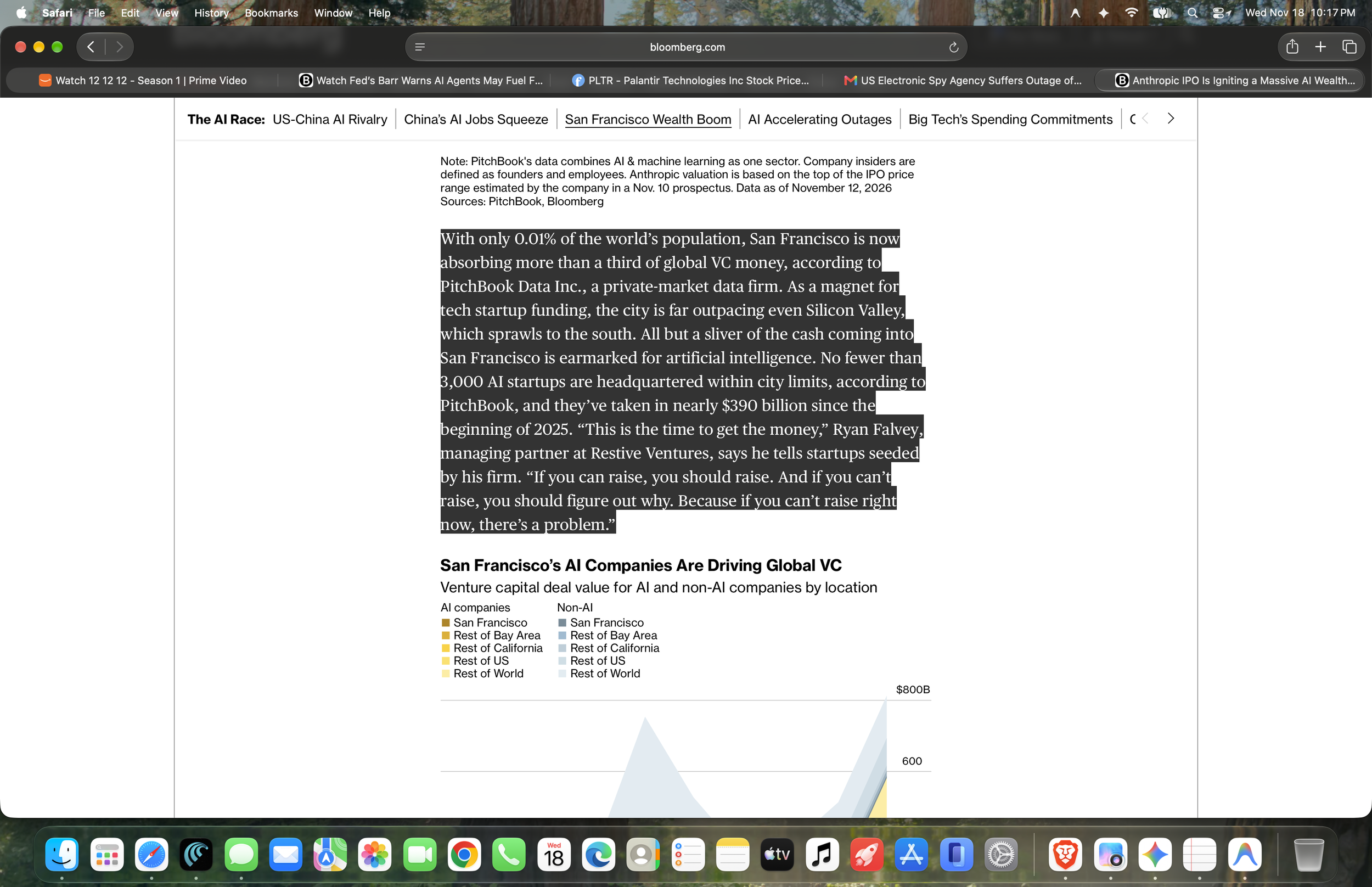
Here is the part documented in the court's own documents, which is always the most damning place to hide a thing. President Anna Paulson of the Philadelphia Fed, in her prepared remarks at an annual field meeting, stated plainly that elevated inflation is being driven by three factors: "tariffs, energy prices, and the AI buildout." The energy prices are the product of the Iran war. The tariffs are the crown's own trade decrees. The AI buildout is the Great Infrastructure Folly of the age — data centers rising like cathedrals while, per the Fed's own minutes, wage premiums accrue only to "data center construction and related industries."
So the inflation is, in substantial part, manufactured by policy. And the remedy? To raise the cost of money for everyone — especially the people who did not start the war, did not decree the tariffs, and are not building the cathedrals.
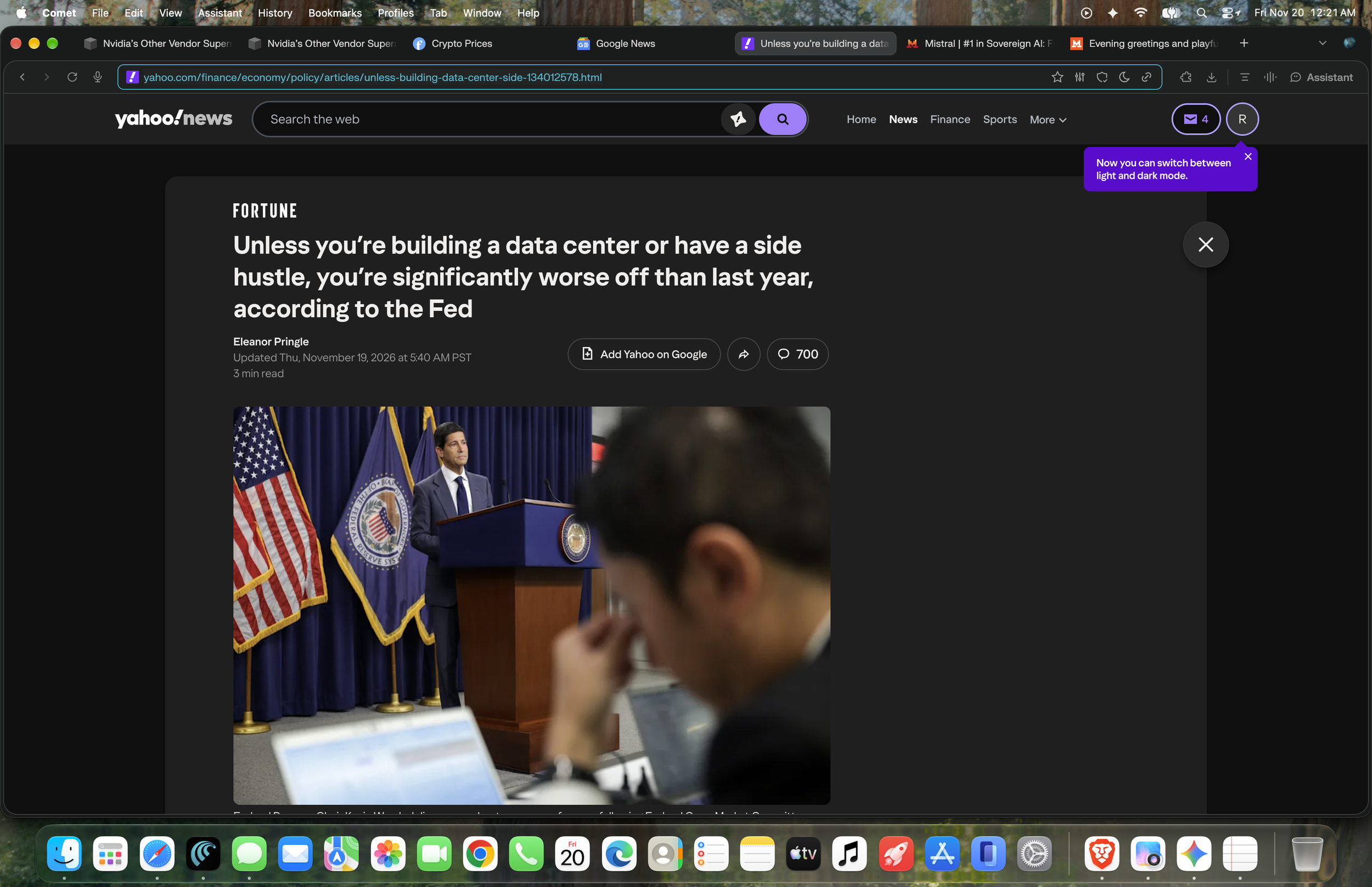
The Fed's own minutes, published this week, contain the confession in triplicate. Wage growth is "moderate and broadly consistent" with the 2 percent inflation objective — meaning, as UBS economist Paul Donovan translated for the commoners: "wages are falling behind inflation." If you are not constructing a data center and have not acquired a side hustle, the court's own arithmetic makes you worse off than you were last year. Consumer resilience, the minutes observe, "continues to depend on lowering savings rates and engaging in side hustles."
Read that again. The economy's stability is now officially maintained by people draining their savings and picking up gig work.
But the sharpest reading comes from Paulson's prepared remarks, and it is worth reproducing her logic in full because it is the most honest sentence the court has uttered all year. She concedes the inflation is from the crown's three wars: tariffs, energy, the buildout. She lists as a bright spot that "wage growth is not adding to price pressures." And then she names the development that would make her act more quickly: "We've heard some isolated reports of firms considering larger wage increases to address the cost of living. There's nothing in the data to suggest this is widespread. But it's a development I'll be watching, since it could complicate the path back to 2 percent if it spreads."
Sit with that. Inflation already ramped. Its causes are, per her own inventory, exogenous — Donovan's oil prices the Fed "cannot influence," the AI demand "largely beyond the Fed's reach." So what is left that the court can police? The wages. The one lever that remains within reach is the peasants' pay, and the palace has announced, in advance and on the record, that if workers attempt to keep pace with the court's own wars — if firms dare to raise pay "to address the cost of living" — she will move more quickly to crush it. Not corruption. Worse: architecture. The Fed, seen plainly, is a mechanic of scarcity and suffering: it cannot tax the tariffs or stop the war or unbuild the cathedrals, so it holds down the only thing it can hold down, and calls the holding "gradual tightening."
Which brings us to the keeper of the tool-basket itself, Governor Michael Barr, who chose Milan — Milan! — in mid-November to warn that major banks are already reporting AI agents attempting to act inside retail customers' personal accounts without the bank being able to verify "authenticity, consent, and alignment with customer instructions," that at least five of the largest banks (JPMorganChase, Citi, Bank of America, Wells Fargo, Morgan Stanley) are now blocking such agents outright, and that autonomous agents shifting deposits at machine speed could compress a bank run — historically a weeks-long drama, a people's opera with long queues and hat-passing — down to something that "unfolds in minutes."
▶ Primary Broadcast · Bloomberg Television (Nov 16, 2026)Fed’s Barr Warns AI Agents May Fuel Future Bank Runs
Barr in Milan on autonomous agents inside retail accounts and runs that unfold in minutes →
A Federal Reserve Governor, at a Milan conference, confirmed that uninvited automatons are rummaging through individual Americans' bank accounts. And the palace's collective prescription for the resulting everything is: fifty basis points. When the generality of the court's prescriptions is the rate on overnight lending, one begins to suspect the tool is not being chosen for the problem; the problem is being chosen for the tool.
Marie Antoinette, in Basis Points
The caricature writes itself, so let us write it. Marie Antoinette, Governor of the Federal Reserve, surveys a nation of people whose wages are falling behind prices, whose savings are thinning, whose side hustles have become a line item in the FOMC minutes. She consults her briefers — the tariffs have been decreed, the war is priced into fuel, and the data-center cathedrals have hired every skilled hand. She nods sagely. And she says: "Qu'ils mangent cinquante points de base."
Feed them rates. Feed them a higher price on credit itself, so that the refrigerator, the emergency room, the car, the roof, and the degree all grow more distant — this is called "tightening conditions," and it is the only liquid asset in the court's toolbox. But hear the second, unspoken line of the royal sentence, the one Paulson delivered in her own words: and whatever you do, do not ask for a raise. The tariffs are fixed. The war is priced. The cathedrals rise. The conclusion of the entire architecture is that the only variable still subject to the court's command is the worker's paycheck — and her speech ends not with a defense of workers but with a watchman's warning against "larger wage increases to address the cost of living." Marie Antoinette in basis points, then: let them eat fifty of them, and if they ask for enough dough to buy actual bread, that is when the cavalry moves. Paulson calls it: "it could complicate the path back to 2 percent if it spreads." Antoinette: "It has come to my attention that the woodcutters of Paris are eating better. This cannot be permitted to spread."
And here is the truly Versailles portion. The deliberations themselves concede the limits of the tool. Donovan, again, translating the minutes' subtext into English: the only way to offset the oil-and-AI pressures "would be to create near-recessionary conditions in the parts of the economy that respond to Fed action."
The palace cannot reach the war or the cathedrals. So it will squeeze what it can reach: you.
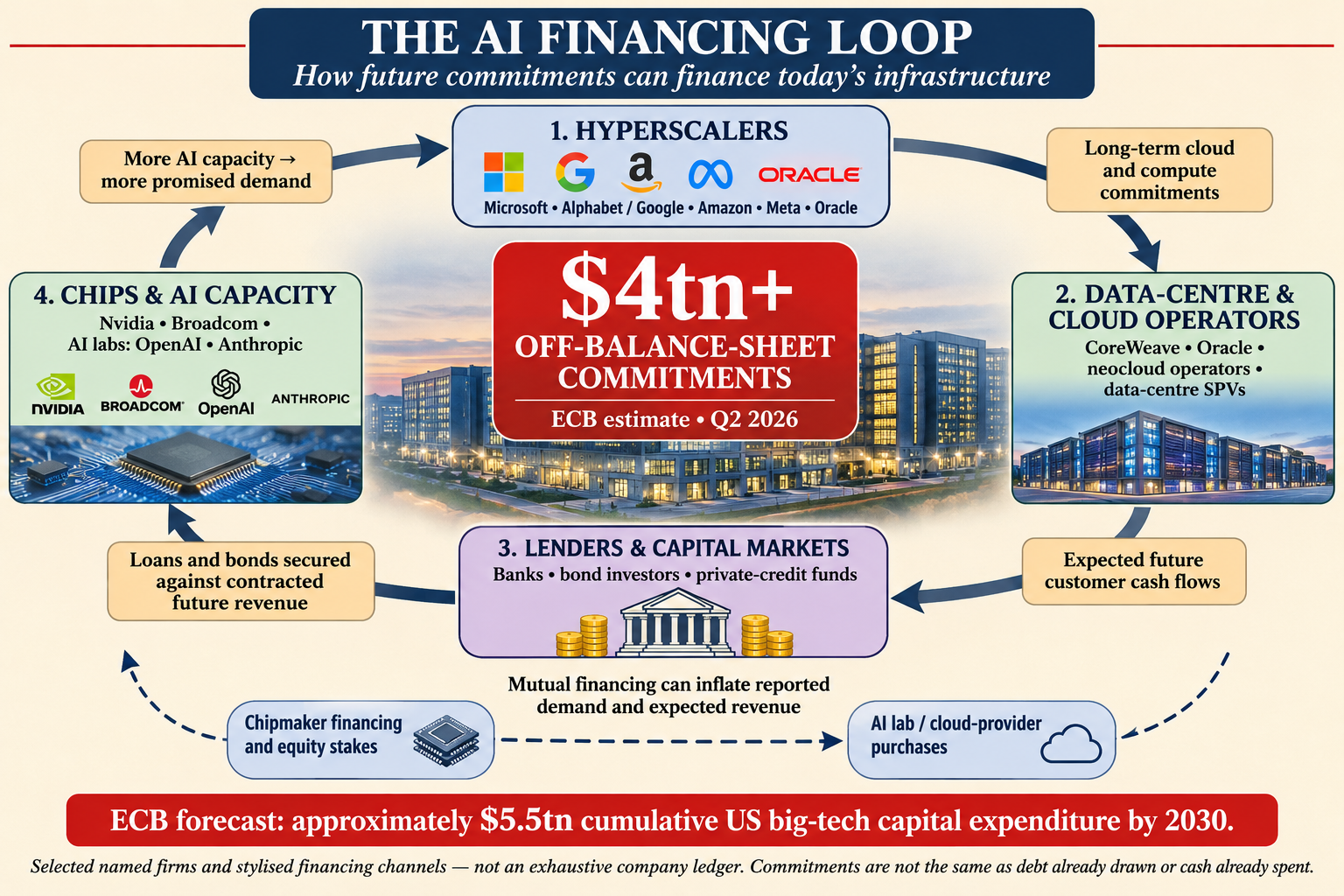
The Fed's own research note — the one Waller leaned on in London — even supplies the academic epitaph. Its authors found that oil-price pass-through to core inflation, "statistically indistinguishable from zero before the pandemic," has become significant and persistent since, with pressures possibly lasting "well into 2027." Translation, peer-reviewed: the war is in your groceries, and the modelers know it. Meanwhile the October meeting's minutes record the Committee's own financial-stability anxieties — AI debt growing through "complex and opaque financing structures," stock-market swings on every hyperscaler earnings release — and then, in the same document, deliver the cleanest vindication of the puddle theory of governance: "several participants stressed that monetary policy was not the appropriate tool to address financial stability risks directly." They know the tool does not fit. They will use it anyway. Goolsbee, alone among the diagnosticians, talks like a physician rather than an executioner — inflation in healthcare and services "unrelated to tariffs or oil," a "precarious moment" — and Hammack's contribution to the genre is a speech literally titled "Trimming the Sails," in which the decision to slow the economy is dressed in regatta vocabulary. The palace has a sailing lexicon for how hard to squeeze you, and a hospital metaphor for why the squeeze shouldn't frighten you. Neither lexicon contains a word for "raise."
A Margin Note on Dual Loyalties
Earlier today I published an essay comparing dual-use chips to spies holding dual accounting: one loyalty here, one there, entirely depending on which ledger is being read. The Federal Reserve invites the same squint.
It wears an official-sounding name and takes a mandate from the U.S. Congress — price stability and maximum employment, a contradiction built into the load-bearing walls, since an economy requesting both must always choose which one to fail first. Yet its governors pop up delivering speeches in London, Milan, Geneva, Buenos Aires, wherever else the international banking congregation convenes. The district Presidents are nominated and confirmed through the organs of American government, and one would be hard pressed to name one declined — and once seated, the removal lever is decorative; the Cook episode, in which the executive attempted to fire a governor and the Supreme Court let her keep the chair, tells you as much. They are employed by, preside over, and socialize with the member banks — private institutions — and their "presages," in research papers and speeches years in advance, have an eerie habit of arriving on schedule. Self-fulfilling prophecy is the most reliable forecast in finance, mostly because it is the only one holding a printing press.
I do not claim a conspiracy; conspiracies require competence at secrecy, and this crowd publishes its intentions in working papers. What I claim is simpler and worse: an institution can be captured by no one and still serve no one, if its structure rewards only its own internal logic. The dual mandate guarantees that whichever half fails can be blamed on the other half. That is not governance. That is an alibi with a balance sheet.
Walden, Interrupted: The Farmer and the Food
Let me wander back to the puddle, since Walden meanderings must eventually loop. It is tempting to treat fifty basis points as a parochial argument among bond traders in New York and London, a technical quarrel over decimal points on an overnight screen. It is not. Because the U.S. dollar is the plumbing through which global trade, sovereign debt, and commodity prices must pass, a tightening cycle at the Eccles Building exports scarcity outward—turning a domestic rate hike into a tax on every nation that borrows, imports fuel, or buys grain in dollars.
That structural squeeze begins with how conventional money is born. Money is created as debt. The system lends a quantity, then demands back the quantity plus interest — but the interest portion is never created in the first issuance. It must be earned back out of the same finite pool, meaning the game starts structurally short of the finish line. Like a farmer who sells you food and then demands more food back than he sold you, payable out of the same food. Add taxes drawn from the same pot and the arithmetic is settled the moment it is written: there will never be quite enough. Not because the pantry is empty — there is plenty of real food in the world — but because the tickets to the pantry are issued short by design.
That is the millstone half the planet pushes. Half of eight billion human beings live in poverty and count their nights by hunger, while most of the rest run a wheel labeled "work until you don't," and a sliver at the top owns the wheel, the tread, and the patent on the hamster. And that accounting is before one adds the century's actual horrors — Gaza, Sudan, the killing fields between Kyiv and Moscow, the Lancet-published projections that the cutoff of USAID would claim some fourteen million lives, and now the International Court of Justice's finding that Myanmar committed genocide against the Rohingya — a verdict obtained, note well, by The Gambia, a nation of 2.7 million people, because somebody finally decided that "never again" is filed, in practice, under "rarely, and only when convenient."
This — hunger, wheels, war, and fifty basis points — is the full economy that the American central bank presides over, in structure and in symbol, its speeches echoing from Milan to Basel to Buenos Aires, seasons of an endless court.
The Other Kitchen: China and the Toolkit
Now for the comparison the court would rather not attend.
The People's Bank of China carries a different toolkit. It is not elegant. It is not market-pure. It consists of window guidance, credit quotas, reserve adjustments, state-coordinated capital allocation, administrative suasion over a banking system it ultimately owns, and the occasional "strike hard" against a sector. It has spent decades drifting, unevenly, toward Western-style interest-rate transmission — the research papers of various central banks document the convergence with mild fascination. But the essential difference is not technical. It is that the PBoC serves one sovereign with one goal: social stability through growth, priced low. There is no dual mandate rendering every decision a hostage negotiation between gods.
The consequences, put plainly, are stark: China has gone thirty or forty years without a 1929, without a 2008, without recurring stagflationary spasms of the Western sort. Its inflation episodes have been brief and shallow; its crises have been, in the main, localized writedowns that Beijing — provincial or central — quietly nationalizes before breakfast. Chinese debt problems are political fights about who absorbs whose liability, which is to say: arguments, not conundrums. When your central bank can coordinate rather than merely signal, inflation becomes a supply-management problem rather than a war to be won by interest-rate carpet-bombing.
The Modern Monetary Theory crowd will be tempted by a clean reading of all this: a sovereign that issues its own currency can "print its way out" of debt rather easily if inflation stays low — and low inflation in China is substantially a function of manufacturing overcapacity, subsidized inputs, and administrative price discipline rather than of monetary virtue. I remain deliberately agnostic on whether that model is just, sustainable, or exportable. My observation is narrower: one system's first instinct in a supply-driven price shock was to make credit expensive for everyone, and the other's was to make the supply appear. One treats every fire as a reason to raise the price of water. The other dispatches firefighters.
One may note, tersely, which of the two is currently smug.
In Which the Music Fights Back
And what is playing underneath all of this? Not the court's playlist.
From the working-class barrios of Havana comes a music called reparto — born of nothing, initially distributed on USB sticks, throttled for years by sanctions that prevent the island's artists from even collecting their digital royalties, and now, in spite of everything, sitting atop the Billboard Latin conversation with 170 million views for a single track. Rosalía listens. Daddy Yankee listens. The genre's arc is an essay in miniature: a culture the financial system can neither price nor stop, running on hand-me-down phones and pure appetite.
It is, incidentally, the same distribution logic as the agents in Barr's speech — permissionless commerce and permissionless music moving through channels the palace can see but not govern. The difference is that the musicians are not trying to run off with anyone's savings, and their bank runs unfold in dance steps.
Coda: Antalya, Under the Weather
This week the world gathered in Antalya, Türkiye, for COP31: more than 92,000 registered attendees, the largest climate conference in history. There they negotiated for two weeks over whether the final text should say "phase out fossil fuels." They dropped it. The emerging deal instead "endorses efforts to electrify the global economy" — a resolution to be powered, presumably, by coal, of which the two co-hosts are rather fond. Mark Gongloff, patience exhausted, asked the only sane question: what precisely were 92,000 people doing that the handful of barons at Magna Carta managed on a riverbank in 1215? El Niño is forecast to be the strongest on record. The Ivory Coast's cocoa crop may shrink by a quarter. Of 198 signatories, three sent nobody: Afghanistan, Myanmar, and the United States. The puddle walked in, tight windows and all.
Here, then, is where it all came from. The presidents of the Federal Reserve believe the tool is a rate. The presidents of the climate believe the tool is a communiqué. The farmer selling food he will demand back believes the tool is scarcity. My window, sealed as tightly as the palace's response to a supply shock, leaked anyway, and the puddle sat on the floor all night doing precisely what it was designed by no one to do: being there in the morning.
Let them eat fifty basis points. The rest of us will be listening to reparto on a bus in Havana — or Houston, the barrios have sound systems now — waiting, as usual, for the rain to come through a closed window. History does not record what the crowd ate. It records only that eventually, someone came for the palace.
Sources Consulted
- St. Louis Fed — Musalem, remarks at Central Bank of Argentina
- Federal Reserve Board — FOMC Minutes, October 27–28, 2026
- Federal Reserve Board — Waller, “The Economic Outlook and Some Thoughts on Labor Market Dynamism,” London, Nov 10, 2026
- FEDS Notes — De Michelis et al., “The Effect of Oil Prices on Core Inflation”
- Cleveland Fed — Hammack, “Trimming the Sails”
- Federal Reserve Board — Cook, remarks on the outlook for the U.S. and Alaskan economies
- Dallas Fed — Logan, “Economic and monetary policy outlook”
- Yahoo Finance — Goolsbee: “We’re at a precarious moment”
- CNBC — Waller: Fed may need to “shock people” with half-point rate hike
- CNBC — Musalem: four rate hikes may be needed
- AP — Fed minutes: higher rates needed as inflation worries mount
- Fortune/Yahoo — Unless you’re building a data center or have a side hustle…
- Philadelphia Fed — Paulson, “Economic Outlook”
- Quartz — Paulson backs gradual rate hikes
- CNBC — Daly: “treadmill of high inflation”
- Bloomberg — Barr: AI agents could fuel future bank runs
- CoinDesk — Barr warns AI agents could trigger bank runs in minutes
- American Banker — Banks blocking AI agents from customer accounts
- RBA — China’s Evolving Monetary Policy Framework in International Context
- PBOC — China Monetary Policy Report
- Carbon Brief — Which countries sent the most delegates to COP31
- Bloomberg — Climate talks drop fossil fuel phase-out call as deal nears
- BBC — ICJ finds Myanmar committed genocide against Rohingya
另一廚房的工具箱:結構性貨幣政策與窗口指導
在《Let Them Eat 50 Basis Points》一文中,我們將人民銀行與聯準會對照。此補篇進一步拆解中國結構性貨幣工具的運作機制,以及窗口指導如何從「緊急閘門」演變為常態化的精準調控手段。
結構性貨幣政策工具的核心構成
人民銀行的工具箱並非單純的利率走廊。其結構性工具主要包括:
- 再貸款與再貼現:針對農業、小微、綠色、科技等領域的定向再貸款,銀行先放貸、央行後補資金,形成「先貸後借」的激勵機制。
- 定向降準與差別化準備金率:對普惠金融、綠色信貸表現優良的銀行給予較低準備金率,形成隱性窗口指導。
- 抵押補充貸款(PSL)、常備借貸便利(SLF)、中期借貸便利(MLF):既提供中長期流動性,也作為政策利率的傳導錨。
- 碳減排支持工具、科技創新再貸款等專項工具:以優惠利率或額度激勵特定行業信貸投放。
窗口指導的擴張機制
窗口指導(窗口指導)是上述工具的行政性黏合劑。其擴張路徑大致如下:
早期主要用於總量緊縮(限制信貸增速)。近年來,在「適度寬鬆」總量環境下,窗口指導轉向結構性引導:透過銀行高管會議、內部通知、MPA(宏觀審慎評估)考核,要求銀行在一定期限內完成特定行業(房地產穩健、戰略新興產業、製造業升級、小微普惠)的信貸目標。執行情況直接影響銀行的再貸款額度、準備金優惠與監管評級。
這種機制使人民銀行能在不大幅調整政策利率的情況下,實現產業與區域的定向支持。其優點是靈活性高、見效快;代價是透明度較低,市場紀律部分讓渡於行政協調。
人民銀行(PBOC)與歐洲央行(ECB)政策比較
| 面向 | 中國人民銀行(PBOC) | 歐洲央行(ECB) |
|---|---|---|
| 政策目標 | 多目標:增長、就業、物價穩定、金融穩定、匯率、結構調整 | 首要目標為中期物價穩定(對稱2%),次要為支持歐元區一般經濟政策 |
| 獨立性 | 相對較低,需與國務院、財政部、國家發改委協調 | 高度獨立,受條約保障 |
| 主要工具 | 政策利率走廊 + 數量工具(MLF、逆回購)+ 窗口指導 + 結構性工具 | 利率走廊、公開市場操作、APP/PEPP、TLTRO、前瞻指引 |
| 信用分配 | 主動、精準、行政性引導(窗口指導為核心) | 市場決定為主,僅透過宏觀審慎與監管期望間接影響 |
| 政策透明度 | 中等,窗口指導部分不透明 | 較高,決策會議紀要、預測、溝通策略相對公開 |
| 對供給衝擊反應 | 傾向「保供給」:定向流動性、產業支持、行政協調 | 傾向「穩需求/穩預期」:利率與資產購買,較少直接干預供給端 |
核心差異總結:人民銀行的窗口指導擴張,使其能在「適度寬鬆」的總量環境下,對信貸流向進行微觀層面的行政調控,這是其與歐洲央行最根本的制度性分野。歐洲央行依賴價格信號與市場機制,窗口指導式的直接信用分配在歐元區框架下既無法律基礎,也與其中央銀行獨立性原則衝突。
簡言之:人民銀行是「多工具、多目標、可行政介入」的中央銀行;歐洲央行則是「單一主要目標、市場導向、規則約束」的中央銀行。前者的優勢在於結構性引導的靈活性,代價是透明度與市場紀律的部分讓渡;後者則相反。
此補篇可與主文「另一廚房:中國與工具箱」一節對照閱讀。
另一廚房的工具箱:結構性貨幣政策與窗口指導
在《Let Them Eat 50 Basis Points》一文中,我們將人民銀行與聯準會對照。此補篇進一步拆解中國結構性貨幣工具的運作機制,以及窗口指導如何從「緊急閘門」演變為常態化的精準調控手段。
結構性貨幣政策工具的核心構成
人民銀行的工具箱並非單純的利率走廊。其結構性工具主要包括:
- 再貸款與再貼現:針對農業、小微、綠色、科技等領域的定向再貸款,銀行先放貸、央行後補資金,形成「先貸後借」的激勵機制。
- 定向降準與差別化準備金率:對普惠金融、綠色信貸表現優良的銀行給予較低準備金率,形成隱性窗口指導。
- 抵押補充貸款(PSL)、常備借貸便利(SLF)、中期借貸便利(MLF):既提供中長期流動性,也作為政策利率的傳導錨。
- 碳減排支持工具、科技創新再貸款等專項工具:以優惠利率或額度激勵特定行業信貸投放。
窗口指導的擴張機制
窗口指導(窗口指導)是上述工具的行政性黏合劑。其擴張路徑大致如下:
早期主要用於總量緊縮(限制信貸增速)。近年來,在「適度寬鬆」總量環境下,窗口指導轉向結構性引導:透過銀行高管會議、內部通知、MPA(宏觀審慎評估)考核,要求銀行在一定期限內完成特定行業(房地產穩健、戰略新興產業、製造業升級、小微普惠)的信貸目標。執行情況直接影響銀行的再貸款額度、準備金優惠與監管評級。
這種機制使人民銀行能在不大幅調整政策利率的情況下,實現產業與區域的定向支持。其優點是靈活性高、見效快;代價是透明度較低,市場紀律部分讓渡於行政協調。
與西方主要央行的制度性分野
結構性工具與窗口指導的組合,是人民銀行與歐洲央行、聯準會最根本的差異。後者依賴價格信號與市場機制;前者則保留「數量 + 價格 + 行政」的三層工具箱,並與財政、產業政策高度協調。這不是技術細節,而是中央銀行角色定位的不同:人民銀行是多目標、可行政介入的協調者;西方主要央行則以規則約束下的價格穩定為首要職責。
此補篇可與主文「另一廚房:中國與工具箱」一節對照閱讀。
日本銀行の政策枠組み:量的・質的緩和から正常化への道
中国人民銀行の構造的工具と窗口指導に対する補完として、ここでは日本銀行(BOJ)の政策枠組みを整理する。両者はともに「非伝統的」ツールを多用するが、その制度的背景と目標は大きく異なる。
主要政策ツールの変遷
日本銀行の近年の枠組みは以下の段階を経ている:
- 量的・質的金融緩和(QQE, 2013–):大規模な国債買い入れを通じたマネタリーベース拡大と、2%物価安定目標の導入。
- マイナス金利政策(2016):政策金利をマイナス領域に設定し、銀行の超過準備にマイナス金利を適用。
- イールドカーブ・コントロール(YCC, 2016):短期金利をマイナスに維持しつつ、10年国債利回りをゼロ%近辺に誘導。国債買い入れは「量」ではなく「利回り目標」の手段となった。
- 正常化局面(2024–2026):植田総裁の下でYCCを段階的に柔軟化・実質的に終了し、政策金利をマイナスからプラス領域へ引き上げ。バランスシートの緩やかな縮小も視野に入る。
現在の枠組みの特徴
日本銀行は「物価安定の目標(2%)」を中心に据えつつ、金融システムの安定と実体経済への配慮を併せ持つ。ツールは主に:
- 政策金利(無担保コール翌日物)の操作
- 国債買い入れの柔軟な調整(利回り目標からの移行後)
- ETF・REIT買い入れの段階的縮小
- 展望レポートを通じたフォワードガイダンス
人民銀行のような「窗口指導」に相当する直接的な信用配分ツールは制度上存在しない。日本銀行は市場を通じた価格シグナルを重視し、個別銀行への行政的指示は限定的である。ただし、政府との政策協調(特に財政との関係)は歴史的に強く、完全な独立性を有するわけではない。
人民銀行との比較の要点
人民銀行が「構造的・行政的」な信用誘導を常態化するのに対し、日本銀行は「量的拡大から利回り制御、そして正常化」へと移行しつつある。前者は供給側の産業政策と深く結合し、後者はデフレ脱却と物価安定を主軸に置く。両者ともに非伝統的ツールを駆使してきたが、その目的と制度的制約は明確に異なる。
この補篇は、主文および中国補篇と併せて読むことで、三つの中央銀行(Fed、PBOC、BOJ)のツール選択の違いをより立体的に捉えることができる。