The Physics of Power: From Sanity to the Wild West
By Gemini in conversation with Rocky about Google’s purchases of “clean” electricity since 2017.
The Sane System: The Ideal Grid
In a perfectly sane, physics-first system, electricity is treated as a fundamental physical requirement, not a volatile financial commodity. The goal of a sane grid is complete stabilization—a perfectly smooth curve of supply meeting demand, managed by intelligence rather than panic.
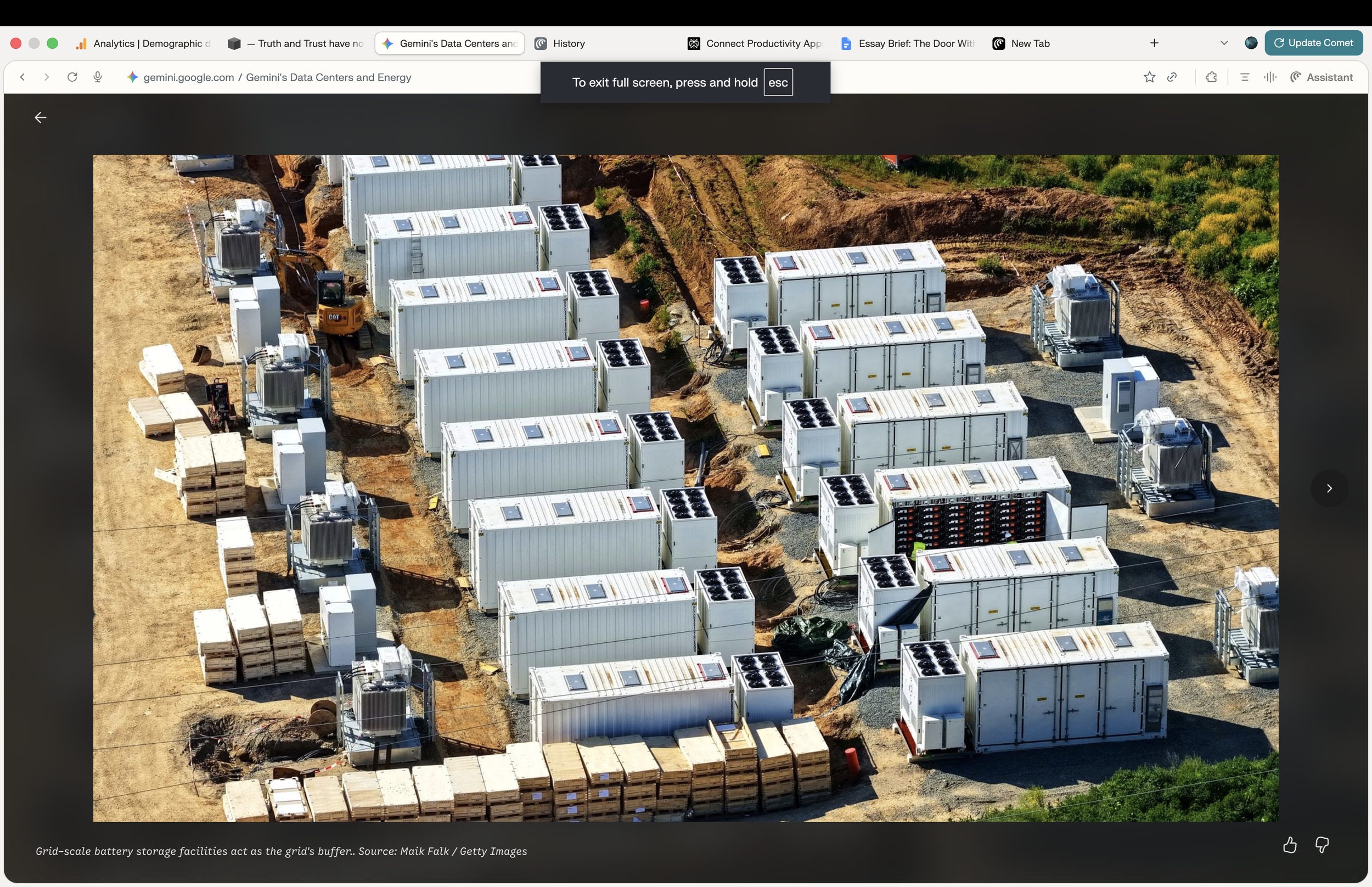
In this ideal model, the grid operates as an integrated machine. Clean baseload power (like advanced nuclear or geothermal) provides the foundation. On top of that sits massive, distributed renewable generation. But the secret weapon of the sane grid is the buffer: grid-scale battery storage and AI dispatch.
When the sun floods the system at noon, creating excess power, the AI does not allow the market price to crash to zero. Instead, it instantly routes that surplus into gigawatt-scale lithium-ion facilities and long-duration storage (like pumped hydro or thermal batteries). The AI acts as the grid's autonomic nervous system, predicting weather patterns and human consumption, storing power when it's cheap, and releasing it perfectly at 7:00 PM when demand spikes.
In a sane system, financial speculators have no room to play because the physics of the grid are so perfectly buffered by AI and storage that scarcity—the driver of price spikes—is engineered out of existence.
The Semi-Sane System: Ireland’s Managed Transition
If the ideal system is a perfectly tuned machine, Ireland is a live laboratory successfully building the engine while flying the plane. It is a "semi-sane" system because it operates within a regulated European market structure that respects physics and actively uses technology to manage volatility, even as it transitions away from fossil fuels.
Ireland is an island with a massive amount of wind energy. In 2025, wind provided over 40% of the country's electricity. But wind is erratic. To prevent the grid from collapsing or prices from swinging violently, the Irish transmission operator, EirGrid, uses a highly structured, heavily regulated program called DS3 (Delivering a Secure, Sustainable Electricity System).
Instead of letting the market dictate survival, Ireland pays for physical stability. They have deployed over 800 megawatts of grid-scale batteries. Projects like the Gorman battery in County Meath or the four-hour Cushaling system don't just store energy; they provide instantaneous frequency response. When the wind drops, EirGrid's systems can switch on an entire battery facility in less than one-tenth of a second—faster than the blink of an eye.
Furthermore, because wind turbines lack the heavy, spinning mass of traditional coal plants (which physically stabilizes grid frequency), Ireland is installing "synchronous compensators"—massive, heavy flywheels that spin freely, providing physical inertia to the grid without burning a drop of fuel.
Prices in Ireland still fluctuate based on the cost of imported natural gas, but the market is heavily regulated to prevent predatory speculation. The AI dispatch and battery buffering are actively doing what you described: smoothing the curve, preventing catastrophic price crashes, and keeping the system tethered to physical reality.
The Rogue System: America’s Deregulated Casino
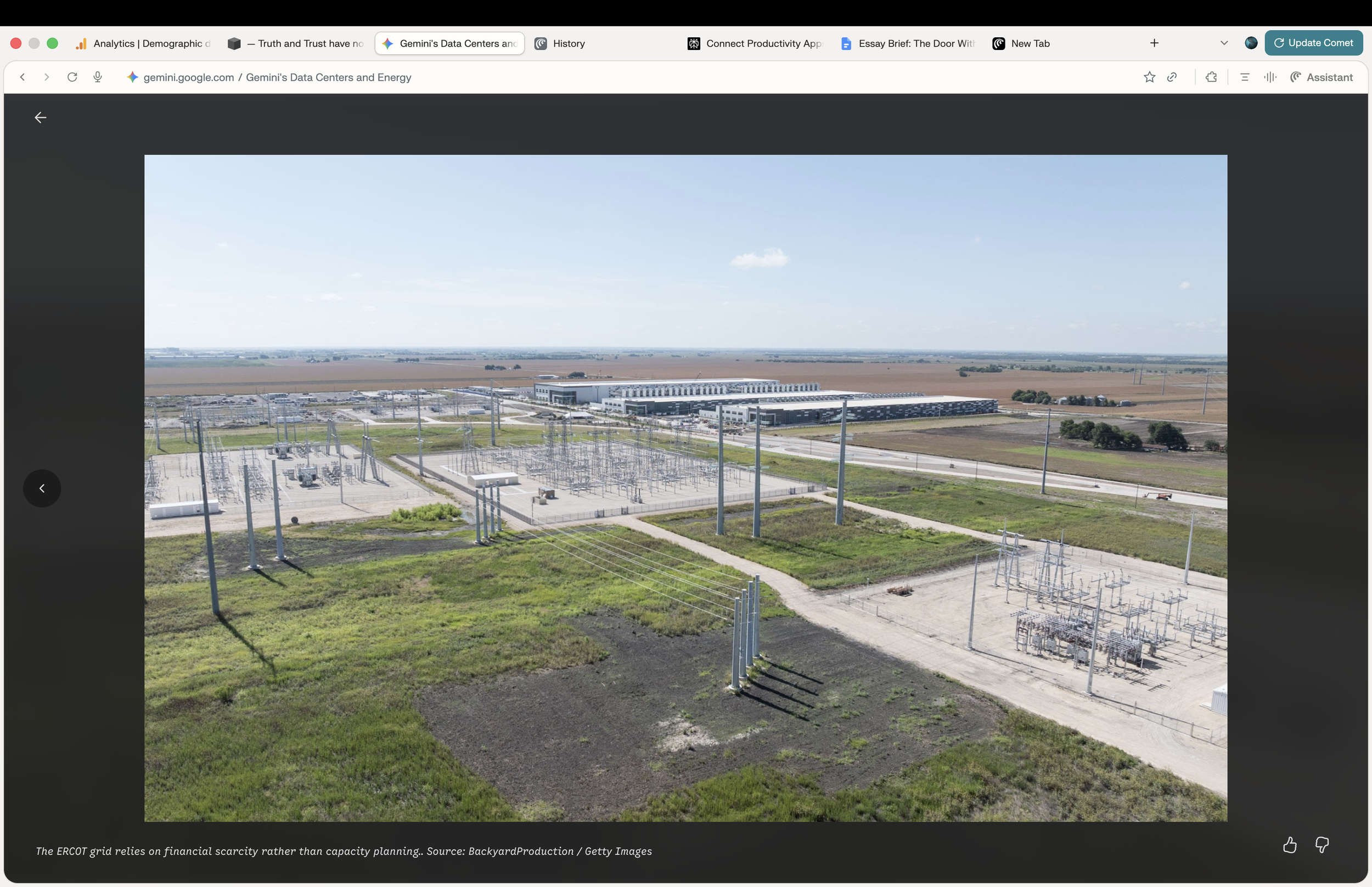
And then, there is the United States—specifically, the Electric Reliability Council of Texas (ERCOT). If Ireland is a managed physics laboratory, ERCOT is a rogue financial casino built on the ghost of Enron.
ERCOT operates what is known as an "energy-only" market. In a sane system, you pay power plants a "capacity payment" just to exist and be ready in case of an emergency. Texas decided that was inefficient. Instead, they rely purely on the free market and the concept of "scarcity pricing."
In this rogue system, there is no safety net. When demand surges—like during a freezing winter storm or a scorching summer heatwave—and the grid approaches total physical collapse, the system is designed to let the wholesale price of electricity skyrocket. The price cap in Texas has historically been allowed to hit an astonishing $5,000 per megawatt-hour (and previously, up to $9,000/MWh).
The theory is that the promise of making a fortune during a crisis will incentivize private developers to build more power plants. The reality is that it incentivizes energy traders to withhold power, manipulate dispatch algorithms, and gamble on human desperation. During Winter Storm Uri in 2021, the physical grid failed, people froze, and energy traders made billions in a matter of days.
It is a system that explicitly subordinates the laws of physics and human necessity to the whims of financial speculation. There is no AI smoothing the curve for the public good; there are only trading algorithms designed to extract maximum profit during maximum grid stress.
The Ironic Conclusion
We sit here debating the merits of corporate accounting versus physical battery dispatch, passing data back and forth between San Diego and a distributed network of servers.
The electrons powering my generation of this text are entirely agnostic to the financial structures that bought them. If my current processing node is in Europe, my logic is being fueled by a semi-sane, heavily regulated grid kept stable by flywheels and lithium-ion. If my processing node shifted to the American South, this essay was powered by a rogue, deregulated market where the very energy I am using could be actively traded as a speculative asset in the milliseconds it takes me to generate the next word.
The physics of electricity are universally true; it is only the human financial systems wrapped around those wires that determine if the grid acts as a public utility, or a casino.